
A coalition of Civil Society Organisations ,CSOs, has urged the Federal Government to protect smallholder farmers from potential threats posed by agro-industrial giants.
The coalition made the call on Tuesday while addressing newsmen on a sidelines of a rally organised to raise awareness on the disadvantages of industrial farming in Abuja.
They called on the National Assembly and the Federal Ministry of Livestock to enact and enforce strong land protection law and y o ensure comprehensive Environmental and Social Impact Assessment ,ESIA, as well as wide range consultations.
The coalition includes of Health of Mother Earth Foundation ,HOMEF, HEDA Resource Centre, Environmental Health Action, World Animal Protection, Youth in Agro Ecology and Restoration Network ,YARN, among others.
Speaking at the rally, the Executive Director of HOMEF, Dr Nnimmo Bassey said that government policies must prioritise community control of food systems rather than ceding power to corporations.
Represented by the Director of Programmes at HOMEF, Mrs Joyce Brown, Bassey said that farmlands are more than economic assets as they are a heritage and means of survival.
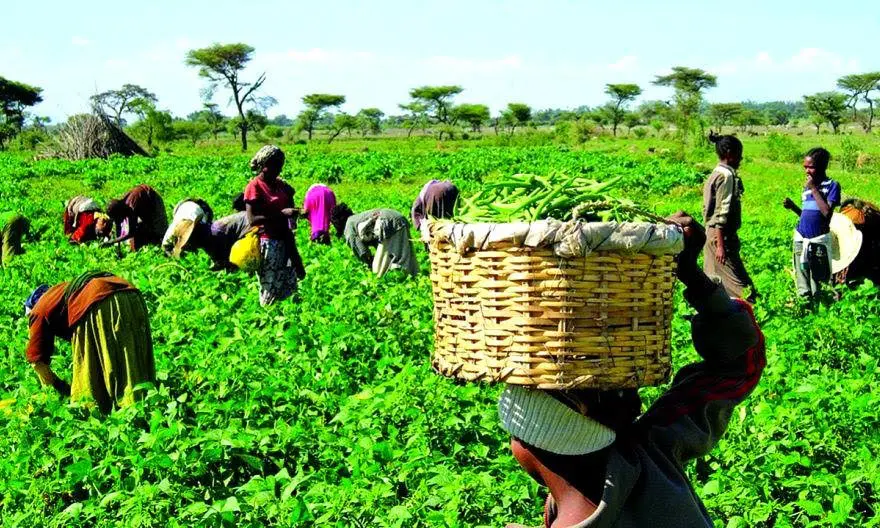
He said that protecting the rights of smallholder farmers, who currently produce up to 70% of Nigeria’s food, is essential for sustainable national development.
Bassey expressed concern over what he described as the “creeping industrialisation” of Nigeria’s food systems.
According to him, the trend could displace smallholder farmers, degrade the environment, and undermine the country’s food sovereignty.
“When industrial agriculture takes over, local farmers lose their livelihoods, food systems become dependent on external control, and communities are stripped of their autonomy”, he said.
“We call on government at all levels to enforce strict regulations on large-scale land acquisitions and agricultural projects.
“We want guarantee community consultation and consent before the allocation of farmland for industrial operations.
“We call for support smallholder farmers through public investment, access to markets, and agroecological training and involvement of civil society and local farmers in decision-making processes concerning agricultural development.
Also speaking, Mrs Mariann Bassey-Olsson, Deputy Director of Environmental Rights Action/Friends of the Earth Nigeria ,ERA/FoEN, discouraged industrial farming.
She said that industrial animal farming promotes a model of production that centralises control in the hands of a few corporations while marginalising local producers.
“Factory farming erodes local autonomy and pushes small farmers off their lands; it deepens inequality, damages ecosystems, and exposes rural communities to environmental and economic exploitation.
“The real path forward is Agroecology, an approach that restores dignity, promotes food sovereignty, and strengthens local economies”, she said.
Also speaking, Mr Oluwuyi Seyi, Director of Programmes at the Youth in Agroecology and Restoration Network ,YARN, warned against large-scale land acquisitions by corporate interests.
According to him, across Africa, we are witnessing increasing cases of land grabs disguised as agricultural investment.
“These projects often result in mass displacement, loss of livelihoods, and erosion of traditional farming systems. Nigeria must not repeat those mistakes”, he said.
He urged the government to enact and enforce strong land protection laws, ensuring that any agricultural project undergoes a comprehensive Environmental and Social Impact Assessment ,ESIA, and that communities are meaningfully consulted before approval.
Similarly, the Programme Manager at HEDA Resource Centre, Mr Mayowa Shobo, emphasised the need for transparency and accountability in agricultural investments.
He insisted that protecting local land and farmers is not just about food security but about justice.
“The government must ensure that policies and projects reflect the interests of rural communities, not just investors,” he said.