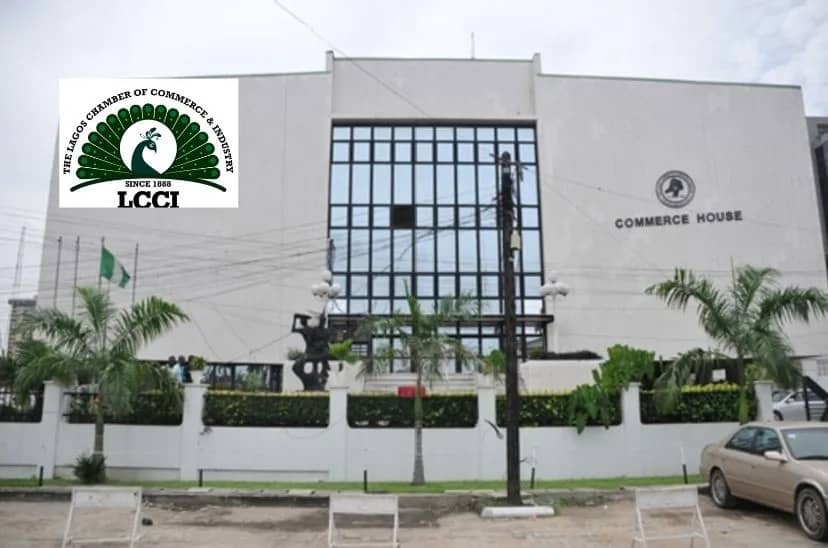
From Rotimi Asher, Lagos
Lagos Chamber of Commerce and Industry ,LCCI, has urged the Federal Government to ensure that the recently enacted Nigeria Tax Reform Act 2025 is implemented in a manner that promotes a predictable, transparent, and business-friendly environment capable of driving industrialisation, job creation, and inclusive economic growth.
Speaking at the Private Sector Stakeholders’ Forum on Emerging Tax Matters in Lagos on Wednesday, LCCI President, Mr. Gabriel Idahosa, described the new legislation as the most comprehensive overhaul of Nigeria’s tax system in more than a decade.
He said the Act presents a bold opportunity to strengthen the country’s social contract through enhanced revenue mobilisation, improved public services, and a more competitive business climate.
Idahosa said, “Taxation is more than a mechanism for raising government revenue; it is the backbone of a credible social contract between the state and its citizens.
“The 2025 Act, with its sweeping provisions on digital taxation, unified filing systems, and incentives for green and export-oriented industries, offers a chance to align fiscal policy with Nigeria’s aspirations as a dynamic, entrepreneurial nation. But bold legislation alone is not enough effective and collaborative implementation will determine its success”.
He noted that while the Federal Inland Revenue Service ,FIRS, and the Lagos State Internal Revenue Service ,LIRS, have made commendable strides in digitalising tax administration, unifying Tax Identification Numbers, and improving transparency in revenue reporting, the new tax environment must remain adaptive to the realities of a rapidly evolving, innovation-driven economy.
Idahosa challenged policymakers to ensure that the Act’s new Investment and Export Incentive Schemes are administered transparently to spur genuine industrial growth rather than create avenues for abuse.
He also called for the institutionalisation of efficient dispute-resolution processes through the Tax Appeal Tribunal to prevent prolonged tax disputes from crippling businesses.
The LCCI president emphasised that the private sector is ready to engage constructively with government to shape the implementation of the Act.
He stressed that taxpayers must see visible improvements in infrastructure, education, healthcare, security, and other public services if they are to perceive tax compliance as a civic duty rather than an undue burden.
“Taxation works best when taxpayers see visible value. A tax system that is simple, fair, technology-driven, and growth-oriented will make compliance easier than evasion, incentivise productive investment, and strengthen trust between government and the governed”, he said.
Idahosa added that the LCCI would collate the forum’s recommendations into a formal communiqué to be submitted to the relevant authorities as part of its ongoing advocacy efforts.
He maintained that transforming the tax system into an engine of sustainable development requires collective responsibility from policymakers, administrators, entrepreneurs, and civil society.
The Nigeria Tax Reform Act 2025, which comes into force in January 2026, introduces significant changes including digital taxation, streamlined filing systems, and targeted incentives to boost investment, exports, and environmentally sustainable industries.
Idahosa concluded by urging all stakeholders to seize the current window of opportunity to align fiscal policy with national development priorities, saying: “We owe it to our members and the Nigerian economy to ensure that this landmark legislation becomes a genuine catalyst for competitiveness rather than a new layer of complexity”.