Not long ago, a group of senior citizens, christened The Patriots, weighed-in on the call for a single-day election to check the maladies confronting the country’s balloting system.
There are four elections undertaken by the nation’s electoral umpire including; the presidential, national assembly, governorship and state assembly polls. The practice is to collapse the presidential and NASS polls, and the governorship and the state assembly polls, and hold them on separate days.
With the aim of enhancing democratic tenets, the group in a seminar on ‘Future of Nigeria’s Constitutional Democracy’ held recently, recommending that “all elections be conducted in a single day, as this is cheaper, time saving and less prone to fraud”.
Their position aligns with those of the Senate and House of Representatives, which in March 2024 separately proposed bills mandating INEC to hold all elections on a single day. That is still yet to take a full course but action is still awaited.
The Patriots and the parliament hold that single-day elections will be cheaper, reduce voter apathy, and avert electoral fraud. They seek amendments to relevant sections of the 1999 Constitution and the 2022 Electoral Act to achieve the proposal.
The argument that undue pressure would mount on the electoral body if it conducts elections in one day is unrealistic as INEC has four years to prepare for a subsequent election.
We need a constitutional amendment that would introduce electronic voting and support other innovations in the electoral process, especially the BVAS, iReV, and mail-in voting.
Mail-in voting plays a significant role in mitigating the effect of time loss and cost in the electoral process as we see in other climes. We can begin gradually to fuse-in this even at a rudimentary and experimental level while fortifying the already introduced BVAS and iREV systems.
With the ongoing constitutional amendment, the NASS can amend the relevant sections and the 2022 Electoral Act to accommodate the required changes.
With the benefit of hindsight, the Election Observation Mission for instance lamented: “The 2007 State and Federal elections fell far short of basic international and national standards for democratic elections. They were marred by poor organisation, lack of essential transparency, widespread procedural irregularities, substantial evidence of fraud, widespread voter disenfranchisement at different stages of the process, lack of equal conditions for political parties and candidates, and numerous incidents of violence”.
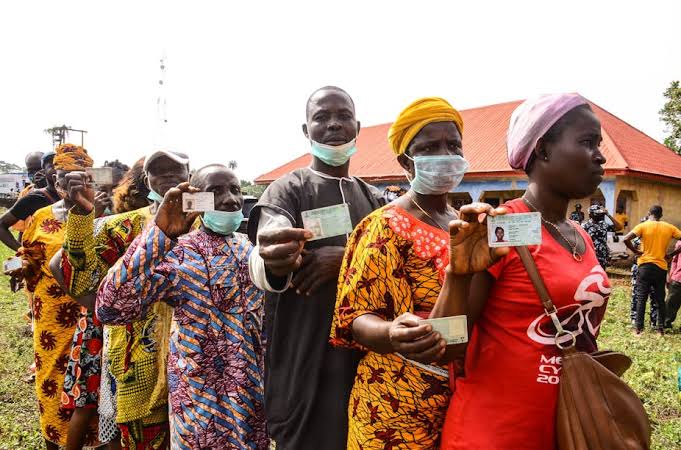
According to INEC, voter turnout in the country’s general elections has steadily declined since the 2007 general elections. A 57.54% voter turnout was recorded in 2007, 53.68% in 2011, 43.65% in 2015, 34.75% in 2019, and 26.72% in 2023. This was the lowest since the return to democracy in 1999.
With the ongoing defections in the country, voter apathy may be worse in the 2027 general elections.
The multiple-day election system is another instrument for influencing elections. Under the multiple-day election timetable regime, voters are swayed to queue behind the president-elect in subsequent elections. This bandwagon effect affects voter turnout.
Single-day elections will check all these. Many voters do not come out to vote after the first election, believing that the candidates of the party that wins the presidential election will automatically sweep the polls. This is of great concern.
Despite this, Nigeria persists with flawed practices, undermining democracy and governance. Poorly conducted elections and falling turnout have, as one pundit puts it, allowed “the worst of us to govern the best of us”.
Election costs are bloating in sequence. INEC received N60.5 billion for the 2007 general elections; N122.9 billion for the 2011 general elections; N189 billion for the 2019 general elections; and N313.4 billion to conduct the 2023 general elections. It is set to receive a higher allocation for the 2027 polls. Can we afford to sustain these avoidable costs in the face of a dwindling economy amid huge poverty levels staring the nation in the face?
Electoral cost and attendant human resources deployed for elections should be checked. The cost components can be subjected to a strict auditing even as the other vices that accompany multiple-day elections would be mitigated should we change the status quo.
We must embrace technology in our electoral process and should not be caught napping in the bug spreading through the globe.