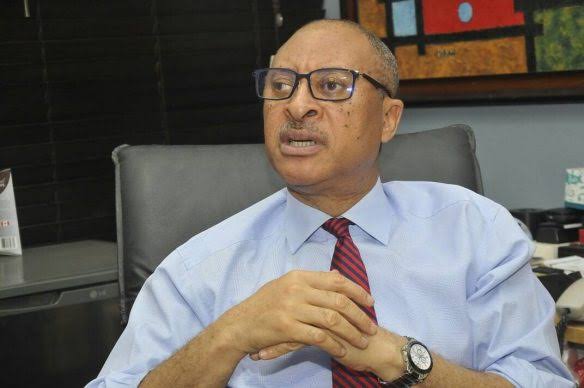
Political Economist, Professor Pat Utomi, said Nigeria should revalidate and probably scrap the Band A power supply strategy, insisting that it is “riping off” Nigerians.
The political economist also advised the National Assembly to focus more on legislations that would advance the lot of Nigerians more than oversight functions.
Utomi, who is also the Convener of The Big Tent, made the call at the group’s news conference on the “state of the nation” in Lagos, yesterday.
The News Agency of Nigeria, NAN, reports that in the context of electricity supply in Nigeria, Band A refers to a category of electricity customers who receive a minimum of 20 hours of power supply per day.
The categorisation is part of a service-based tariff structure implemented by the
Nigerian Electricity Regulatory Commission, NERC.
Customers in Band A pay the highest tariff for electricity due to the higher quality of service.
Utomi described the Band A category as “exploitative and lacking in economic sense.”
“A university professor in Band A for instance, spends 75 percent of his salary on electricity tariff alone.
“If not speedily revalidated, this tariff system will further impoverish Nigerians, especially the working class,” he said.
On legislations, he said while oversight remains a fundamental part of the functions of the National Assembly, it should not be prioritised over legislations.
According to him, the National Assembly ought to have finished with all electoral reforms for the nation long before now .
“We need pragmatic electoral reforms. It is sad that till this moment, the National Assembly has yet to finish all reforms on our elections.
“It will be a disservice to Nigeria if the nation goes into 2027 with a flawed constitution.
“In addition, there are areas like insecurity and issue amendments for rural policing that have become germane in the face of worsening crime situation in Nigeria.
“It is fundamental that Nigeria should decentralise its policing such that communities or councils can have their own armed police force as should states, in addition to the federal police force.
“This is the fastest way to combat insecurity.”
He noted that the state of security has largely impacted the welfare of the people, pointing out that those in rural areas are worse off for it.
“Majority of people in rural Nigeria live in chronic poverty.
” The severity of the conditions of insecurity has prevented peasant farmers in rural areas from farming and driven down their quality of life.
“We must move away from where we stand currently and Nigerians must rally to save the country.”
He noted that contrary to what many might think, Nigeria is not a failed state, but could be prevented from failing.
“The existential threats can be taken care of by all concerned. These threats demand that citizens rally to save the country.
“The National Assembly must also get to work on the land tenure system, incorporating the setting up of systems like land registries that give value to all land and make them easy to sell and buy and to ascribe value,” he said
He lamented that many farmers struggle to access financing due to insufficient collateral, alongside lack of production and processing infrastructure.
“These challenges are compounded by security concerns stemming from farmer-herder conflicts and climate change impacts.
“We propose that we look at several long term impact prediction that would not only ensure food security and production that drives growth, but also crack the mystery of capital challenge and massively grow entrepreneurship.
“Universities need to be brought into the agricultural extension services, the way land grant universities drove America’s agriculture revolution.”
He said political engagement with sponsors of terrorism and insurgency would also be required to supplement police and military action.
“A Forest Rangers scheme already proposed from the Federal Ministry of Agriculture under the watch of Chief Audu Ogbeh as Minister of Agriculture, could be justified if we do a cost-benefit analysis of the derivable growth.
“The urgency for dealing with this matter of insecurity cannot be overemphasised.
“Poverty makes deprived and vulnerable people easy recruits for those minded to politically or criminally upset the status quo.
“Fighting poverty with passion will, therefore, reduce insecurity,” he added.
Speaking on apathy towards elections, Utomi said many people are fed up with being used by some politicians, hence the need for political engagement that would create interest in the electoral system. NAN