…NNPC considers selling
refineries
… TotalEnergies begins production from two offshore Angola projects
By Charles Ebi
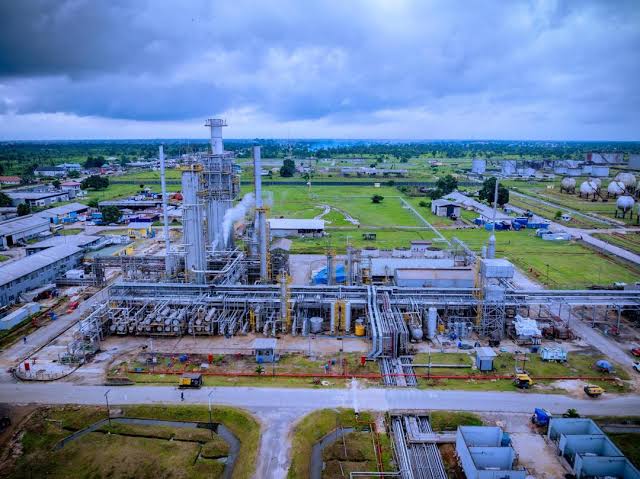
Exactly 60 days have passed since the Nigerian National Petroleum Company Limited, NNPCL, abruptly shut down the Port Harcourt refinery, barely six months after it resumed operations on November 26, 2024, following a $1.5 billion rehabilitation project.
What was initially described as a “scheduled 30-day maintenance” has become a protracted shutdown, fueling economic hardship, outrage from host communities, and raising allegations of fraud and mismanagement at the highest levels.
The refinery, which began rehabilitation in April 2021 by Italian’s Maire Tecnimont, had been celebrated as a symbol of Nigeria’s commitment to ending its dependence on imported petroleum products. But that hope now hangs by a thread.
Following seven rescheduled recommissioning dates between 2022 and 2024, the refinery achieved its first flare in December 2023, only to be shut down again after a fire incident. It was officially declared operational on November 26, 2024, by NNPC Ltd, marking the beginning of product loading, until operations halted once more on May 24, 2025.
The prolonged silence over the refinery’s operational status has sparked widespread concerns, especially among host communities and industry stakeholders, given that the project received a $1.5 billion rehabilitation investment. Allegations of fraud, missed deadlines, and mounting economic losses have since emerged, prompting legislative investigations and anti-corruption inquiries.
Leading the growing chorus of discontent are residents and small-scale petroleum marketers in Eleme and Okrika, two communities hosting the refinery complex.
Under the umbrella of the Eleme and Okrika Host Community Bulk Petroleum Retailers Association, the stakeholders are demanding immediate presidential intervention.
Speaking, Chairman of the Association and former Chairman of IPMAN in Rivers State, High Chief Sunny Nkpe, outlined three urgent requests, namely immediate release of funds to contractors, restart of production at the Old Port Harcourt Refinery, Area 5, by August, and a guaranteed crude oil supply to ensure sustainable operations.
He said, “We respectfully yet urgently call on President Bola Ahmed Tinubu to intervene in this matter. The delay may irreparably undermine his administration’s transformative agenda for Nigeria.
“This prolonged delay has had a devastating impact on the economy and business activities in and around the host communities. People are suffering, and jobs are disappearing. This cannot continue”.
In a dramatic turn, the House of Representatives Committee on Petroleum Resources (Downstream) has announced a full-blown probe into the refinery projects.
Committee Chairman, Hon. Ikenga Imo Ugochinyere, disclosed that the move follows numerous petitions alleging massive fraud, mismanagement, and diversion of funds.
“The goal is to uncover why, despite heavy financial investments, the refinery remains non-functional, shut down, and surrounded by confusion and controversy”, Ugochinyere stated.
He confirmed that the committee will also examine the $740 million disbursed for Kaduna refinery and $657 million for Warri refinery.
Ugochinyere emphasized that the refineries are public assets jointly owned by the federation, and the National Assembly has a duty to find out whether contractual obligations were met or breached.
Meanwhile, NNPC Ltd appears to be distancing itself from the long-promised refinery revolution. Speaking at the 9th OPEC International Seminar in Vienna, the Group CEO of NNPC Ltd, Bayo Ojulari, hinted that Nigeria may sell off its refineries as part of a broader strategic review.
Ojualri said, “We’re reviewing all our refinery strategies now. Sale is not out of the question. All the options are on the table”.
He admitted that despite large investments, “some of those technologies have not worked as we expected”, and blamed the setbacks on the old infrastructure and the complexities of refurbishing a neglected facility.
“When you’re refining a very old refinery that has been abandoned for some time, what we’re finding is that it’s becoming a little bit more complicated”, Ojulari said.
Adding another layer to the saga, the Economic and Financial Crimes Commission, EFCC, has reportedly launched a separate investigation into how $1.5 billion allocated to the Port Harcourt refinery was spent. The anti-graft agency is also examining the Kaduna and Warri refinery funds.
Sources suggest the EFCC is looking into irregular procurement processes, inflated contract costs, and diversion of rehabilitation funds.
For small-scale retailers and logistics operators who depend on the refinery, the shutdown has meant economic paralysis. Transportation costs have soared, and scarcity of refined products has returned contrary to government assurances.
“Before the refinery restarted, we used to queue for days to get products. We hoped those days were over”, lamented Dr. Joseph Obele, a petrol retailer in Eleme. “Now, we are back to square one, except this time, after spending billions of dollars”.
Political analysts say the lingering shutdown of the Port Harcourt refinery is a litmus test for President Tinubu’s energy reform promises.
“The refinery situation has become a symbol of public sector dysfunction”, said energy governance advocate and Executive Director of YEAC-Nigeria. “If the President fails to act decisively, it may reinforce public cynicism about his reforms”.
What was meant to be a national milestone, Nigeria finally refining its own petroleum products, now risks becoming an emblem of waste and broken promises.
With host communities agitating, lawmakers investigating, and the NNPC rethinking its strategy, the next few weeks could determine whether the $1.5 billion Port Harcourt refinery revival was a dream deferred, or a dream dead on arrival.
However, TotalEnergies has announced the start of production from the BEGONIA and CLOV Phase 3 offshore Angola projects, which together will add a total of 60,000 bpd of new production. The two subsea tie-back projects will deliver additional production leveraging available capacity on existing FPSOs, TotalEnergies stated, citing added benefits of low marginal costs and low carbon intensities.
TotalEnergies has begun production from its BEGONIA development, located in Block 17/06. BEGONIA is the first inter-block development in Angola, TotalEnergies said. Located 150 km off the Angolan coast, BEGONIA is a 30,000 bpd project consisting of five wells subsea tied back to the PAZFLOR FPSO.
TotalEnergies also announced the first oil from CLOV Phase 3 in Block 17, in agreement with ANPG and its partners Equinor (22,16%), ExxonMobil (19%), Azule Energy (15.84%) and Sonangol E&P (5%). Located 140 km from the Angolan coast, CLOV Phase 3 is a 30,000 bpd project consisting of four wells subsea tie-back to the CLOV FPSO.
“TotalEnergies, operator of Block 17 and 17/06, continues to actively deliver its low-cost and low-emissions developments to grow its upstream production by more than 3% in 2025″, stated Nicolas Terraz, E&P President at TotalEnergies. “With BEGONIA and CLOV Phase 3, we are leveraging available production capacity in existing FPSOs of Block 17 ,PAZFLOR and CLOV, while reducing costs and emissions”.
“These two first oils will help Angola maintain its production levels above 1 million bpd”, added Paulino Jerónimo, Chairman of the Board of Directors of ANPG. “BEGONIA is the first project between Blocks in Angola with a significant component of Local Content and CLOV 3 is a great achievement resulting from intense work between the concessionaire and the B17 contractor group, operated by TotalEnergies”.