…Says 2024 worst year ever
…NHRC underscores sacrifices, urges sustained action
By Anthony Ochela, Abuja
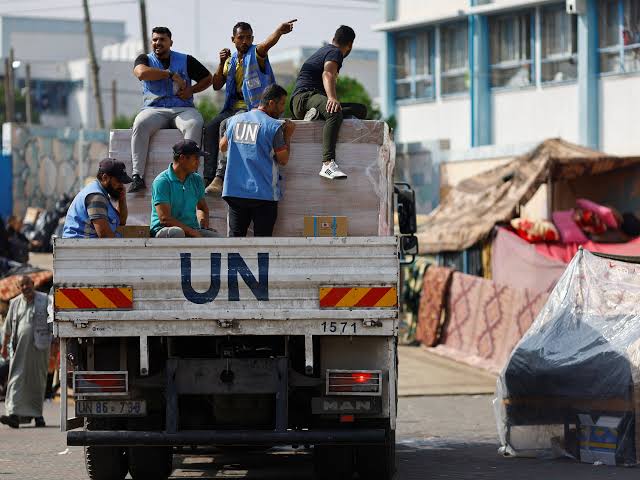
As world marks this years World Humanitarian Day, the United Nations Office for the Coordination of Humanitarian Affairs, OCHA, has said that “shocking new record of 383 aid workers” were killed in 2024.
Therefore, OCHA pointed out that this “must be a wake-up call to protect all civilians in conflict and crisis and call time on impunity.
Information posted on the OCHA website revealed that most of the aid workers killed were national staff serving their communities, and they were attacked in the line of duty or in their homes. An additional 308 aid workers were wounded, 125 kidnapped and 45 detained in the same year.
According to UN Under-Secretary-General for Humanitarian Affairs and Emergency Relief Coordinator, Tom Fletcher, “Even one attack against a humanitarian colleague is an attack on all of us and on the people we serve”.
Fletcher, said “Attacks on this scale, with zero accountability, are a shameful indictment of international inaction and apathy. As the humanitarian community, we demand again that those with power and influence act for humanity, protect civilians and aid workers and hold perpetrators to account”.
The UN agency further stated that the 31 per cent surge in aid worker deaths compared to 2023 was driven by the relentless conflicts in Gaza, where 181 humanitarian workers were killed, and in Sudan, where 60 lost their lives. Violence against aid workers increased in 21 countries in 2024 compared to the previous year, with State actors the most common perpetrators.
The first eight months of 2025 show no sign of a reversal of the disturbing trend: 265 aid workers have been killed as of 14 August, according to provisional data from the Aid Worker Security Database¹.
Attacks on humanitarian workers, assets and operations violate international humanitarian law and undermine the lifelines that sustain millions of people trapped in war and disaster zones.
OCHA recalled that the United Nations Security Council adopted resolution 2730 in May 2024, which reaffirmed the obligation on parties to conflict and Member States to protect humanitarian personnel and called for independent investigations into violations. But the lack of accountability remains pervasive.
On this World Humanitarian Day, aid workers and their supporters commemorate those killed and stand in solidarity with those serving people in need, demanding urgent protection for civilians and aid operations, OCHA stated.
Besides, As Nigeria joins the Global Community to commemorate the 2025 International Humanitarian Day, the National Human Rights Commission, NHRC, has payed tribute to the selfless dedication and sacrifices of humanitarian workers worldwide.
In a statement to commemorate the day in Abuja, yesday, Executive Secretary of the Commission, Dr. Tony Ojukwu ,SAN, said humanitarian workers are heroes who risk their lives to provide critical assistance to vulnerable populations, including Internally Displaced Persons, IDPs, refugees, persons with disabilities, and other marginalised groups and population of concern.
“As we commemorate this day, we recognise the tireless efforts of humanitarian workers who strive to alleviate suffering, protect human dignity, and promote resilience in the face of crises. Their work is a testament to the power of compassion, empathy, and solidarity in the protection of civilians”, he noted.
He stated that despite their courageous efforts, many vulnerable populations continue to face significant challenges in accessing essential services, protection, and support.
He emphasised that it is imperative that stakeholders – governments, civil society organisations, international partners, and individuals – come together to strengthen humanitarian work and ensure that those in need receive the help they deserve.
The chief human rights officer of Nigeria also said that the NHRC in collaboration with UNHCR is currently undertaking a critical project to document reports of human rights situations affecting vulnerable populations like the forcibly displaced persons across the six geopolitical zones in Nigeria.
This initiative according to him aims to provide a comprehensive understanding of the challenges faced by these groups and inform evidence-based interventions to address their needs. This will be followed by a quarterly Humanitarian Dashboard on humanitarian situation in the country
The executive secretary used this medium to call on all stakeholders to prioritize the protection and dignity of vulnerable populations, enhance collaboration and coordination to address humanitarian challenges, increase support for humanitarian workers and initiatives, as well as promote inclusive and sustainable humanitarian responses.
He used this opportunity to thank the humanitarian community in Nigeria, the UN system especially the UNHCR, the Red Cross, ICRC and host of international agencies, CSOs who continue to support the protection of civilians and other vulnerable population in need.
In the statement issued by Fatimah Agwai Mohammed, the director of Corporate Affairs and External Linkages, Ojukwu noted that the United Nations has set aside 19th of August, every year for the commemoration of International Humanitarian Day.