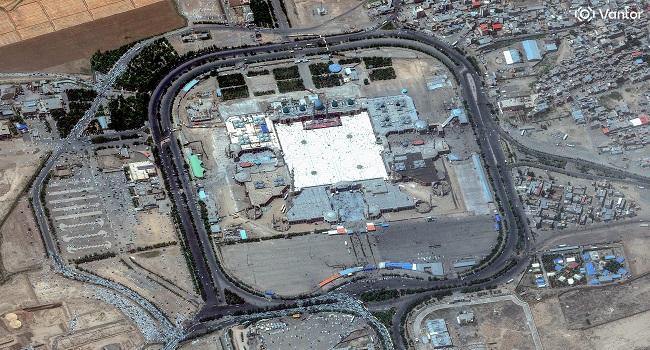
The United States military on Tuesday carried out what it described as “powerful” airstrikes against Iranian targets in response to attacks on three commercial vessels transiting the Strait of Hormuz.
The operation was confirmed by the United States Central Command (CENTCOM), which said the strikes were aimed at holding Iran accountable for actions it described as dangerous violations of an existing ceasefire arrangement.
In a statement posted on its official X account, CENTCOM said the military action followed attacks allegedly carried out by Iranian forces against commercial shipping operating in one of the world’s busiest maritime routes.
“The US strikes are in response to Iranian attacks on three commercial vessels that were transiting the Strait of Hormuz” and will “impose heavy costs for targeting and attacking commercial shipping,” the statement read.
The US military further accused Iran of escalating tensions despite an existing ceasefire, describing the alleged attacks as unjustified and a threat to international maritime security.
“Iran’s demonstrated aggression was unwarranted, dangerous, and a clear violation of the ceasefire,” CENTCOM added.
The Strait of Hormuz remains one of the world’s most strategically important waterways, serving as a major transit route for global oil and commercial shipping.
Any disruption in the area often raises concerns over international trade, energy supplies and regional security.
According to US officials, the latest military operation was intended to deter further attacks on commercial vessels and reinforce the protection of maritime traffic in the Gulf region.
The strikes also mark the first direct US military action against Iran since a series of air raids conducted late last month.
Washington had similarly justified those earlier operations as retaliation for attacks on commercial shipping allegedly linked to Iranian forces.
Although a ceasefire reportedly came into effect on April 8, security concerns have continued to persist across the Gulf region.
Despite the agreement, sporadic incidents involving commercial vessels, military operations and retaliatory actions have continued to fuel tensions between both countries.
The renewed exchange of hostilities highlights the fragile nature of the ceasefire and raises fresh concerns about stability in the Middle East.
As of the time of filing this report, Iranian authorities had not issued an official response to the latest US airstrikes.
The extent of damage caused by the strikes and any possible casualties were also not immediately disclosed.