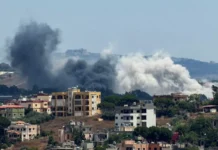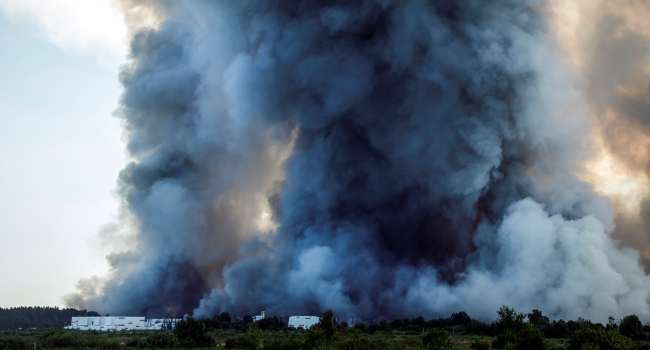
A wave of Ukrainian drone attacks struck key logistics facilities in Russia overnight on Saturday, killing at least eight people and triggering massive fires at warehouses in the Moscow and Tambov regions.
The strikes, carried out using explosive-laden drones, ignited large infernos that sent thick black smoke into the sky for several hours and marked one of Kyiv’s latest long-range operations deep inside Russian territory.
Ukraine has significantly intensified drone attacks on Russian territory in recent months, describing the campaign as retaliation for more than four years of Russian bombardments against Ukrainian cities and infrastructure.
Kyiv has labelled the strategy “long-range sanctions,” with many of its operations targeting Russia’s energy sector and oil infrastructure, contributing to an ongoing fuel crisis in one of the world’s largest oil-producing nations.
The latest attacks focused on two major logistics centres belonging to Wildberries, Russia’s largest e-commerce company.
Authorities confirmed that eight workers were killed during the overnight strikes, most of them employees on the night shift.
Wildberries Chief Executive Officer Tatiana Kim described the incident as devastating.
“A terrible night, terrible events for our company and for our country. It is a pain that cannot be put into words,” she said.
According to Tambov regional governor Evgeny Pervyshov, seven employees lost their lives after drones struck one of the company’s logistics centres in the region, located roughly 500 kilometres southeast of Moscow.
In the Moscow region, Governor Andrei Vorobyov confirmed that another victim later died in hospital after sustaining injuries during a separate strike that also targeted a Wildberries warehouse.
Authorities said firefighters continued battling the blaze in Elektrostal, near Moscow, hours after the attack, while emergency services successfully extinguished the fire at the Tambov facility.
An empty kindergarten in Elektrostal was also reportedly damaged during the strikes, although no casualties were recorded there.
Officials disclosed that nearly 60 people sustained injuries during the attacks and were transported to hospitals for treatment.
Moscow Mayor Sergei Sobyanin said more than 370 Ukrainian drones were launched toward the Moscow region overnight.
He added that Russian air defence systems had intercepted nearly 1,900 drones heading toward Moscow between July 11 and July 18.
Ukraine Defends Campaign
Ukrainian President Volodymyr Zelensky defended the attacks, saying they were carried out in response to continued Russian strikes on civilian infrastructure across Ukraine.
“In response to Russian strikes on our civilian infrastructure and on our cities and communities, two major logistics facilities were hit — in the Moscow and Tambov regions,” Zelensky wrote on X.
He further alleged that the warehouses were being used to store sanctioned components required for the production of drones and navigation equipment.
Meanwhile, Russia continued its own offensive against Ukraine.
Authorities in Ukraine reported that Russian strikes killed one person and injured 13 others in the Black Sea port city of Odesa, where infrastructure and port facilities came under renewed bombardment.
The continued attacks have placed increasing pressure on Russia’s energy sector.
Fuel shortages have reportedly affected nearly 90 per cent of Russian regions since June, with long queues at petrol stations becoming common across the country.
The shortages represent an unusual challenge for Russia, where fuel has historically remained plentiful and considerably cheaper than in many European countries.
Despite the growing exchange of long-range strikes, fighting along the front lines has slowed considerably, with Ukrainian forces appearing to have halted Russia’s latest summer offensive.
Diplomatic efforts to negotiate an end to the conflict have also stalled after the United States shifted much of its attention to the ongoing conflict involving Iran.