

Joel Ajayi
As Nigeria confronts complex challenges ranging from insecurity and economic inequality to youth unemployment and political tension, experts and policymakers are increasingly identifying one critical factor that could shape the country’s future—social cohesion.
Beyond economic reforms and policy adjustments, analysts argue that strengthening trust among citizens, and between citizens and government, may prove decisive for Nigeria’s long-term stability and development.
Across the country, discussions around unity, identity, and shared national values have moved beyond academic circles into mainstream policy conversations. A growing body of research, including findings from the Africa Polling Institute (API), suggests that a nation’s internal bonds significantly influence its ability to grow, attract investment, and sustain peace.
Social cohesion refers to the willingness of individuals and groups within a society to cooperate, trust one another, and work collectively toward shared goals.
In Nigeria, this means strengthening national identity, improving trust in public institutions, encouraging civic participation, and ensuring equitable access to opportunities.
Development experts maintain that sustainable progress cannot be achieved without these foundations. Where trust is weak, policies often fail, public institutions lose credibility, and communities become fragmented along ethnic, religious, and political lines.
Analysts believe many of Nigeria’s pressing challenges—including insecurity, poverty, and uneven economic growth—are not solely economic or structural problems but also symptoms of weakened social cohesion.
At the centre of social cohesion lies trust. Experts envision a future Nigeria where citizens have stronger confidence in government institutions, while governments increasingly rely on citizen engagement to shape policy decisions.
When trust exists, policies are more likely to succeed because citizens willingly participate in implementation. However, when trust breaks down, even well-designed policies can face resistance, apathy, or outright rejection.
Rebuilding this trust, experts say, requires transparency, accountability, and consistent communication between leaders and citizens. It also demands inclusive governance that ensures all regions and demographic groups feel represented in decision-making.
The media is expected to play a defining role in shaping Nigeria’s social cohesion. Journalists and content creators are no longer seen merely as reporters of events but as powerful influencers of national perception.
Experts warn that journalism can either strengthen unity or deepen division depending on how stories are framed. Balanced reporting, fact-checking, and avoiding ethnic or religious stereotyping remain essential to promoting harmony in a diverse society like Nigeria.
Future media development initiatives are expected to focus more on data-driven journalism, conflict-sensitive reporting, and storytelling that emphasizes shared national identity over division.
Capacity-building programmes for journalists are also expected to expand, equipping media professionals with the skills to report sensitive national issues in ways that foster understanding rather than conflict.
Education is another vital pillar of social cohesion. Experts believe schools and universities must play stronger roles in teaching civic responsibility, national history, and values that promote unity.
They argue that when young Nigerians learn to appreciate diversity and understand the importance of cooperation early in life, they are more likely to contribute positively to society as adults.
Civic education is also expected to extend beyond classrooms through community programmes, youth engagement platforms, and digital learning tools that reinforce tolerance, inclusion, and active citizenship.
For Nigeria, future growth will depend significantly on how fairly economic opportunities are distributed across regions and social groups. Persistent inequality, if unaddressed, could further weaken national unity and slow development.
However, experts caution that technology can either unite or divide. While digital platforms can enhance participation and transparency, they can also spread misinformation and deepen social tensions when poorly managed.
The challenge, therefore, lies in harnessing technology as a tool for inclusion while developing systems that counter misinformation and encourage responsible digital engagement.
At the heart of the social cohesion agenda are ordinary citizens. Analysts insist that national unity cannot be imposed from above—it must be built through daily interactions, shared values, and active participation.
Citizens are encouraged to engage in community development, participate in governance, and contribute ideas for solving local and national challenges.
Future governance models are expected to place greater emphasis on citizen feedback, participatory policymaking, and grassroots involvement in development planning.
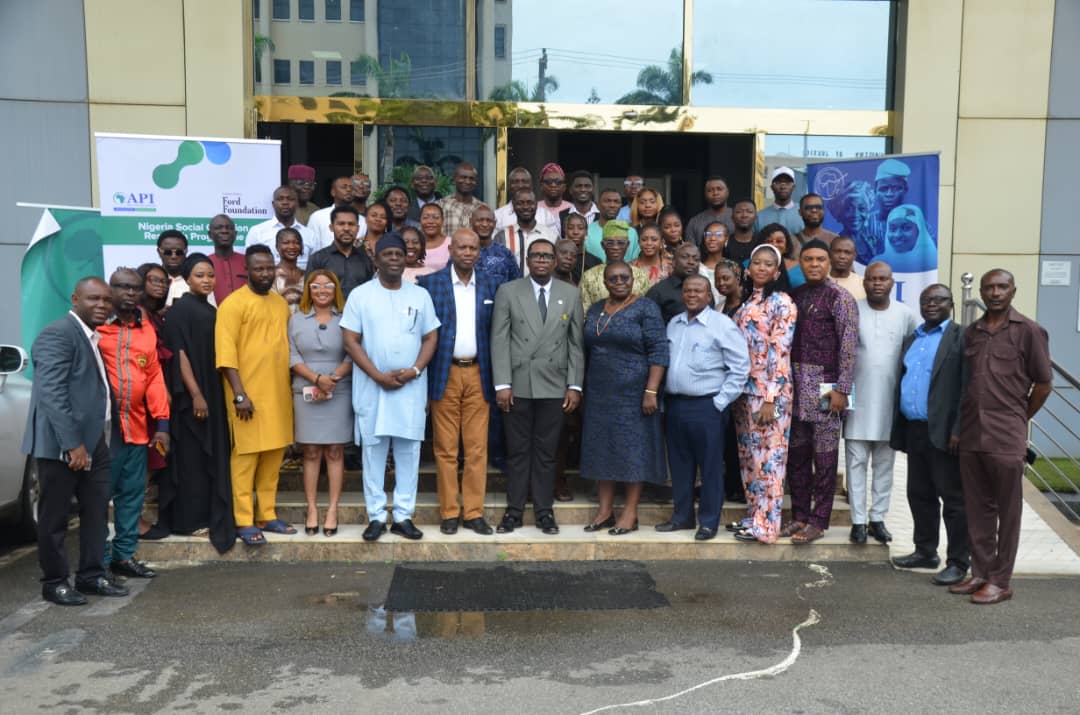
Based on this needs Africa Polling Institute API put in place 2 days workshop for Journalists, storytellers, Bloggers Content Creators amongst other to chat a way forward on issue of Social Cohesion in Nigeria.
Speaking at a capacity-building workshop in Abuja for journalists, communication professionals, researchers, policy experts, and academics, Executive Director of the Africa Polling Institute, Prof. Bell Ihua, stressed the importance of strengthening social cohesion to improve governance outcomes.
According to Prof. Ihua, this approach would not only improve governance but also encourage constructive, solution-driven storytelling within the media landscape.
He noted that many citizens increasingly feel the social contract between government and the people is weakening, leading to declining trust in public institutions.
Prof. Ihua emphasized that socially cohesive reporting can help rebuild public confidence while fostering better understanding between government and citizens.
Also speaking, Professor of Journalism and Media Studies at Veritas University, Dr. Obiora Chukwumba, presented a paper titled “Required Newsroom Responses to Social Cohesion Gaps in Nigeria.”
During his presentation, he highlighted what he described as uncomfortable truths about the state of the nation and the media’s role within it.
Dr. Chukwumba warned that Nigeria may not be as resilient as many assume and argued that the media’s watchdog role is increasingly under pressure.
He also raised concerns over narratives promoting the fragmentation of African states, noting that such issues deserve greater media attention.
The media scholar further pointed to a growing disconnect between storytelling and the realities faced by citizens, urging journalists to ensure their reporting reflects genuine public concerns.
Researcher and Founder of Scientia Partners Innovation Hub, Dr. Helen Emore, also spoke on navigating journalism, diversity, and pluralism in increasingly complex information environments.
Dr. Emore stressed that responsible journalism must remain rooted in ethics and professional standards. According to her, quality journalism requires accuracy, concise storytelling, fact verification, accountability, and readiness to correct errors.
She noted that journalism remains essential in informing citizens, stimulating public debate, building communities, and holding power accountable.
The workshop concluded with member board of API, eloquent Facilitator, certified Trainner Dr. Olusoji Adeniyi calling on media practitioners to intensify efforts against misinformation, disinformation, stereotypes, and harmful narratives that undermine social cohesion.
Drawing lessons from Indonesia, Adeniyi stressed the importance of vocational education, skills acquisition and local language instruction in promoting inclusion and national development.
He said equipping young people with practical skills would provide them with opportunities, reduce social exclusion and strengthen their sense of belonging.
Participants agreed that fact-checking and verification do not weaken journalism; rather, they strengthen credibility, professionalism, and public trust.
The training forms part of ongoing efforts by the Africa Polling Institute and its partners to strengthen the media’s contribution to building a more inclusive, informed, and socially cohesive Nigeria.
The consensus among policymakers, media practitioners, and development experts is clear: building social cohesion is no longer optional—it is essential to Nigeria’s survival, stability, and future growth.