

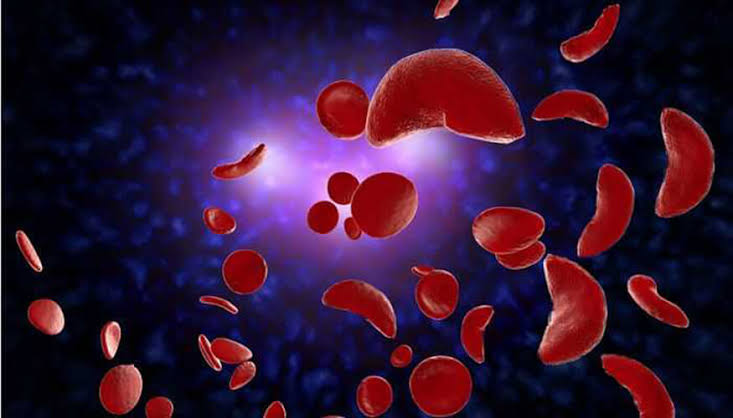
Sickle Cell Disease, SCD, has become scourge bedeviling the global community despite efforts to draw awareness on how to mitigate its devastating effects both socially and economically. It takes a deriding toll on families and in effect on communities.
Back here in Nigeria, it is estimated that no fewer than 150,000 children are born annually into pain, uncertainty, and a life of distorted health occasioned by SCD.
SCD is rated as the most common genetic disorder in Nigeria and quite preventable.
Recently, Nigeria as well as the global community marked World Sickle Cell Day, on June 19 with a view to raising awareness about sickle cell disease, in addition, advocating for improved patient care, and promoting research.
Besides, the annual event serves as a platform for patients, caregivers, researchers, and healthcare professionals to collaborate and share advancements in managing the disease. The day also emphasises the need for policy reforms to prioritise sickle cell disease on national health agendas across countries.
Interestingly, the day has attracted global attention and defines the enormity of the crises.
However, recent figures suggest that we are confronting difficult times with SCD as ine in four Nigerian adults carries the sickle cell gene.
Approximately 8% of infant deaths are linked to SCD complications.
Association of Medical Laboratory Scientists of Nigeria, AMLSN, was quoted as emphasizing that many genotype tests conducted in the country — including those for couples preparing for marriage are sometimes wrong.
It is obvious that the causes are avoidable and these include fake reagents, defective equipment, unqualified personnel, and a lack of regulatory enforcement. Couples are believed to be misinformed about their genetic compatibility.
In this vein, there is the need for effective test for would-be couples who would rather avoid the chances of breeding children with SCD.
There is every cause to avoid the culture of complacence where institutions and health professionals become negligent in the cause of this whole concern.
It is remarkable that the Federal Ministry of Health has reiterated its commitment to improving awareness, early diagnosis, and access to care. It is time for the ministry to move beyond awareness to action — including the aggressive certification and supervision of all genotype-testing laboratories.
Therefore, we urge the Medical Laboratory Science Council of Nigeria, MLSCN, to respond in line with its mandate by subjecting all testing equipment and labs to proper scrutiny.
There should be efforts at enhancing efforts at local research on how to deal with SCD. Given our enormous capacity with such prestigious institutions as the Nigerian Institute of Medical Research, NIMR, and the Nigerian Institute of Pharmaceutical Research and Development, NIPRD, there is no reason we should not have made headway in sickle cell research.
SCD like other deadly diseases should be brought to the front burner of national health matters and indeed should be treated as emergency given the tremendous toll it is taking on our society.
Beyond the federal and state governments who should be in the forefront of fight against SCD, faith-based organisations must rise to the occasion by educating their adherents on the steps that are imperative to mitigate the effects of SCD even as it would not be unhealthy to take awareness campaign to schools as we see it done with Tuberculosis, HIV/AIDS and other concerns of affecting public health.
We must be deliberate in our actions against the disease as it is preventable.