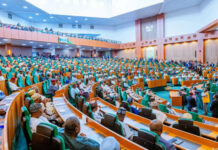
The Senate on Tuesday passed a bill seeking to rename the National Insurance Commission (NAICOM) as the Insurance Regulatory Commission (IRC), marking a significant reform of Nigeria’s insurance regulatory framework.
Lawmakers explained that the change became necessary because the existing name no longer reflects the evolving structure of the insurance industry and has continued to create confusion regarding the commission’s role.
The bill also provides legal protection for the Commission and its officials against adverse claims arising from the lawful execution of their statutory duties.
The legislation, titled the Insurance Regulatory Commission (Establishment) Act, was passed following the presentation and consideration of the report of the Senate Committee on Banking, Insurance and Other Financial Institutions on the National Insurance Regulatory Commission (Repeal and Re-Enactment) Bill, 2026 (SB. 394).
The report was presented by the Chairman of the committee, Senator Adetokunbo Abiru (APC, Lagos East).
Abiru moved the motion for the Senate to receive and consider the committee’s report.
“That the Senate do Receive and Consider the Report of the Committee on Banking, Insurance and Other Financial Institutions on the National Insurance Regulatory Commission (Repeal & Enactment) Bill, 2026 (SB. 394),” he said.
The bill was sponsored by Senator Abiru alongside other members of the Senate Committee on Banking, Insurance and Other Financial Institutions.
Following its passage, the National Insurance Commission officially transitions to the Insurance Regulatory Commission after lawmakers adopted the bill at third reading.
While presenting the committee’s report, Senator Abiru traced the history of the commission, noting that it was established through the National Insurance Commission Decree of 1997 to regulate insurance companies, brokers and loss adjusters while ensuring compliance with industry standards.
According to him, the Commission has over the years played a central role in protecting policyholders, monitoring the financial health of insurance operators and promoting the development of Nigeria’s insurance industry.
“Established by the National Insurance Commission Decree of 1997, the National Insurance Commission was empowered to regulate insurance companies, brokers, and loss adjusters, ensuring they operate within set guidelines. It also mandates the Commission to protect policyholders, monitor financial solvency, and enforce industry-wide compliance. Over the years, NAICOM has been instrumental in promoting compliance, enforcing standards, and fostering the development of the insurance market,” Abiru said.
He, however, observed that the enabling legislation has become outdated and no longer aligns with current realities in the financial sector.
According to him, the insurance industry has evolved significantly over the years, exposing several gaps in the existing legal framework.
“However, despite its significant contributions, the enabling law has become obsolete, failing to align with current realities and global best practices, and unable to keep pace with the evolving nature of the insurance industry, exposing numerous gaps in the law, necessitating urgent amendments,” he added.
Explaining the objectives of the new legislation, Abiru said the bill seeks to strengthen the operational independence of the Commission while expanding its regulatory powers.
He noted that the proposed law would empower the Commission to take independent regulatory decisions without undue external interference.
“The current National Insurance Commission Act 1997 is outdated and does not adequately address the emerging economic growth, needs, and development of the insurance business.
“The Bill seeks to establish the independence of the Commission and strengthen its regulatory powers, including the ability to make decisions without undue influence,” he stated.
He further explained that the legislation would also enhance collaboration between Nigeria’s insurance regulator and both domestic and international regulatory bodies.
According to him, the Commission would have greater authority to exchange information, issue regulations, guidelines, standards and directives on insurance matters, while also possessing stronger intervention powers to address financially distressed insurance companies.
“The Bill also grants the Commission enhanced powers to exchange information and collaborate with domestic and international regulatory and supervisory authorities, issue regulations, guidelines, standards, and directives to relevant government institutions and stakeholders on insurance-related matters, and exercise strengthened resolution and intervention powers to address financially distressed insurers, protect policyholders, preserve financial stability, and facilitate the orderly resolution of failing insurance institutions in accordance with the provisions of the Bill,” Abiru said.
The senator also noted that the legislation introduces stricter qualifications for members of the Commission’s governing board to ensure effective regulation of the insurance industry.
He explained that only individuals with relevant expertise in insurance, finance, corporate governance, law and risk management would qualify for appointment into the governing board.
“The National Insurance Commission (NAICOM) plays a critical role in regulating and developing Nigeria’s insurance sector, ensuring financial stability, consumer protection, and industry growth. To effectively achieve these objectives, it is essential that its Governing Board comprises individuals with the requisite expertise in insurance, risk management, finance, law, and corporate governance.
“The bill introduces clear requirements for the expertise and suitability of board members that will ensure that only competent professionals with relevant experience and integrity are appointed to guide the commission’s policies and regulatory framework,” he added.