By Blessing Otobong-Gabriel
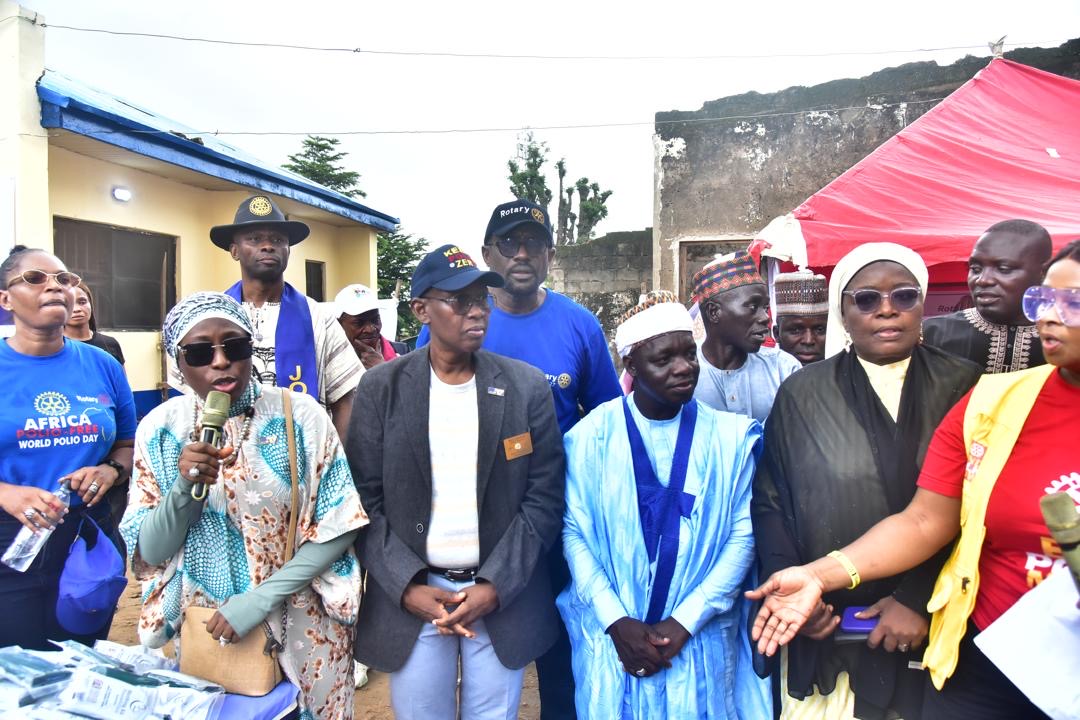
Rotary International District 9127 has strengthened efforts to tackle maternal and infant mortality in the Federal Capital Territory, FCT, with the launch of a comprehensive maternal and child health intervention at the Primary Healthcare Centre, Sheretti, Kabusa, where expectant mothers received birth kits, health education and support for safe deliveries.
The initiative, implemented by Rotary District 9127 in collaboration with the Rotary Club of Abuja (The Grandfather), is designed to improve access to quality maternal healthcare, encourage antenatal care attendance and promote routine childhood immunisation.
Speaking at the inauguration, the District Chair, Maternal and Child Health, and Zonal Coordinator, Zone 1, District 9127, Dr Samuel Usman, MON, said the intervention was aimed at helping women experience safer pregnancies and childbirth while ensuring newborns receive the care required for a healthy start in life.
According to him, the programme includes the distribution of birth kits, antenatal care awareness campaigns, the promotion of exclusive breastfeeding and advocacy for routine immunisation against vaccine-preventable diseases, including tuberculosis, measles, yellow fever and whooping cough.
“Our mission is to reduce maternal mortality by ensuring that every expectant mother has the support required for a safe delivery. We are equally committed to reducing infant mortality because when mothers survive childbirth, their babies have a far greater chance of surviving and thriving,” Dr Usman said.
He explained that Rotary had supported the Kabusa Primary Healthcare Centre for several years but decided to expand its intervention after identifying significant gaps in maternal and child healthcare services.
Dr Usman disclosed that the health centre recorded five deliveries within three days despite a shortage of essential birth kits, highlighting the urgent need for additional support.
“This project marks the beginning of a renewed commitment. We identified a shortage of essential delivery materials and responded because every safe birth matters. A journey of a thousand miles begins with a single step, and this is our contribution towards reducing preventable maternal and newborn deaths,” he added.
The medical practitioner identified inadequate awareness as one of the major contributors to maternal mortality, urging pregnant women to attend antenatal clinics regularly to enable health professionals detect and manage complications early.
District Governor, Rotary International District 9127, Rotary Year 2026/2027, Rotarian Sikiru Adetona Owonikoko, reaffirmed Rotary’s commitment to advancing maternal and child health, describing it as one of the organisation’s seven core areas of focus.
He said the initiative reflected Rotary’s dedication to promoting safe motherhood and healthy childhood through sustainable, community-based interventions.
Owonikoko commended the Rotary Club of Abuja for organising the programme under the leadership of its president, with the support of the District Chair for Maternal and Child Health, Dr Usman.
According to him, the outreach aligns with Rotary’s humanitarian mission of supporting vulnerable communities through impactful service projects.
“This programme is particularly significant because it falls within one of Rotary’s seven areas of focus—maternal and child health. We remain committed to improving the wellbeing of mothers and children and will continue to support initiatives that positively impact their lives,” he said.
The District Governor also expressed delight over the successful deliveries recorded during the outreach, noting that the wellbeing of both mothers and newborns remains a source of fulfilment for Rotarians.
“It is gratifying to witness the birth of healthy babies and to see both mothers and newborns doing well.
Celebrating safe deliveries and supporting families with gifts is always rewarding,” he added.
Also speaking, the Immediate Past District Polio Chair of Rotary International District 9127 and member of the Rotary Club of Abuja, Dr Kadijat Kuburat Yusuf, called for greater government investment and stronger collaboration with non-governmental organisations to address Nigeria’s persistently high maternal and neonatal mortality rates.
She described maternal and newborn deaths as a major public health challenge, stressing that the wellbeing of mothers and children remains a key indicator of a nation’s healthcare performance.
Dr Yusuf observed that, despite ongoing interventions, Nigeria continues to record unacceptably high maternal and neonatal mortality rates, underscoring the need for sustained action by government, development partners and civil society organisations.
“Maternal and neonatal health indices remain among the most important measures of a nation’s health.
Unfortunately, Nigeria’s rates are still too high, making it imperative for all stakeholders to intensify efforts to save more lives,” she said.
She identified poverty, inadequate education, weak healthcare infrastructure, poor access to health facilities and harmful socio-cultural practices as some of the major factors driving maternal mortality in the country.
According to her, financial hardship prevents many women from accessing quality healthcare, while cultural barriers often delay timely medical attention.
While acknowledging ongoing government efforts to strengthen healthcare delivery, she maintained that greater investment and targeted interventions are still required, particularly in underserved communities.
The Site Coordinator of Mothers to Models Nigeria at the Sheretti Primary Healthcare Centre, Queen Esther, commended the Rotary Club of Abuja for its continued support for maternal and child health, describing the intervention as a significant boost to healthcare delivery in the community.
She said the health facility, which previously experienced low patronage due to limited services and inadequate organisation, has witnessed a remarkable transformation following recent improvements, resulting in increased utilisation and better access to quality healthcare for women and children.