

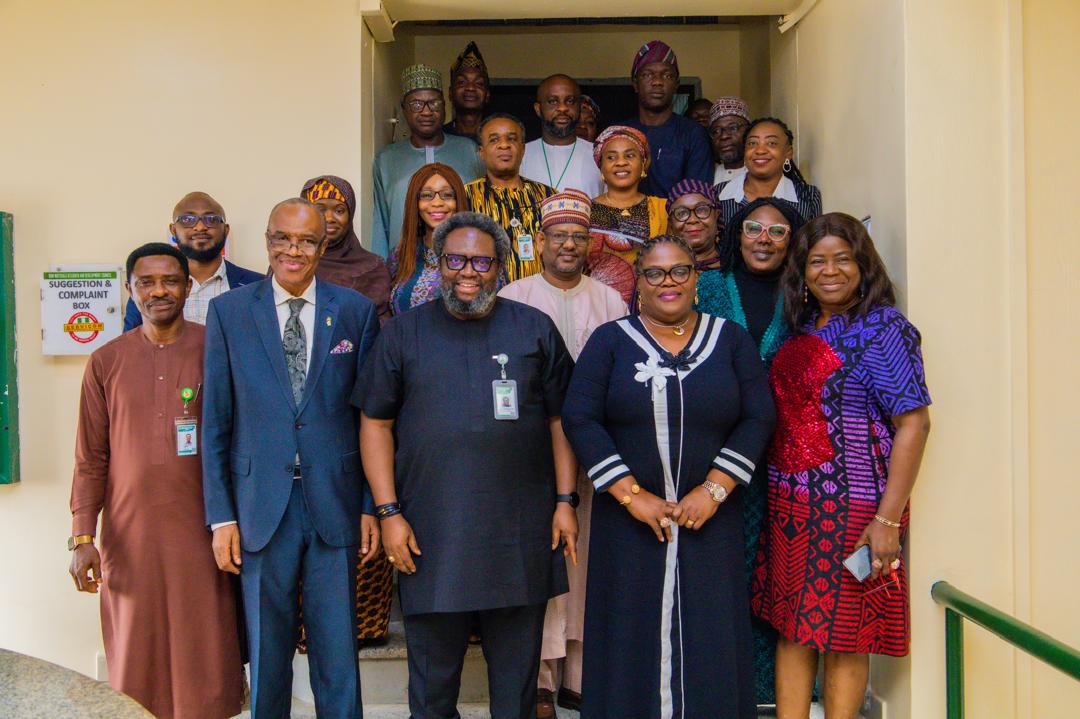
The Raw Materials Research and Development Council (RMRDC), in collaboration with Dipton Nigeria Ltd., convened a National Stakeholders’ Engagement Meeting on Aloe Vera Value Chain Development, at the RMRDC Corporate Headquarters in Abuja.
In statement by the Director Agriculture and Agro Allied Department Dr. Seb Ebierekwe
revealed that, the high-level engagement was designed to foster strategic collaboration among key stakeholders to unlock the vast economic and industrial potential of Aloe vera in Nigeria.
Recognized globally as a “wonder plant” for its extensive application in pharmaceuticals, cosmetics, food, and allied industries, Aloe vera presents a unique opportunity for Nigeria to advance its industrialization, import substitution, and economic diversification agenda.
The meeting brought together 48 participants, including representatives from Federal and State Ministries, Departments and Agencies (MDAs), regulatory agencies such as NAFDAC and SON, research institutes, academia, farmers’ associations, financial institutions, development partners, and the private sector.
Delivering the keynote address titled “Developing the Aloe Vera Value Chain: A Strategic Pathway to Nigeria’s Industrialisation and Economic Diversification”, the Director-General/CEO of RMRDC, Prof. Nnanyelugo Ike-Muonso, stressed that the engagement marked a practical and demand-driven step toward organizing Aloe vera cultivation into a viable national value chain. He noted that the global Aloe vera market, estimated between USD 2–5 billion, continues to grow, driven by demand across multiple industries. Despite Nigeria’s natural advantage, the country lags behind due to lack of data, certified seedlings, standardized processing systems, and weak institutional coordination.
Prof. Ike-Muonso highlighted the key challenges facing the Aloe vera sector in Nigeria, including inadequate technology, poor quality control, limited financing, and the absence of harmonized regulatory standards.
He outlined RMRDC’s strategic approach, which includes establishing a National Aloe Vera Working Group (NAWG), conducting baseline surveys, developing standards in collaboration with NAFDAC and SON, supporting certified nurseries, and linking SMEs with investors and markets.
He called for collaborative efforts among government agencies, investors, researchers, and regulators to develop a comprehensive Aloe Vera Value Chain Roadmap. He concluded by affirming that Aloe vera could become a model for indigenous raw materials development, creating jobs, reducing imports, boosting exports, and driving economic growth.
Earlier, in his welcome address, the Director, Agriculture and Agro-Allied Raw Materials Department, Dr. Sab Ebiriekwe emphasized the strategic importance of the event in repositioning Nigeria’s agro-allied raw materials sector for industrialization, job creation, and sustainable development. He highlighted Aloe vera’s immense global value and Nigeria’s underutilization of the crop despite its favourable climate and natural endowments.
He described the engagement as a crucial national dialogue to unite stakeholders around identifying gaps and opportunities, developing a roadmap for the Aloe vera value chain, and building a framework for sustainable collaboration and investment. Dr. Ebiriekwe also commended Dipton Nigeria Ltd., led by Mr. Ike Willie-Nwobu, for its role as the National Secretariat Partner in championing the initiative.
The Managing Director of Dipton Nigeria Ltd., Mr. Willie-Nwobu, expressed appreciation to the Director-General of RMRDC, Prof. Nnanyelugo Ike-Muonso, for his visionary leadership in advancing raw materials development in Nigeria.
He noted the absence of organized Aloe vera plantations, formal data, and effective information systems, and emphasized the need for structured development of the sector.
According to him, the engagement served as a platform to raise national awareness, mobilize stakeholders, and energize the Aloe vera ecosystem in Nigeria.
He affirmed Dipton’s commitment to inclusive sector development by working with universities, medical centers, farmers, retirees’ groups, and security institutions.
He also announced a partnership with Loharu Agro Farm of India to provide technical mentorship and guide local content development within the Aloe vera value chain.
Two technical papers were presented during the meeting: Aloe Vera as an Industrial Plant – Experience from the Loharu Agro Farm, India and Development of Aloe Vera as Industrial Raw Material for Economic Diversification and Sustainable Growth in Nigeria. These papers provided global insights and recommendations to inform Nigeria’s Aloe vera value chain strategy.
The meeting concluded with the drafting and adoption of a communiqué. Participants observed that Nigeria possesses favourable agro-ecological conditions for Aloe vera cultivation but lacks baseline data on hectares cultivated, farmer clusters, and processing capacity. It was noted that the sector remains largely informal, with limited extension services, quality control, and standardization. Participants emphasized the growing global demand for Aloe vera-based products and acknowledged Nigeria’s potential to become a key player in the market if competitiveness gaps are addressed.
The engagement ended with a shared commitment to establishing a multi-stakeholder task force to drive implementation of the Aloe vera development roadmap under RMRDC’s Raw Materials Development and Commercialization Framework.