· Funds embezzled through shoddy approvals
· Breakdown of fraudulent payments exposed
· Aniti-graft agencies await publication – Sources
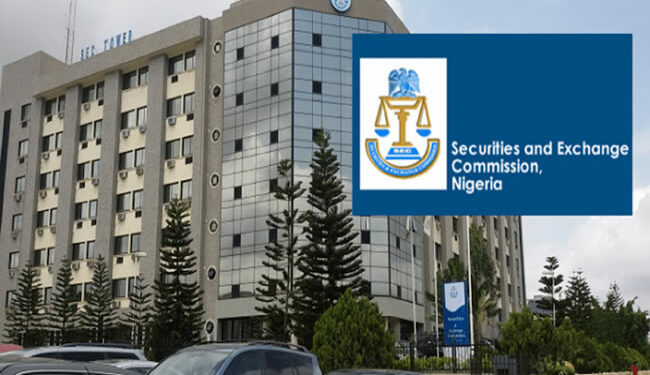
Established in 1979 to promote and facilitate the growth of equitable, effective and open financial markets in Nigeria, the 46-year-old Securities and Exchange Commission, SEC, is now enmeshed in allegations of fraud amounting to more than ₦32 billion, write JIBRIN NDANUSA and JULIET IBIMINA.
For decades, the Securities and Exchange Commission (SEC) has prided itself on its commitment to empowering capital market operators through a centralised hub of resources designed to streamline operations, enhance decision-making and drive market performance.
The Commission is charged with regulating and developing the capital market to ensure fairness, transparency and operational efficiency. Its responsibilities include investor protection, market registration and supervision. These functions encompass the registration of securities and market intermediaries, monitoring of trading activities, investigation of breaches, enforcement of regulatory rules and ensuring full disclosure in public offerings to protect investors from fraud and other abuses.
Given its extensive mandate — regulation, market development, investor protection, supervision, registration and enforcement — the Commission remains central not only to Nigeria’s capital market, but to the wider national economy.
“So for an organisation of that capacity to be involved in graft or financial impropriety does not speak well for the image of the country,” financial expert Julius Agoaza told this publication.
This is, however, far from the first time the Commission has faced allegations of corruption and financial misconduct.
In 2017, the then Director-General, Mr Mounir Gwarzo, and two senior officials – Mr Abdulsalam Naif Habu, Head of Media Division, and Mrs Anastasia Omozele Braimoh, Head of Legal Department – were suspended by the Minister of Finance, Mrs Kemi Adeosun, while the government investigated several allegations of financial impropriety.
Earlier, in 2012, the then Director-General, Arunma Oteh, was placed on compulsory leave to allow an unfettered investigation into an alleged misuse of funds. The SEC stated that Oteh was asked to step down to permit an independent probe into “the sources and uses of funds for the Project 50 event”, organised to mark 50 years of capital markets regulation in Nigeria.
Daisy Ekineh, Commissioner in charge of Market Operations, assumed office as Acting Director-General, but within four days she too had been removed, and the entire board was effectively dissolved. According to local media reports, the then Minister of Finance, Ngozi Okonjo-Iweala, announced that the government would not extend the board’s tenure.
The SEC’s Director of Administration, Ibrahim Bolaji Bello, subsequently took charge, pledging to “forget about the past” and work swiftly to restore investor confidence. Yet, on 18 July 2012, Oteh was recalled following an independent investigation by PricewaterhouseCoopers, which cleared her of financial impropriety. She went on to complete her five-year tenure in January 2015. Ultimately, both Gwarzo and Oteh were exonerated, the former by the courts and the latter by the investigative panel.
SEC Silent on Fresh Allegations
Following fresh allegations of financial irregularities at the Commission, AljazirahNigeria sought the response of the current Director-General, Emomotimi Agama. In a letter dated 16 September 2025, the newspaper requested clarification on allegations of financial misconduct, fund diversion and corrupt practices. Specifically, the Commission was asked to provide:
- Evidence of approvals from the appropriate authorities for the payments under review.
- A list of beneficiaries of the payments made, including allowances, staff grants and gratuities.
- A list of staff allegedly double-paid for health allowances despite NHIS remittances already made.
- Any counter-report to the Auditor-General’s findings on the alleged irregularities.
- A list of beneficiaries of the gratuity payments and evidence of the authority that approved them.
Despite the inquiry being made in line with standard ethical practice for investigative journalism, the SEC failed to respond. The letter was duly received and stamped by the DG’s office on 17 September 17. A reminder was issued about a month later on October 15 and was again received and acknowledged on October 16 — yet, like the first letter, it went unanswered.
Speaking to AljazirahNigeria, an EFCC source who spoke under conditions of anonymity said, “while the Commission has not gotten any petition to the effect of financial impropriety against the SEC, but as an anti-graft agency, it would wait to see the publication from Aljazirah, plus any other petition to launch an investigation into the allegations. Similarly, a source at the ICPC also said the organisation usually takes note of detailed media publications exposing financial impropriety against institutions of government and would not wait to commence thorough investigation when and if it sees weight in any such publication.
For public affairs analyst Shuna Fakum, she said: “Sometimes I wonder what stock Nigerian public office holders are made of, because I have never been able to fathom their level of impunity. But I think it all boils down to the fact that, although we have laws, the lack of proper enforcement is what emboldens them. Otherwise, how can anyone confidently commit financial impropriety amounting to several billions in a single accounting year unless they believe they can get away with it? And you cannot blame them entirely, because every day many commit these crimes and yet only a handful are brought to justice.”
Similarly, Ndubisi Nwankwo told this newspaper: “I blame the police and other law enforcement and anti-graft bodies like the Economic and Financial Crimes Commission, EFCC, and the Independent Corrupt Practices and Other Related Offences Commission, ICPC, for the blatant abuse of office, from influencing contract awards to non-declaration of assets and outright graft.
“If these agencies were truly up to their task, many would think twice before committing such offences. But sometimes government itself contributes to the laxity by protecting its sacred cows. Until government shows seriousness, these agencies will remain ineffective, and without effective oversight, public office holders will continue to commit fraud.”
Even though the list of alleged financial irregularities at the SEC is extensive, AljazirahNigeria will, on Monday, December 1, publish the specific details of the over N32bn squandered and the breakdown of the fraudulent payments for which the Commission failed to provide answers.