- …Acquired before his conviction
- …Houses bought with cash
- …Properties held by former wife, daughter, own American trust
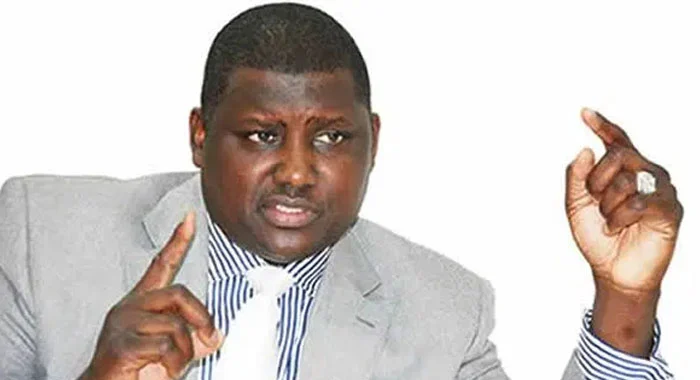
After his conviction in November 2021 and eventual release in February last year for “good conduct and industry,” Abdulrasheed Maina who has remained in relative oblivion is in the news again, but not for the good reasons, DAUDA ISMAIL writes.
Abdulrasheed Maina was entrusted with safeguarding the retirement savings of
millions of Nigerians. Instead, a court later found that he laundered some of the
very funds he was appointed to protect. Fresh investigations now show that while
serving as chairman of the Presidential Task Force on Pension Reforms, Maina
acquired three properties in the United States and later purchased a luxury
apartment in Dubai, assets that appear to have escaped Nigeria’s forfeiture process.
Maina became the central figure in one of Nigeria’s most notorious corruption
scandals. In 2021, he was convicted of money laundering and sentenced to a
maximum of eight years’ imprisonment. He was released early in February 2025
on grounds of good conduct and continues to insist on his innocence. He is also
standing trial in a separate case in which prosecutors allege he dishonestly obtained
about ₦700 million from pension funds through sham biometric enrolment
contracts and inflated allowances.
Following his conviction, the Federal Government moved to recover funds
allegedly diverted during Maina’s tenure between 2010 and 2013. A court ordered
him to repay ₦2.1 billion (about $5 million at the time), and at least 20 properties
across Nigeria were seized and later forfeited.
However, according to a report by the Organised Crime and Corruption Reporting
Project, OCCRP, investigators’ records suggest that four foreign properties, three
in the United States and one in Dubai, were never targeted. During Maina’s trial, a
detective testified that he had acquired assets abroad, but no details were made
public and there is no evidence that the Economic and Financial Crimes
Commission, EFCC, sought their recovery.
Property documents show that all three US homes were bought outright, without
mortgages, during the period when prosecutors allege Maina was laundering public
funds. One is now held by his former wife, Laila Abdulrasheed Maina. Two others
are owned by an American trust he created for his children. A two-bedroom hotel
apartment in Dubai, bought shortly after his removal from office, is currently
registered in his daughter’s name.
Contacted by telephone, EFCC spokesperson Dele Oyewale declined to comment
on the specifics but said the commission would pursue overseas assets if credible
information became available. “If we have the information in that regard, we
would want to pursue it,” he said.
Under the terms of a 2022 divorce settlement, a US court awarded Laila possession
of one of the American homes, a property in Frankfort, Kentucky, bought by
Maina in August 2010 for $215,000.
According to the indictment in his ongoing criminal case, Maina had received the
equivalent of about $1.7 million the month before that purchase, allegedly from
two sham biometric enrolment contracts. Prosecutors further allege that between
July and December 2011, he and a co-conspirator received nearly $978,000 from
another fraudulent contract of the same nature.
In August 2011, a company linked to Maina, VIU Investment LLC, acquired two
more homes in Kentucky for a combined $415,000. Deeds show that all three
properties were bought in cash.
In January 2013, Maina transferred the two homes from VIU Investment LLC to
himself and then to the Abdulrasheed Maina Children’s Trust. It is unclear whether
the trust’s structure or beneficiaries have since changed.
Three months after his removal from office, in June 2013, Maina purchased a two-
bedroom hotel apartment in Dubai for nearly $670,000. The property is now
registered in his daughter’s name. There is no indication that Nigerian authorities
sought assistance from the United Arab Emirates to trace or recover the asset.
Disputed ownership claims
Maina’s former wife lived with him in Dubai and the United States until his arrest
in 2019. When she filed for divorce in 2021, she told a US family court that she
was unemployed. Earlier, however, she had claimed in Nigerian proceedings that
she was the rightful owner of some properties authorities alleged were bought with
pension funds.
In a 2019 affidavit, she said she had purchased Nigerian properties with proceeds
from exporting African fabrics to the United States, but produced no documentary
evidence. The EFCC countered that she had never conducted such business. In
2024, courts ordered the final forfeiture of at least 20 properties to the Nigerian
government, including a mansion bought for $2 million in cash and another luxury
apartment purchased for $1.4 million, also in cash.
Laila, who now goes by Laila Duke Williams in the United States, did not respond
to emailed requests for comment.
As chairman of the Presidential Task Force on Pension Reforms, Maina was
mandated to modernise Nigeria’s pension system by introducing biometric
verification to eliminate fraud. Prosecutors allege instead that he awarded fictitious
contracts for biometric equipment through several companies and used forged
driving licences to open bank accounts under his control.
His brother and two sisters reportedly testified for the prosecution in his ongoing
case, saying he used their identities to open accounts for one of the companies.
In sentencing Maina in 2021, Federal High Court judge Okon Abang observed that
Maina had been accused of receiving more than ₦2 billion in stolen funds. “The
convict’s salary as a civil servant was a little above ₦300,000, and could not have
amounted to ₦2 billion even if he had saved all his salaries for 35 years,” the judge
said.
In 2019, authorities arrested Maina and his son, Faisal, at a hotel in Abuja. During
the raid, Faisal allegedly brandished a pistol and rammed a bulletproof Range
Rover into the hotel gate in a failed escape attempt. In a separate trial, Faisal was
convicted in 2021 of money laundering for diverting pension funds. He was
sentenced in absentia after fleeing on bail and is now believed to be living in the
United States.
Maina himself jumped bail in 2020 and fled Nigeria again. He was later arrested in
neighbouring Niger while trying to obtain travel documents to abscond to the
United States, where he and members of his family hold dual citizenship. He was
extradited to Nigeria to complete his trial and was eventually convicted.
Although sentenced to a maximum of eight years, Maina was released early in
February 2025 after the Nigerian Correctional Service cited “good conduct and
industry” in response to a Freedom of Information request.
For much of the past year, Maina remained out of public sight. That changed when
a local branch of the Nigerian Bar Association named him a patron and presented
him with a “Rule of Law and Courage Award”. At the ceremony, he again insisted
on his innocence, though his conviction remains in force.
The following day, the national leadership of the NBA condemned the award and
announced disciplinary proceedings against the lawyer who presented it.
Renewed questions
The discovery of Maina’s overseas property holdings, bought with cash, held
through family members and an American trust, and acquired during his years in
charge of pension reform, is likely to reignite scrutiny of one of Nigeria’s most
notorious corruption cases. It also raises renewed questions about the reach of asset
recovery efforts and whether all proceeds of the pension scandal have truly been
traced and returned to the public purse.
For a man entrusted with protecting the livelihoods of retired Nigerians, the quiet
accumulation of luxury homes abroad stands in stark contrast to the hardship faced
by many pensioners. More than a decade after the scandal first erupted, the full
extent of Abdulrasheed Maina’s assets, and how much of the stolen funds have
been recovered, remains an unresolved chapter in Nigeria’s long battle against
corruption.
Efforts to get in touch with either for comments failed as they couldn’t be reached
on phone.