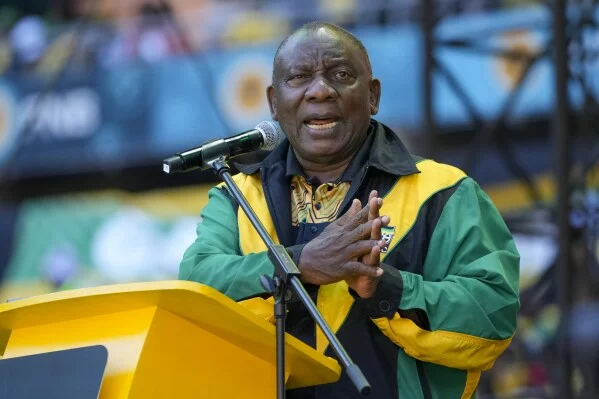
South African President Cyril Ramaphosa has vowed that his government will not tolerate any attempt to destabilise the country ahead of planned nationwide anti-immigrant demonstrations scheduled for June 30.
The warning comes amid rising tensions and a fresh wave of xenophobic sentiment following calls by citizen-led groups demanding that undocumented foreigners leave the country.
The groups have issued an unofficial deadline of June 30 for illegal immigrants to depart South Africa and have mobilised supporters for marches across the country, raising concerns about a possible resurgence of xenophobic violence.
Addressing lawmakers in the upper house of parliament on Thursday, Ramaphosa assured citizens that security agencies were fully prepared to maintain order.
“We will not tolerate any attempts to destabilise the country by anyone, whether marching or otherwise,” the president said.
“Our security forces are ready, and those who transgress the measures that we are putting in place will definitely meet the might of the law.”
The planned demonstrations follow months of anti-immigrant protests that have, in some instances, turned violent.
Authorities and humanitarian organisations have expressed fears that the campaign could trigger a wider outbreak of xenophobic attacks similar to previous incidents that resulted in significant loss of life and property.
In response, the South African Police Service has announced heightened security measures nationwide for June 30, while government officials have intensified efforts to prevent unrest.
Part of those efforts has included consultations with influential traditional leaders, including members of the Zulu Royal House.
The country has remained tense following several weeks of anti-foreigner unrest that has already claimed lives.
Official reports indicate that at least three people have been killed, while Mozambican authorities claim that five of their nationals died during recent incidents linked to the violence.
The growing hostility towards foreign nationals has also prompted thousands of migrants from various African countries to voluntarily return home.
Nationals of Ghana, Malawi, Mozambique and Nigeria are among those who have sought repatriation amid fears for their safety.
Temporary camps have emerged in major cities, including Durban and Johannesburg, where thousands of migrants are waiting for transportation back to their countries.
Aid organisations have warned that the situation is rapidly evolving into a humanitarian crisis as overcrowding and limited resources continue to affect displaced persons.
Ramaphosa stressed that government agencies were working to ensure that June 30 would proceed without disruption.
“We are taking measures to ensure that the 30th becomes a normal day where people will be able to work, to go about their business,” he said.
South Africa remains one of the continent’s largest and most industrialised economies and has long attracted migrants from across Africa seeking better economic opportunities.
However, the country continues to struggle with a high unemployment rate of approximately 32 per cent, creating intense competition for jobs and economic resources.
Many South Africans blame undocumented migrants for worsening poverty, unemployment and crime, sentiments that have fuelled support for the anti-immigration movement.
While Ramaphosa and major labour unions have argued that migrants are being unfairly scapegoated for broader economic challenges, some political figures have embraced anti-immigrant rhetoric as local government elections draw closer.
Analysts say the issue has increasingly become a tool for mobilising political support among frustrated voters.
South Africa has experienced several deadly outbreaks of xenophobic violence in the past.
In 2008, widespread anti-foreigner riots left 62 people dead and displaced thousands.
A further wave of violence in 2019 saw mobs attack foreign-owned businesses in and around Johannesburg, resulting in at least 12 deaths, including 10 South African citizens.
Authorities have reiterated that any individual found engaging in violence, intimidation or unlawful activities during the planned protests will face the full weight of the law.
With June 30 approaching, security agencies remain on high alert as the government seeks to prevent a repeat of the country’s darkest episodes of xenophobic violence.