Joel Ajayi
In a bold move to foster a culture of excellence and personal responsibility, DIG. Hashimu, Salihu Argungu (RTD), mni, PSC, NPM, the Chairman of Police Service Commission, has called on officers of the Nigeria Police Force across all departments to prioritize self-development as a strategic imperative.
In a statement issued by the Police Reform Secretariat Head, Strategic Communication and Public Outreach Collins Ajibola on Wednesday.
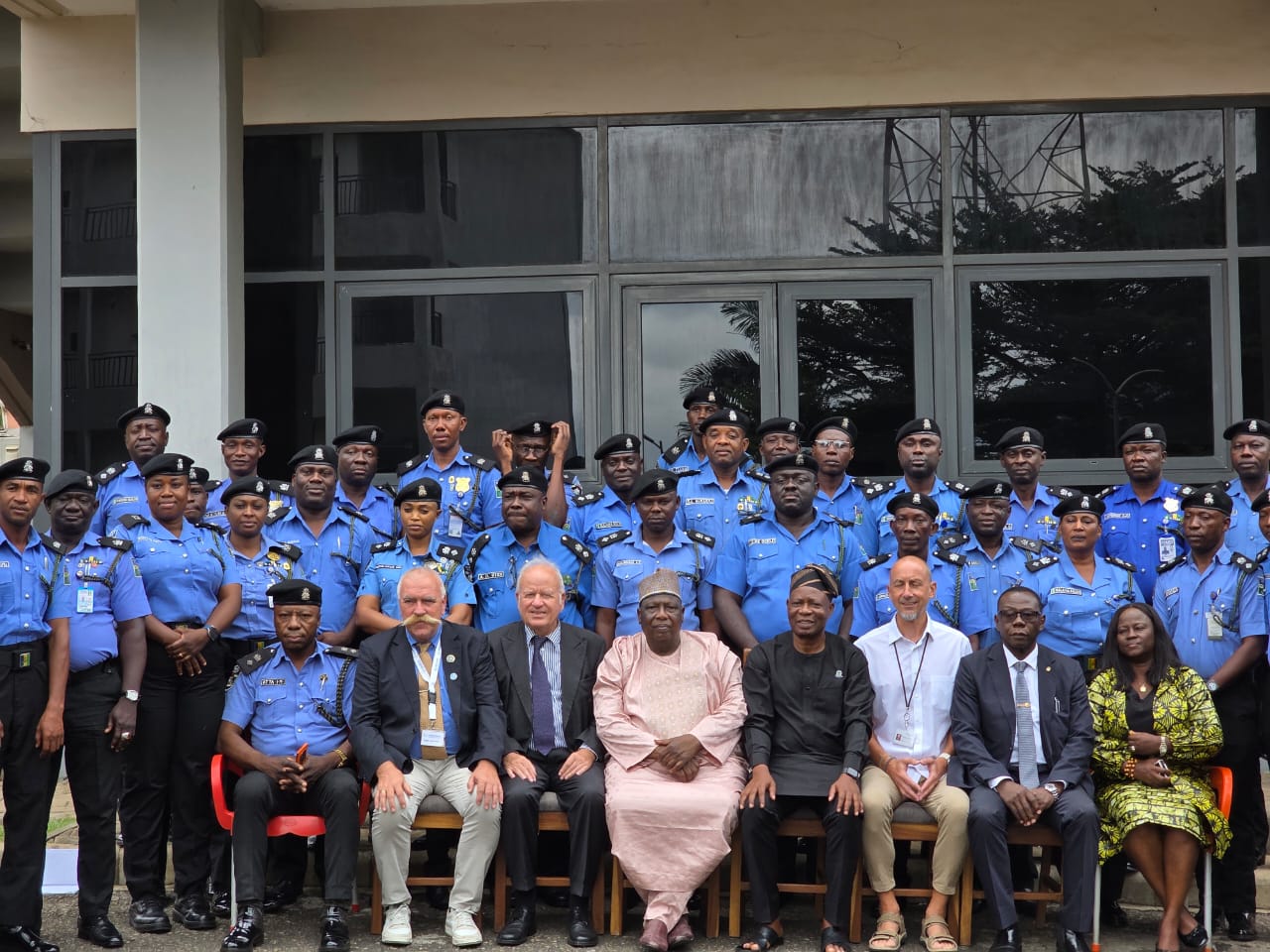
Speaking during a Strategic Leadership and Change Management Retreat for Divisional Officers of the Nigeria Police Force Organized by Police Reform Secretariat in Conjunction with UNDP, GS-Foundation, and CLEEN with funding support from the Federal Foreign Office of the Federal Government of Germany, held at the National Institute of Police Studies (NIPS), the Chairman emphasized that the strength of any institution lies in the quality, character, and capacity of its personnel.
Speaking of the topic: “Ethics And Professionalism: Bedrock of Policing Code of Conducts”, the Chairman noted that while institutional training and workshops play a critical role in career advancement, it is individual commitment to self-improvement that ultimately distinguishes great officers from average ones.
“We are in an age where knowledge evolves rapidly. As officers, you cannot afford to rely solely on what you were taught five years ago. You must constantly seek growth, intellectually, professionally, and ethically,” the Chairman stated.
The PSC Chairman outlined key areas where officers are expected to focus their personal development efforts, which he said include Intellectual Growth, Leadership intelligence, ethics and integrity, and digital literacy.
“I encourage you to engage in continuous learning through reading, research, and participation in professional development programs, enrole in relevant online courses, attend seminars, and obtain higher academic qualifications.
The Chairman reminded officers that self-development is not limited to skills and knowledge but also includes strengthening moral character and maintaining integrity in public service.
Considering the digital transformation sweeping across all sectors, officers were advised to enhance their digital skills and adapt to emerging technologies.
The Chairman’s message was well received by many officers who acknowledged the importance of taking charge of their personal growth.
The Chairman’s charge is more than a motivational speech. It is a timely reminder that sustainable institutional progress is driven by the growth of its people. In calling officers to take ownership of their development, the Chairman has laid a foundation for a more dynamic, competent, and future-ready workforce. As organizations continue to evolve in a complex world, self-development is no longer a luxury, it is a duty.