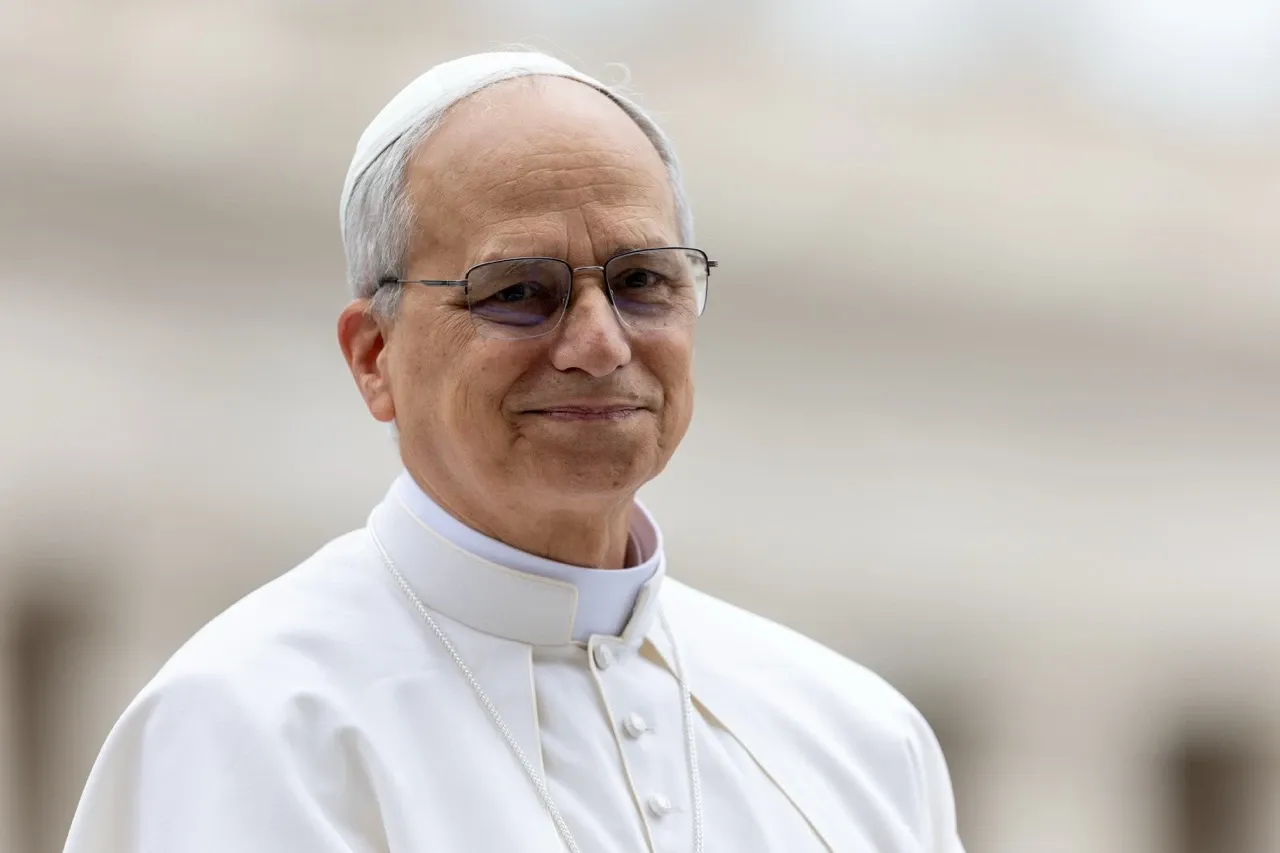
Pope Leo XIV has called for greater compassion toward migrants and stronger action against human traffickers, telling displaced people gathered at a reception centre in Spain’s Canary Islands that “all of us are migrants” in one way or another.
The pontiff made the remarks on Friday while visiting the Las Raices reception facility in Tenerife, one of Spain’s Canary Islands that has become a major entry point for thousands of migrants attempting to reach Europe in search of safety and better economic opportunities.
The visit marked the final stage of the Pope’s weeklong trip to Spain, which focused heavily on migration, humanitarian concerns and the challenges faced by people undertaking dangerous journeys across the Atlantic and Mediterranean routes.
Addressing hundreds of migrants at the centre, which is located in a former military barracks, Pope Leo XIV drew a spiritual parallel between migration and the Christian understanding of life’s journey.
“In a sense, all of us are migrants, for we are all pilgrims on our way to our heavenly homeland,” he said.
He urged governments, communities and individuals to do more to ensure that migrants are treated with dignity and humanity throughout their journeys.
“Let us help make this journey more humane for everyone by contributing in whatever way we can,” the Pope added.
Following the visit, the leader of the world’s 1.4 billion Catholics was scheduled to preside over an open-air Mass in the port city of Santa Cruz de Tenerife, where tens of thousands of worshippers were expected to gather.
The Tenerife stop followed earlier engagements in Madrid and Barcelona, as well as a visit to Gran Canaria, another island within the archipelago.
During his time in Gran Canaria, Pope Leo XIV delivered a strong message against what he described as growing indifference toward migrants and refugees. At the port of Arguineguin, he paid tribute to thousands of people who have lost their lives attempting to reach Europe by sea.
In a symbolic act of remembrance, the Pope cast a wreath into the Atlantic Ocean to honour migrants who died during perilous crossings.
He also stressed that human dignity should never depend on nationality or immigration status.
“Human dignity has no passport,” he said.
Standing on the dockside, the Pope blessed a weathered blue wooden cross crafted from parts of a migrant boat, turning it into a symbol of remembrance and hope.
He further condemned criminal trafficking networks that exploit vulnerable migrants, particularly women and children, while criticizing what he described as global indifference to human suffering.
“Monsters lurk in these seas… traffickers who enslave women and children, and those whose indifference allows the poor to be swallowed up by exploitation or forgetfulness,” he said.
The Pope’s remarks come amid continued debate across Europe over migration policies, with several governments adopting stricter border measures in response to increasing political pressure from anti-immigration movements.
According to migration agencies, the route connecting Africa to the Canary Islands remains one of the deadliest migration corridors in the world. Thousands of migrants continue to risk dangerous sea journeys despite the threat of drowning, exploitation and abuse.
The pontiff warned that Europe cannot claim to uphold human rights while becoming accustomed to migrant deaths at sea.
He argued that the growing number of fatalities in the Atlantic and Mediterranean should serve as a moral challenge for both destination countries and nations from which migrants depart or pass through.
The Pope also called on governments to address the root causes of migration, including poverty, armed conflict and instability, which often force people to leave their homes and fall into the hands of trafficking syndicates.
For many migrants in the Canary Islands, the visit was seen as a significant gesture of solidarity.
One migrant, Mohamed Amjahdi, who arrived from Morocco as a teenager, described the visit as meaningful at a time when many migrants feel overlooked and vulnerable.
The Pope’s focus on migration is increasingly emerging as a defining theme of his papacy. His advocacy is expected to continue next month when he visits Lampedusa, another major entry point for migrants arriving in Europe.
The July 4 visit is expected to reinforce his message that the plight of migrants deserves greater international attention and humanitarian action.