BY Joel Ajayi
In the growing story of Nigerian sports, a new chapter is being written—one defined by bold reforms, strategic vision, and renewed ambition.
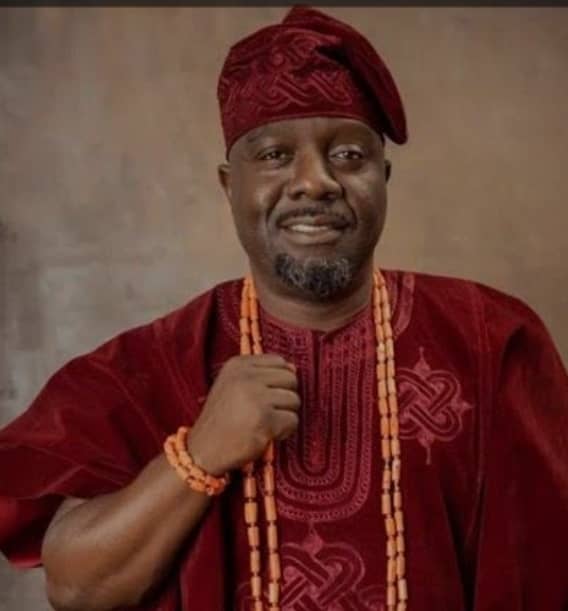
At the center of this transformation stands, Mighty Conqueror, a reformer, Master of strategist, bridge-builder, tactician, energetic, the engine room of Nigeria Sports Hon. Bukola Olopade, the Director General of the National Sports Commission (NSC), no doubt widely regarded as one of the most dynamic sports administrators of his generation.
One of the foremost Egba MAN Olopade who has contributed immensely to development of Sports in General, call him engine room driving Nigeria’s sports renaissance.
With backing of the President Bola Ahmed Tinubu, NSC Chairman Shehu Dikko, Federations President and relevant stakeholders, he has brought fresh thinking, private-sector discipline, and long-term planning into a sector that for years struggled with structural inefficiencies.
Describing Bukola Olopade merely as an administrator would be a gross understatement. He is far more than a manager of systems and structures; he is a transformational force, and one of the most influential architects of modern sports development in Nigeria.
His impact transcends administration, reflecting a rare blend of strategic thinking, innovation, passion, and an unwavering commitment to excellence.
Bukola Olopade has consistently demonstrated an exceptional ability to inspire progress, build institutions, and drive meaningful change within Nigeria’s sports ecosystem. Through his leadership, he has championed initiatives that have not only elevated sports administration but also created opportunities for athletes, coaches, and stakeholders to thrive.
His birthright is defined by action, results, and a relentless pursuit of greatness. Whether through policy formulation, talent development, grassroots sports promotion, or national sporting advancement, Olopade has remained a formidable force whose contributions continue to shape the future of Nigerian sports.
To call him just an administrator is to overlook the depth of his influence. Olopade is, in every sense, a builder, a reformer, and a game changer.
From school sports revival to athlete scholarships, federation peace, football commercialization, and global performance planning, his fingerprints are visible across Nigeria’s sporting ecosystem.
His leadership recalls a fundamental truth: sporting greatness is not built only on podium finishes—it is built in boardrooms, policy rooms, training grounds, and grassroots communities.
Nigeria’s sports future will depend on systems, not luck. And today, under Bukola Olopade, those systems are finally being built.
If sustained, these reforms may well define a golden era for Nigerian sports.
The restructured NSC is no longer focused solely on winning medals. Instead, it is building a sustainable sports economy anchored on talent development, commercialization, athlete welfare, infrastructure, and institutional peace. Through the Renewed Hope Initiative for Nigeria Sports Economy (RHINSE) blueprint, Olopade is leading what many now describe as the most comprehensive sports reform agenda in modern Nigerian history.
Here are eight key reforms reshaping Nigerian sports under his leadership.
Revival Of School Sports As The Foundation Of Talent Discovery
For decades, Nigeria produced sporting legends through school competitions. However, the gradual collapse of structured school sports created a major vacuum in athlete development.
Olopade understands that champions are not discovered at elite camps—they are nurtured from classrooms and school playgrounds.
Under the new NSC framework, school sports are once again receiving serious attention. The Commission is rebuilding inter-school competitions as talent pipelines for future national teams. This strategy ensures that gifted young athletes are identified early, properly monitored, and developed scientifically.
The renewed focus on school games represents a deliberate effort to restore the golden era when schools served as Nigeria’s biggest talent factories.
National Intermediate Games: Bridging the Missing Gap
One of Olopade’s most revolutionary reforms is the introduction of the National Intermediate Games.
For years, a major gap existed between the National Youth Games and elite competitions like the National Sports Festival. Many promising athletes disappeared during this transition phase.
The Intermediate Games aim to solve that problem.
Scheduled for its inaugural edition in Lagos from October 1–15, 2026, the Games will serve as a structured bridge between youth and elite competition. It creates continuity for athletes aged beyond youth level but not yet fully established professionally.
This reform ensures Nigeria no longer loses talents during the critical transition period.
According to Olopade, the initiative is about opportunity, structure, and sustainability.
The Games will not only create competition pathways but also opportunities in coaching, sports science, officiating, and administration.
Athletes First Policy And Scholarship Programme
Perhaps the most athlete-centered reform under Olopade is the Athletes First Policy.
The new NSC leadership is changing that narrative. At the heart of Olopade’s agenda is the belief that athletes must remain the center of every policy decision. Training support, camp organization, nutrition, welfare, mental conditioning, and performance incentives now receive greater priority.
Beyond competition, Olopade is also championing athlete scholarship initiatives.
The scholarship programme is designed to ensure athletes can pursue education while building sports careers. This dual-development model prepares athletes for life beyond active competition.
The message is clear: Nigerian athletes must no longer choose between education and sports.
Lasting Peace in Sports Federations
One of the most significant but less publicized reforms under Olopade is conflict resolution across sports federations.
For years, leadership disputes, factional politics, and governance crises weakened many federations. Internal battles often distracted administrators and negatively affected athletes.
Olopade has made federation stability a major priority.
By promoting dialogue, governance reforms, accountability, and corporate structures, the NSC is gradually restoring peace across multiple federations.
This stability is crucial. Without peace at the administrative level, athlete development suffers. With harmony restored, federations can now focus on technical growth, sponsorship, and international competitiveness.
The emerging stability across federations is already creating a healthier sports ecosystem.
The NPFL Billion-Naira Commercial Breakthrough
One of the boldest football reforms linked to Olopade is the transformation of the Nigeria Premier Football League.
Few people know the strategic influence Olopade played in strengthening the league’s commercial framework, including the landmark prize-money structure of total package of 2.5 billion naira contract that now offers ₦1 billion, the highest financial reward in Nigerian domestic football history.
This represents a major shift in how local football is valued.
Higher financial incentives improve competitiveness, attract investors, motivate clubs, and raise professional standards.
For years, Nigeria’s domestic league struggled commercially despite enormous talent. The new model signals a move toward sustainability and profitability.
A stronger NPFL means better clubs, improved facilities, greater media attention, and increased international recognition.
NNL Reset Through Toptier Sports Partnership
If the NPFL represents the elite level, then the Nigeria National League remains the breeding ground for emerging talent.
Under Olopade’s broader reform agenda, the NNL is undergoing a remarkable transformation through a strategic partnership with Toptier Sports Management.
This partnership is changing the league’s future. For years, the NNL suffered from low visibility, weak governance, and poor commercialization. But the collaboration with Toptier is delivering practical reforms.
Key improvements include: Digitized league administration, Better governance structures, Enhanced branding, Improved broadcast production, Greater club visibility and Commercial expansion.
One major breakthrough has been live match broadcasts by Team 33 Production, giving clubs and players exposure they previously lacked.
This visibility creates commercial opportunities and helps players attract scouts and sponsors.
The NNL is no longer merely surviving—it is evolving.
Commercialization and Private Sector Integration
Olopade’s biggest ideological shift may be his insistence that sports must become business.
For decades, Nigerian sports depended heavily on government funding. This model proved unsustainable. The NSC is now aggressively integrating the private sector.
Olopade envisions a sports economy worth over $700 million, powered by sponsorship, media rights, merchandising, event hosting, infrastructure investments, and sports tourism.
His success in sports business predates his NSC appointment.
During his private-sector engagements, especially with the Access Bank Lagos City Marathon, Olopade demonstrated how world-class sporting events can drive tourism, branding, and economic growth.
That experience now shapes his national strategy. The future of Nigerian sports under Olopade is not just competitive—it is commercial.
Elite Preparation for Glasgow 2026 Commonwealth Games
With the 2026 Commonwealth Games fast approaching in Glasgow, the NSC has intensified preparations for Team Nigeria.
Historically, Nigeria has won 271 Commonwealth medals—82 gold, 84 silver, and 105 bronze.
Olopade wants that legacy strengthened. Preparations now reflect a more scientific approach.
Athletes have undergone intensive training camps, including the first phase at the Stephen Keshi Stadium in Asaba. Plans are also in place for a four-week residential camp in Aberdeen, Scotland, ahead of the Games.
This strategy allows athletes to acclimatize to weather conditions, reduce travel stress, and optimize performance.
The NSC has also assembled respected Team Nigeria ambassadors, including veteran administrators like Amos Adamu, Patrick Ekeji, and Gbenga Elegbeleye, to provide institutional guidance.
Support is also expanding across disciplines.
Also, Cycling is benefiting from international collaboration, athletics is improving through high-performance training, and wheelchair basketball teams are gaining competitive exposure through friendly matches abroad.
This reflects Olopade’s philosophy: preparation must be deliberate, not accidental.
Ride on the Giver, Ride on MR BUKKY, Ride on Olopade.