By Joel Ajayi
The National Population Commission (NPC) and the United Nations Population Fund (UNFPA) have called for increased investment in Nigeria’s young population, stressing that the country’s demographic advantage can only translate into sustainable economic growth through deliberate policies that empower young people.
The call was made on Wednesday in Abuja during a press briefing to herald activities marking the 2026 World Population Day (WPD), scheduled for July 11. This year’s global theme, “Realizing the Hopes and Aspirations of Young People – Today and for the Future,” highlights the need to place young people at the centre of national development.
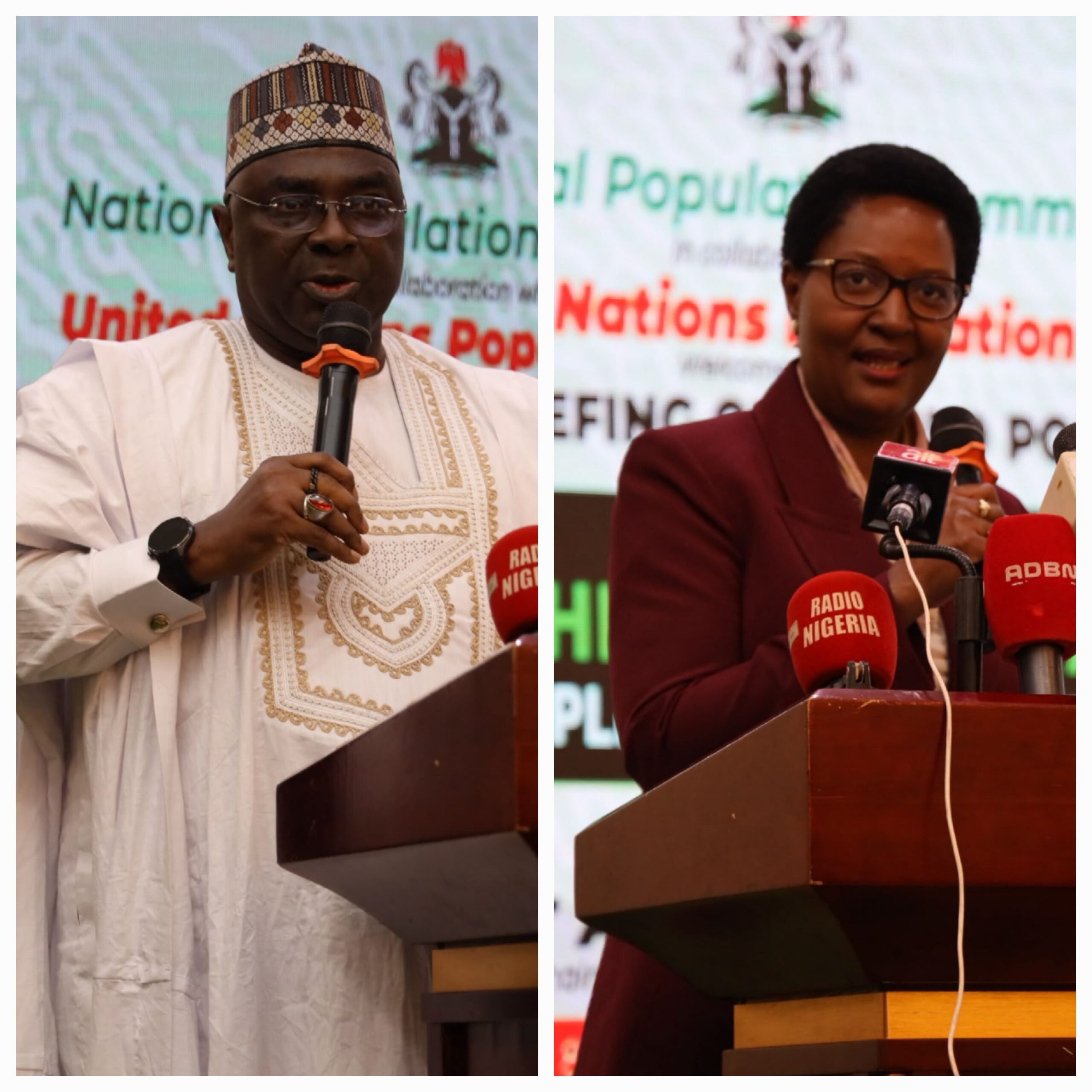
Speaking at the event, the Chairman of the National Population Commission, Dr. Aminu Yusuf, said Nigeria’s estimated population of 242 million makes it Africa’s most populous nation and one of the world’s youngest, with people aged 15 to 29 accounting for nearly 30 per cent of the population.
According to him, the country’s future depends not on the size of its population but on the opportunities available to its young people.
“Our future will not be determined by the size of our population alone, but by the opportunities available to our young people. They must be healthy, educated, skilled and productively engaged if Nigeria is to reap the benefits of its demographic dividend,” Yusuf said.
He acknowledged that government interventions under President Bola Ahmed Tinubu’s Renewed Hope Agenda have recorded some progress in youth development but noted that significant challenges remain. He said youth unemployment had hovered around 33 per cent, while underemployment exceeded 20 per cent, largely due to the mismatch between educational curricula and labour market demands.
Yusuf also highlighted improvements in reproductive health, noting that Nigeria’s Total Fertility Rate has declined from 5.3 to 4.8 children per woman, although adolescent fertility remains high at 15 per cent.
He cited ongoing initiatives such as the 3 Million Technical Talent (3MTT) programme, which has certified 30,000 fellows, the Nigerian Education Loan Fund (NELFUND), expanded vocational training programmes and the modernisation of birth registration through the Civil Registration and Vital Statistics (CRVS) system.
Despite these achievements, he warned that infrastructure deficits, insecurity, rising living costs and implementation gaps continue to limit the impact of youth-focused programmes.
The NPC chairman therefore called for the speedy review of the National Youth Policy and reiterated the commission’s demand for a credible, technology-driven Population and Housing Census, describing reliable demographic data as essential for effective planning and equitable resource allocation.
Also speaking, the UNFPA Resident Representative in Nigeria, Ms. Muriel Mafico, said Nigerian youths remain resilient despite growing socio-economic challenges.
She revealed that findings from UNFPA’s Global Demographic Futures Survey, which engaged more than 100,000 young people worldwide, showed that many young people in West and Central Africa remain optimistic despite financial insecurity, skills gaps and limited opportunities.
Mafico noted that more than 73 million Nigerians are below the age of 24, presenting the country with a unique opportunity to accelerate development through strategic investment in education, skills acquisition, healthcare and employment.
She, however, expressed concern that about 12 per cent of Nigerian youths are neither in education, employment nor training, while 93 per cent of employed young people work in the informal sector.
She urged governments at all levels to strengthen the implementation of existing youth policies, improve inter-agency coordination, expand access to quality education, affordable housing and social protection, and promote peace and security.
Meanwhile, the 2026 World Population Day, scheduled for July 11, will provide another platform for Nigeria to deepen conversations on youth development and population issues.