Joel Ajayi
The United Nations Population Fund (UNFPA) has urged the Federal Government to prioritise accurate and reliable population data, stressing that Nigeria can no longer rely on estimates if it hopes to effectively plan for its growing population and maximise its demographic dividend.
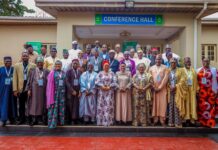
The call was made on Wednesday in Abuja during a press briefing organised by the National Population Commission (NPC) and UNFPA ahead of the 2026 World Population Day (WPD), which will be commemorated on July 11 under the theme: “Realizing the Hopes and Aspirations of Young People – Today and for the Future.”
Speaking at the briefing, the UNFPA Resident Representative in Nigeria, Muriel Mafico, emphasised that credible demographic data is critical to national development, insisting that Nigeria must move beyond speculation about its population size.
“We should not be guessing. Are we 240 million? Are we 250 million? Are we going to be 450 million by 2050? We should not be guessing because the tools and knowledge for understanding population already exist,” she said.
Mafico noted that Nigeria is already producing demographic profiles at the state level, describing the initiative as an important step towards building a culture of unified and evidence-based data for planning and policymaking.
She disclosed that UNFPA’s Global Demographic Futures Survey, which covered more than 100,000 respondents across 73 countries, including nations in West and Southern Africa, revealed that despite economic hardship, many young people remain optimistic about their future.
According to her, Nigeria’s youthful population presents enormous opportunities if backed by strategic investments in education, healthcare, skills development and employment.
She revealed that more than 73 million Nigerians are below the age of 24, but expressed concern that about 12 per cent of young people are neither in education, employment nor training (NEET), while 93 per cent of employed youths work in the informal sector.
Mafico therefore urged governments at all levels to strengthen implementation of youth-focused policies, improve access to quality education, affordable housing, healthcare and social protection, while also promoting peace, security and economic opportunities for young people.
In His Addressed, the Chairman of the National Population Commission, Aminu Yusuf, said Nigeria’s estimated population of about 242 million makes it Africa’s most populous country, with nearly 30 per cent of its citizens aged between 15 and 29 years.
He stressed that the country’s future would depend not on the size of its population but on how well it invests in its young people.
“Our future will not be determined by the size of our population alone, but by the opportunities available to our young people. They must be healthy, educated, skilled and productively engaged if Nigeria is to reap the benefits of its demographic dividend,” Yusuf said.
The NPC chairman acknowledged ongoing youth-focused initiatives under President **Bola Ahmed Tinubu>’s Renewed Hope Agenda, including the 3 million Technical Talent (3MTT) programme, the Nigerian Education Loan Fund (NELFUND), expanded vocational training and improvements in the Civil Registration and Vital Statistics (CRVS) system.
However, he noted that youth unemployment, underemployment, insecurity, infrastructure deficits and the rising cost of living continue to undermine the country’s development potential.
Yusuf renewed the commission’s call for a credible, technology-driven Population and Housing Census, describing accurate demographic data as indispensable for national planning, policy formulation and equitable distribution of resources.
The 2026 World Population Day celebration on July 11 is expected to provide another platform for stakeholders to advance discussions on population management, youth empowerment and sustainable development in Nigeria.