By Enene Ejembi
Nigeria’s greatest challenge has never been its diversity. Our greatest development and nation-building challenge has been our inability to consistently transform that diversity into collective purpose.
One of Nigeria’s nation-building realities is that many citizens simultaneously navigate three powerful identities: ethnic identity, religious identity, and national identity. Nigeria is still a relatively young nation, and like many young societies, it is still forming a coherent sense of self. Unlike countries like Israel or Saudi Arabia or India where historical, religious, and national identities largely reinforce one another, these identities in Nigeria do not always align. They can compete for loyalty and shape how people interpret politics, institutions, and one another.
When these identities compete rather than complement each other, trust becomes fragmented and nation-building becomes more difficult. Part of our collective task is therefore to strengthen a Nigerian identity that sits comfortably alongside, rather than in opposition to, our ethnic and religious identities.
Every election, each bout of violent insecurity, and every period of economic hardship reminds us of our ethno-religious differences and exposes institutional weaknesses. Yet if we look a little deeper than the surface, every national challenge also reveals something remarkable: Nigerians continue to cooperate, innovate and endure despite extraordinary pressure. That resilience deserves closer attention.
The newly released Nigeria Social Cohesion Survey by the Africa Polling Institute provides one of the clearest evidence-based assessments of our nation’s social fabric. Its headline finding is encouraging: Nigeria’s Social Cohesion Index now stands at 48.8 percent, the highest recorded since the survey began in 2019, although still marginally below the 50 percent threshold that the Institute uses to distinguish a society with weak social cohesion from one demonstrating stronger social cohesion. More significantly, for the first time since the study commenced, more respondents identified primarily as Nigerians over their ethnic, religious or regional affiliation. This is more than an encouraging statistic; it is a nation-building milestone.
Rather than reading the survey as fourteen separate indicators, I believe it is best understood through what I call the ‘Four Questions of Nation Building’. Together, the survey’s fourteen indicators answer four fundamental questions that ultimately determine whether any nation can hold together:
Who do we believe we are? | Who do we trust? | Do our systems feel fair? | Do we believe tomorrow can be better than today?
The first question is one of identity: Who do we believe we are?
Nationhood begins when belonging expands beyond ethnicity. The finding that Nigerians increasingly identify first with the nation suggests that our shared identity may be evolving faster than our politics. Citizens appear increasingly prepared to imagine a common future even while public discourse often reinforces ethnic, religious and regional fault lines. That is an opportunity our government should not squander. A stronger national identity is not built by asking citizens to abandon their ethnic cultures. Rather, it emerges when our many identities (ethnic, religious) complement, rather than compete with, our shared national identity and citizenship.
The second question is perhaps the survey’s most consequential finding, and it concerns trust: Who do we trust?
While the index has improved, trust in many public institutions remains worryingly low. Only 28 percent of respondents expressed significant trust in the Federal Government and 23 percent in the National Assembly. By contrast, 51 percent expressed significant trust in religious leaders and 45 percent in traditional leaders.
This should not be read as an indictment alone. It should be understood as an opportunity.
Nigeria is not short of trusted institutions. We simply have not been deliberate enough about connecting the moral authority of our faith and traditional institutions with public governance, nation-building, and collective problem-solving.
During the National Social Cohesion Dialogue, I observed:
“The real question is not whether our faith and traditional institutions have influence, they do. The question is how to deepen co-creation and collaboration among our institutions – traditional, government and faith – for public trust, cohesion and nation-building.”
That recommendation was reinforced by voices across the dialogue. Representing the Catholic Archbishop of Abuja, Rev. Fr. Emmanuel Onamba noted that the consistently high trust enjoyed by religious and traditional institutions “is not news to be cheered, but an opportunity to be explored.” Likewise, traditional leaders emphasised that they remain deeply rooted in their communities, understand local priorities, and often sustain peace, mediate disputes, and deliver social support where formal government presence is limited.
The implication is clear. Nigeria’s challenge is not the absence of influence; it is the absence of intentional collaboration among those who already possess it.
The third question is about justice: Do our systems feel fair?
Trust cannot flourish where fairness feels selective. The survey reveals that 71 percent of Nigerians believe the law does not protect everyone equally. Half of respondents continue to perceive corruption as high, while most remain dissatisfied with government efforts to combat it. These perceptions matter because social cohesion is ultimately built not only on shared identity but also on shared confidence that government institutions operate fairly and consistently.
People may tolerate hardship. They are far less willing to tolerate injustice. When citizens believe that opportunities, justice and accountability depend on connections rather than principles, social cohesion rapidly weakens. Rebuilding Nigerians’ trust therefore requires strengthening not only justice institutions but also the public’s everyday experience of those institutions.
The fourth question is perhaps the most important: Do we believe tomorrow can be better than today?
Hope is often dismissed as an emotion. It is, in fact, strategic national capital. Citizens who believe tomorrow can be better invest in education, grow businesses, participate in civic life, and foster peaceful coexistence. Nigerians who lose hope gradually disengage from public institutions, from one another and, ultimately, from the national project itself: whether through the route of ‘japa’ or through chronic apathy.
The encouraging story within this survey is not only that Nigeria’s cohesion score has improved. It is that, despite economic hardship, insecurity and political polarisation, Nigerians continue to demonstrate remarkable resilience and willingness to cooperate across ethnic and religious lines. Seventy-seven percent expressed willingness to cooperate with fellow citizens from other ethnic groups to make Nigeria more united, while 73 percent indicated willingness to participate in the political process to improve the country.
That resilience is one of Nigeria’s greatest strategic assets. The responsibility now rests with leadership to match it.
The survey leaves us with a hopeful paradox. At a time when public discourse often suggests Nigeria is becoming more divided, the evidence indicates that many Nigerians are increasingly prepared to imagine a shared future. More citizens now identify first as Nigerians. More are willing to work across ethnic lines. More still express a willingness to participate in shaping the country’s future. The challenge, therefore, is no longer whether Nigerians are capable of nation-building. The evidence suggests they are. The greater challenge is whether our institutions can become worthy of that aspiration.
Government must focus as deliberately on rebuilding public trust as it does on delivering public services, and both need to improve. Religious and traditional institutions should intentionally use their moral authority not merely to strengthen their individual communities, but to deepen our consciousness of citizenship and national belonging. Civil society, the private sector and development partners should continue creating platforms where evidence informs policy, dialogue strengthens relationships, and collaboration replaces fragmentation.
At Verbatim Virtual Solutions, our work has consistently shown that sustainable development is rarely constrained by a shortage of technical solutions. More often, progress stalls because institutions operate in silos rather than as systems, implementation is fragmented, and evidence is not translated into action. Our work is centered on helping institutions bridge these gaps by transforming knowledge into strategy, strategy into execution, and results into credible evidence that strengthens institutional performance, accountability and impact.
Ultimately, social cohesion is the presence of sufficient trust to keep building together despite our differences. The Nigeria Social Cohesion Survey is therefore more than an annual measurement exercise; it is a practical governance tool and a roadmap for nation-building. And the 2026 report suggests that Nigerians may already be more ready for the next chapter of our national journey than our institutions are.
The next chapter of nation-building depends on whether our leadership can catch up.
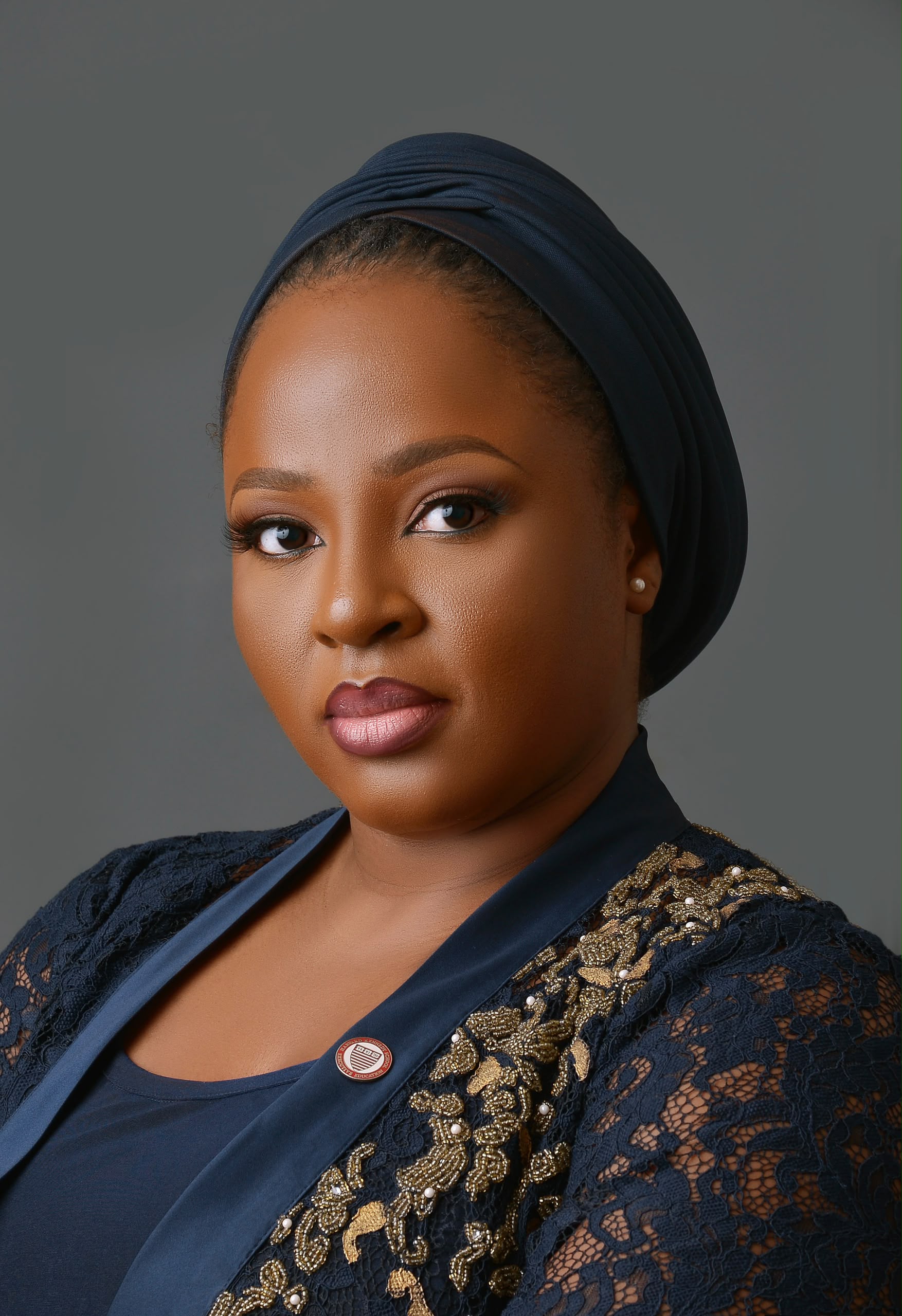
Enene Ejembi has over 20 years’ experience supporting governments, development partners, and institutions across Africa. She is the Founder and Executive Director of Verbatim Virtual Solutions, a strategy, communications, and knowledge management consultancy that helps governments, and development partners strengthen policy, strategy, implementation, institutional learning.