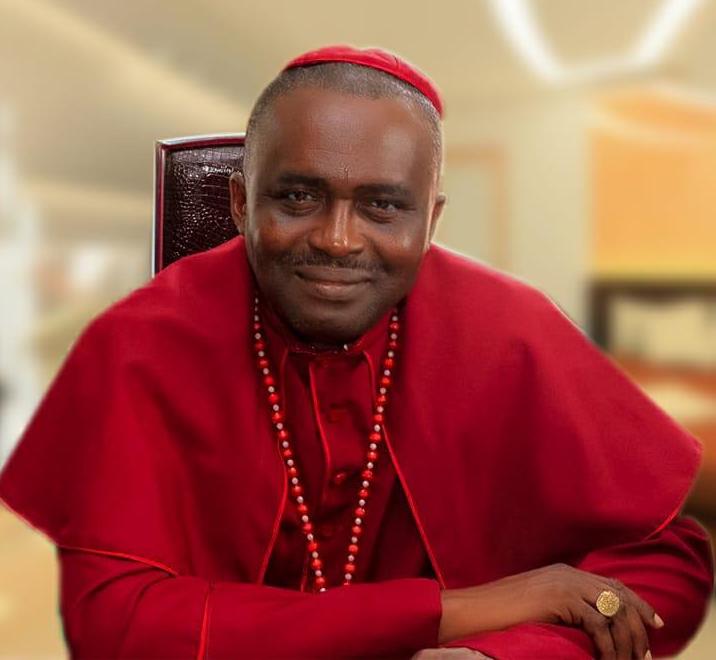
The Archbishop, Special Duties, At-Large of the Methodist Church Nigeria, Most Rev. Dr Sunday Ndukwo Onuoha, has warned that Nigeria cannot overcome its worsening insecurity crisis while leaders and citizens continue to live in denial.
Onuoha spoke on Sunday in Abuja during a thanksgiving service held to mark his investiture as Archbishop of Special Duties, raising concerns over rising abductions and attacks across the country. He worried that Nigeria was borrowing not only money but even the technology needed for its survival.
He said the nation could no longer afford to “pretend that all is well” when citizens were being kidnapped and vulnerable groups targeted across communities.
In his words, “Nigeria is facing a serious security crisis. Wherever we come from, it is time to stand up and say: enough.
The cleric said denial was worsening the national condition, stressing that people must stop “saying peace when there is no peace”.
He warned that the country had reached a point where external assistance might be necessary, adding that “Our young people are being taken; our women are assaulted. When we lack the skills to fix what is wrong, someone who can do it must step forward. If there is anyone who can help, please come and help us.”
Onuoha, who previously served in government, disclosed that public officials often struggled to speak openly because of diplomatic restraints. He said this made it even more important for citizens to take responsibility for confronting the truth.
Appealing for immediate action, he said, “On behalf of the government, the church, and every ordinary worker, let help come immediately — not tomorrow. Now. Right now.”
The Archbishop cautioned that unresolved violence would shape the next generation, insisting that genuine healing would only begin when Nigerians rose above ethnic, religious and class divisions. He noted that hunger, sickness, sunshine and rainfall recognised no tribe or faith, stressing that the country remained “one family under God”.
He added that national progress had been crippled by selfishness and deceit, reminding Nigerians that “righteousness exalts a nation, but wrongdoing breaks it”.
Onuoha urged the country to confront hard truths, discard bitterness and embrace a fresh start. He illustrated his point with everyday examples, saying, “When children play football, no one cares about tribe. When you board an aircraft, you don’t ask the pilot’s religion. Safety benefits everyone.”
He also warned leaders that power was fleeting, noting that “Look at our nation today: when people enjoy power, they become unreachable. But when power leaves, they become ordinary again. Even phones that once rang nonstop suddenly stop ringing.”
Onuoha stressed that God had not abandoned Nigeria but was calling the nation to repentance, justice and unity. “Something is wrong. Something is not right. As a country, we are hiding wounds instead of healing them,” he said.
He urged the country to stop pretending and begin rebuilding with truth and accountability at its core.