By Joel Ajayi
In a bid to strengthen Nigeria’s export ecosystem and empower Micro, Small, and Medium Enterprises (MSMEs), the Nigerian Export-Import Bank (NEXIM) explained that its EXCEL Programme a strategic initiative will help to unlock the full potential and Values to all MSMEs across the country.
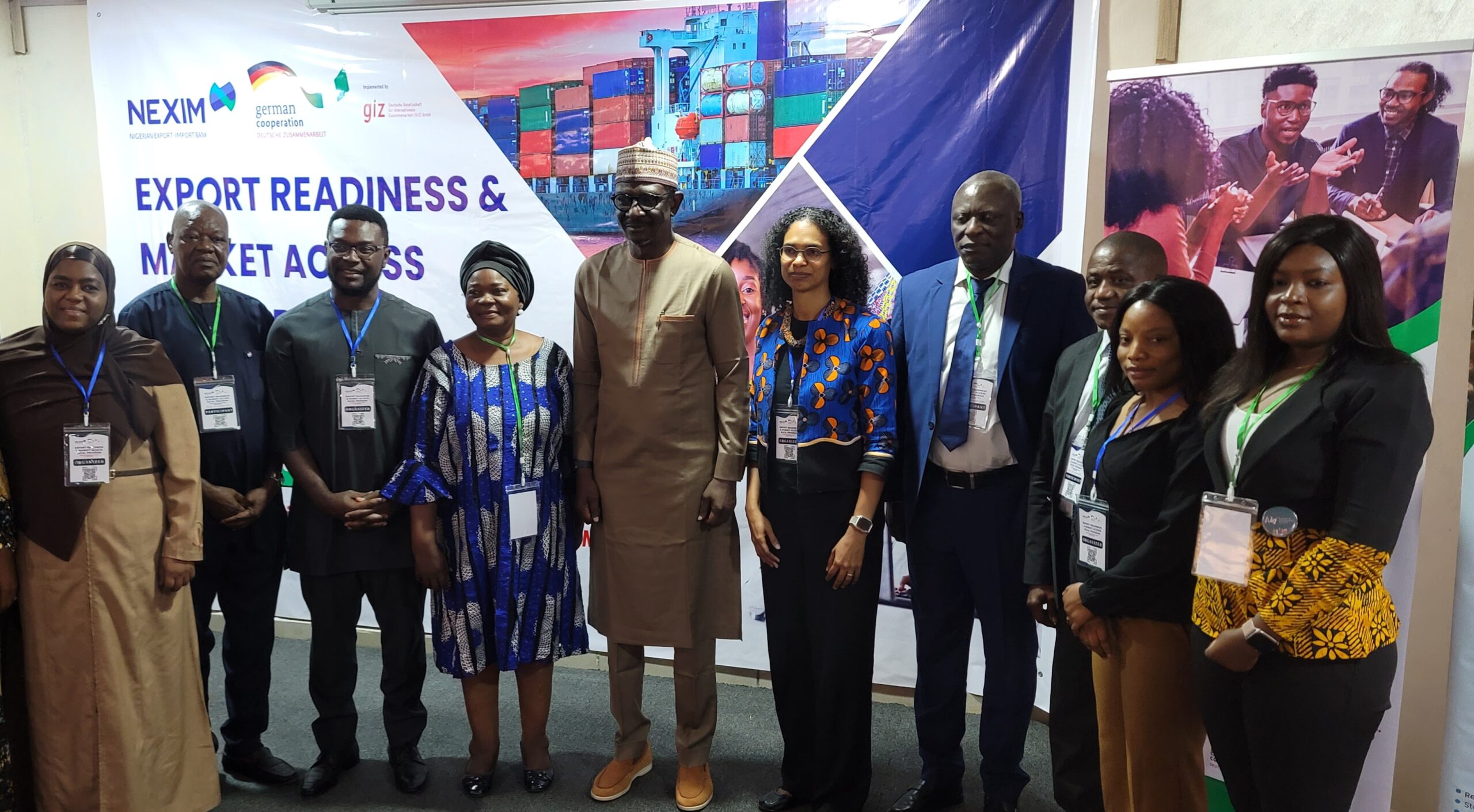
Speaking at the SME Export Finance Sensitization Forum held on Wednesday in Abuja, the Managing Director and Chief Executive Officer of NEXIM Bank, Abubakar Abba Bello, emphasized that MSMEs remain central to Nigeria’s economic growth and diversification strategy.
“MSMEs are the backbone of our economy,” he stated. “They make up 96.9% of registered businesses, contribute 48% to Nigeria’s GDP, and employ nearly 88% of the workforce. Yet, despite their enormous contributions, over half face challenges accessing finance, while many struggle to survive beyond their first five years.”
To address these challenges, Bello said EXCEL — developed in partnership with the GIZ-SEDIN Programme — is focused on identifying and equipping export-ready MSME clusters across Nigeria. The programme offers a digitally driven framework to provide targeted training, tailored financial products, and market access support.
“The EXCEL Programme is a catalyst. It is designed to empower MSMEs to grow, compete internationally, and contribute significantly to our non-oil export revenue,” he said.
Despite the size and scope of Nigeria’s MSME sector, exports of goods and services currently contribute only 7.64% to GDP, according to World Bank data — a gap the EXCEL programme aims to narrow.
To complement the initiative, NEXIM Bank has rolled out export financing solutions such as the SME Export Facility (SMEEF) and the Women and Youth Export Facility (WAYEF). Additionally, its NEXA digital platform enables MSMEs to access export services and financial tools more efficiently.
“We are also preparing to onboard SME clients onto the African Trade Gateway (ATG), which will enhance access to African markets, improve payment systems, and deepen trade under the AfCFTA framework,” Bello added.
He commended the enduring partnership between NEXIM and GIZ, noting that their collaboration is rooted in shared values and a vision for inclusive, sustainable development.
Bello also acknowledged the contributions of key stakeholders present at the forum, including the Nigerian Export Promotion Council (NEPC), SMEDAN, Abuja Enterprise Agency (AEA), NASME, WACCIMA, NIWAB, NEF, and others.
“This forum is more than a meeting — it’s the beginning of a transformational journey for MSMEs. I urge participants to take full advantage, ask questions, and engage meaningfully with the resources presented today,” he encouraged.
Representing the Deutsche Gesellschaft für Internationale Zusammenarbeit (GIZ), a development agency of the German government, the GIZ SEDEC Cluster Coordinator, Dr Dideir Djoumessi applauded NEXIM for its role in promoting opportunities across Nigeria’s non-oil export sectors.
“This forum kicks off a broader sensitization campaign, with sessions scheduled to hold in Edo, Plateau, and Lagos States,” the GIZ representative announced. “These efforts demonstrate a strong commitment to empowering MSMEs with the tools, knowledge, and financing they need to thrive in competitive markets.”
GIZ, which has operated in Nigeria for over 50 years, supports various development programmes, including the Sustainable Economic Development for Decent Employment in Nigeria (SEDIN), under which the EXCEL initiative is being implemented.
“Our support for this programme reflects GIZ’s belief in the immense potential of Nigerian MSMEs,” the representative stated. “With the right support mechanisms — finance, training, and market access — these businesses can drive inclusive growth, job creation, and economic diversification.”
The event concluded with a call to action: “Engage actively, ask questions, and explore how you can apply today’s insights to strengthen your businesses. Together, through programmes like EXCEL, we can build a globally competitive, export-ready MSME sector that powers Nigeria’s long-term development.”