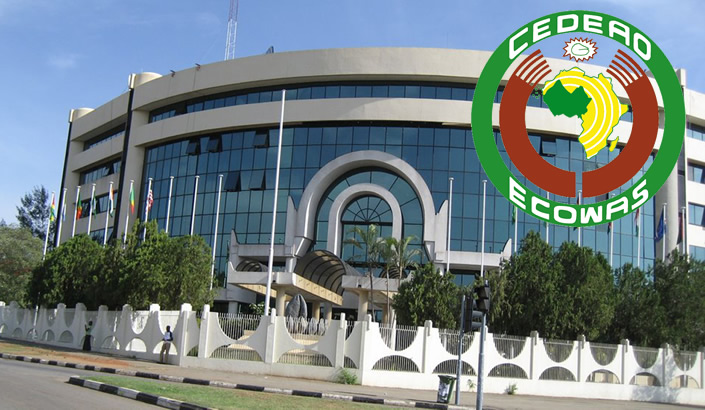
Economic Community of West African States, ECOWAS, has called on its members to reduce poverty in their individual countries as a strategy to tackle human trafficking.
ECOWAS gave the charge during the opening session of the 17th Annual Review Meeting of the ECOWAS Regional Network of National Focal Institutions against Trafficking in Persons Plus, RNNI-TIP+.
In his welcome address at the event Monday in Lagos, Chairman of the meeting, Mr Dehunge Shiaka, a representative of the government of the Republic of Sierra Leone, identified poverty as one of the factors aiding human trafficking.
Shiaka, who is also the Executive Director, Anti Trafficking in Persons Agency in Sierra Leone, urged West African countries to ensure sustainable efforts in reducing poverty among the populace.
He called on EECOWAS member-states to encourage cooperation to tackle human trafficking in the region.
“Promoting cooperation among member-countries is key.
“There is the ECOWAS Mutual Assistance Protocol. If we are able to implement that fully, we can ensure that member-countries are able to work together to detect trafficking in persons in their various countries.
“Member-states should educate their populations about measures they could take to protect themselves, especially vulnerable groups and persons, from falling into the trap of traffickers.
“These are some of the measures we need to take, including providing assistance, direct assistance, to protect victims of trafficking,” he said.
He added that ECOWAS member-states should enhance their capacity to tackle poverty at the micro and macro levels.
Representative of the Director of Humanitarian and Social Affairs at ECOWAS, Mr Olatunde Olayemi, described poverty as a developmental issue.
Olayemi said every ECOWAS member-state has its national development plan and is working on implementing it toward curbing poverty and human trafficking.
“ECOWAS had a declaration by heads of states since 2001 and it several plans of action to which member-states have committed themselves to implementing.
“The current plan of action will continue till 2027,” he said.
According to him, ECOWAS has continued to support member-states to work in a coordinated manner toward solving issues of interest.
He said part of the support is helping its members to translate the regional action plan into national action plans and implement them.
Olayemi said the annual meeting will measure the level of implementation of the regional plan at the national level.
The Director of Intelligence/Research and Programme Development Department, National Agency for the Prohibition of Trafficking in Persons, NAPTIP, in Nigeria, Mr Josiah Emerole, said there is the need for concrete actions to reduce poverty in West Africa.
Emerole said acquiring simple skills such as baking and vulcanizing could help families and liberate them from poverty.
He called for focus on practical measures to address hunger and poverty in West Africa.
The 12 ECOWAS member-states were represented on the first day of the five-day meeting.
They are Nigeria, Ghana, Benin, Togo, Senegal, Sierra Leone, Liberia, Cote D’Ivoire, Gambia, Guinea, Guinea Bissau and Cabo Verde.