By Abdullateef Bambgose
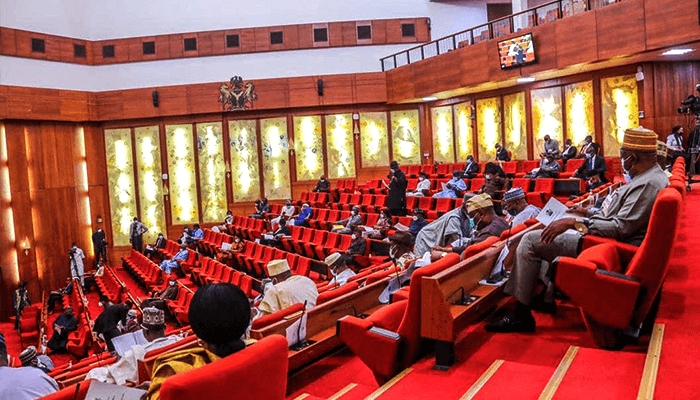
Senate has constituted a 12-member ad-hoc committee to advise it on how to respond to growing international concerns over the alleged state-backed persecution of Christians in Nigeria.
The decision was reached during a closed door session where lawmakers deliberated on recent claims by the United States government suggesting possible acts of genocide targeting Christians in some parts of the country.
The move followed increasing diplomatic scrutiny and the potential implications of such allegations on Nigeria’s international reputation and interfaith relations.
Members of the committee include Victor Umeh, Yemi Adaramodu, Aniekan Bassey, Niyi Adegbonmire, Abdul Ningi and Titus Zam.
Others include Tony Nwoye, Tahir Munguno and Asuquo Ekpenyong.
The committee has been tasked with developing a comprehensive position paper for presentation to the executive and the Senate.
The team is expected to come up with a document that would shape Nigeria’s legislative stance on the matter and guide its engagement in ongoing international discussions.
The Senate President, Godswill Akpabio, who made the declaration, noted that the position paper must be backed with verifiable facts and statistics.
Earlier, the upper chamber resolved to engage with the United States Congress to address and counter what it described as misleading narratives portraying the country’s security challenges as a Christian genocide.
The decision followed a motion raised by Senator Ali Ndume last week, which sparked a broader debate among lawmakers on the international perception of Nigeria’s internal security issues.
In an ensuing debate, lawmakers expressed concern that such narratives, though often arising from genuine concern, are grossly misinforming international partners and damaging Nigeria’s global image and economy.
Akpabio mooted the idea that an ad-hoc committee be set up to visit the United States and directly engage American lawmakers to clarify the situation.
He noted the need for private discussions, suggesting a closed door session and a smaller delegation to undertake the engagement.
“There are misconceptions that need to be corrected. We are dealing with a complex terrorist threat and it is important that our counterparts in the US understand that the violence affects both Christians and Muslims.”