Federal government has declared an end to the era where oil companies acquire field licenses and leave them dormant.
The government warned that it would no longer tolerate operators lacking the technical and financial capacity to develop oil fields, stressing that such licenses would be withdrawn.
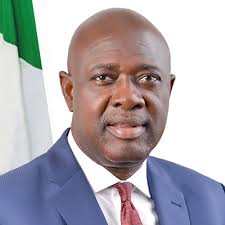
The Minister of State for Petroleum Resources ,Oil, Mr Heineken Lokpobiri, issued the warning at the ongoing 2025 Nigeria Oil and Gas Energy Week in Abuja on Tuesday themed Accelerating Energy Progress Through Investment, Global Partnerships and Innovation.
He said the government was determined to maximize oil production by ensuring that only serious investors retain access to Nigeria’s hydrocarbon resources.
“In our ongoing drive to boost national oil production, the federal government remains resolute in ensuring that maximum value is derived from upstream assets currently held by operators.
“This objective has taken on greater urgency as global financing for oil and gas projects continues to tighten, making it increasingly difficult for all operators to secure the capital needed to develop these assets.
“It is no longer acceptable for critical national resources to remain in the hands of companies that lack the technical or financial capacity to optimize them or worse, those who use such licenses merely as a lever to access scarce capital, only to divert it to unrelated ventures”, he said.
“Our oil and gas industry has witnessed far too many cautionary tales of this nature, and we must now draw a clear line”, he warned.
Mr Lokpobiri said the government has engaged an international consultant to evaluate the 273 fees and rates faced by oil companies in the country to align them with international best practices.
Also speaking, the Minister of State Petroleum Resources ,Gas, Mr Ekperikpe Ekpo said Nigeria had proven gas reserves of over 200 trillion cubic feet, yet value would only be created when resources were developed and utilised.
Mr Ekpo said that through the Decade of Gas initiative, the country was focused on translating its vast gas wealth into tangible socio-economic benefits.
This, he said, included driving industrialisation, expanding power generation, increasing domestic Liquefied Petroleum Gas ,LPG, usage, deepening gas-to-transport adoption, and growing gas export capacity.