
By Lois Sambo
The European Union-supported project, ‘Resilience, Engagement, and Conflict-Prevention for At-Risk Populations’ Protection, RECAP, has earmarked €4.5 million to support 537,000 people across 10 local government areas in Sokoto State.
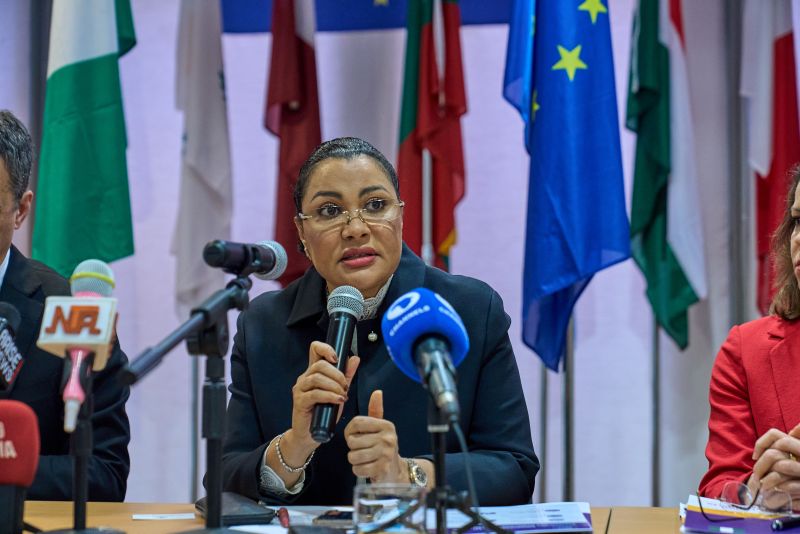
Ms Xenia Stoll, the Political Officer at the EU Delegation to Nigeria and ECOWAS, announced this during the project’s launch and external stakeholders’ grant opening in Sokoto.
Ms Stoll explained that the initiative is designed to bolster local capacity for conflict prevention and resolution by enhancing partners’ understanding of conflict dynamics. She noted that it would reinforce community mediation structures, establish inclusive dialogue platforms, and empower young people to serve as peacebuilders.
“It will also support conflict-sensitive media engagement to reduce harmful narratives and increase the dissemination of verified peace messages including through local languages.
“Strengthen peaceful coexistence in Sokoto State by reducing conflict drivers and improving resilience, social cohesion and equitable access to services.
“Services included; enhance community dialogue, mediation and conflict resolution, improve inclusive, climate-resilient and conflict-sensitive livelihood,” she said.
According to her, the project will also improve access to gender-sensitive healthcare, Sexual Reproductive Health Rights, SRHR, Gender-Based Violence, GBV, support, and Mental Health and Psychosocial Support, MHPSS, services.
Emphasising the value of the partnership between the EU and Sokoto, Ms Stoll highlighted the strategic importance of prevention, resilience, and inclusive governance, adding that the project could potentially be scaled up based on its success.
“The EU values the relationship with the authorities in their efforts to provide stability and prosperity for their population. Through the RECAP project we jointly commit to conflict prevention, social cohesion, and human security in Northwest Nigeria.
“By addressing the root causes of violence, such as exclusion, resource competition, and economic marginalization, this action strengthens local capacities for peace and contributes to long term stability in Sokoto State,” she added.
In his remarks, the Country Director of Action Against Hunger Nigeria, Mr Thierno Diallo, stressed the vital nature of stakeholder collaboration, noting that the project reflects a collective responsibility to move past crisis response and invest in sustainable peace.
Mr Diallo stated that the RECAP project is funded by the EU and implemented by Action Against Hunger Nigeria, ACF Nigeria, International Alert, IA, and the Save The Child Initiative, STCI. The rollout involves federal, state, and local authorities, alongside traditional institutions, civil society actors, and community leaders.
He added that the intersecting challenges of conflict, climate change, poverty, and displacement demand inclusive, locally owned solutions.
“RECAP will strengthen community resilience, restore trust, and empower women and youth as central actors in peacebuilding and recovery,” Mr Diallo said.
The Deputy Governor of Sokoto State, Alhaji Idris Gobir, reaffirmed the state’s commitment to the partnership, promising stability and long-term sustenance given the project’s profound impact on local lives.
Represented by the Commissioner for Health, Dr Faruk Abubakar-Wurno, the Deputy Governor described the intervention as a vital, life-changing initiative, expressing gratitude to the European Union and Action Against Hunger Nigeria for their continued solidarity.
“The focus on dialogue, livelihoods, water governance, and protection directly aligns with our development and peacebuilding priorities.
“We remain committed to providing the necessary institutional support to ensure that this project delivers lasting benefits for our communities,” Dr Abubakar-Wurno said.
The Sultan of Sokoto, represented by the District Head of Kilgori, Dr Jabbi Kilgori, urged the partners to consistently involve traditional rulers in their activities, noting that they are closest to the populace and deeply understand community structures.
The launch concluded with contributions from representatives of federal and state ministries, departments, civil society organisations, and community groups, all of whom pledged their commitment to achieving the project’s objectives.