By Caleb Ishaya
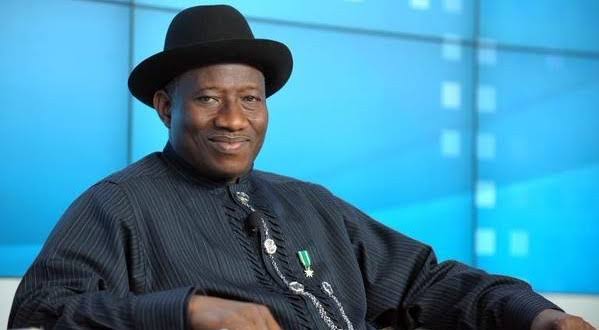
Ex-President Goodluck Jonathan, yesterday, revealed that Boko Haram insurgents nominated former President Muhammadu Buhari to represent them in peace talks with the federal government during his tenure.
Speaking at the public presentation of Scars, a book authored by a former Chief of Defence Staff, General Lucky Irabor (retd), in Abuja, Jonathan said his administration had set up several committees to explore dialogue with the sect, adding that in one of such instances, the insurgents named Buhari as their preferred negotiator.
He added that, based on that, he felt it would have been easy for Buhari, when he emerged as president, to negotiate with the terrorists to surrender, but the insurgency persisted.
Jonathan stated, “One of the committees we set up then, Boko Haram nominated Buhari to lead their team to negotiate with government.
“So I was feeling that, oh, if they nominated him to represent them and have a discussion with government, then when Buhari took over, it could have been an easy way to negotiate with them and they would have handed over their guns. But it is still there till today.”
Jonathan noted that Buhari’s inability to eradicate Boko Haram terrorists showed that the crisis was more complex than often portrayed.
He said, “If you conduct research and interview many people, you will only get part of the story, but never the full story. I was there. Boko Haram started in 2009 when I was vice president. I took over in 2010 and spent five years battling the insurgency until I left office.
“I thought that after I left, within a reasonable time, General Buhari would wipe them out. But even today, Boko Haram is still there. The issue is far more complex than it is often presented.
“So, it is a bit complex and not a single story. I believe that as a nation, we have to look at the issue differently from the conventional approach. I believe one day we will overcome it. Once again, let me thank General Irabor for this, because I always appreciate people who document events clearly. That way, when we write our own accounts, we can borrow from such documentation.
“I also believe that all the military officers involved in the Boko Haram saga should provide information about what the group truly stood for.”
Jonathan also said the issue is beyond hunger, adding that his administration employed so many strategies, but they did not work.
He said, “If it was only about hunger—because we tried different options—I don’t want to sound like I am defending my government. That will be left for history when we document our books.
“But I believe we did our best: we set up different committees and tried various approaches during the five years I was in office. I believe the late Buhari, too, must have tried his best.
“I believe the government—luckily, with the defence minister here and the service chiefs represented—must adopt a slightly different approach. God willing, we will be able to resolve this crisis.”
Jonathan described the abduction of the Chibok schoolgirls in 2014 as a permanent scar on his administration.
The former president added that he hoped some leaders of the insurgent group would eventually document their actions, similar to how key actors of the Nigerian Civil War wrote their own accounts, to provide clarity on the insurgency’s motives.
He said, “It is a scar I will die with. But perhaps later, more details may become known and that too has to do with Boko Haram.
“What did they really want? Our chairman once raised the issue when he interviewed some of them and they gave him certain perspectives. But I pray that one day, some Boko Haram leaders may be literate enough to document what they have done, so that people will truly understand what they want. It is similar to the story of the Nigerian Civil War.”
Jonathan urged the current administration to consider a carrot-and-stick approach, stressing that the group’s sophisticated weapons suggest external support beyond mere hunger or poverty.
He said, “Issue of carrots and the stick may be adopted, and yes, probably, the needs are there, but if you look at the weapons they use and you value it, then you know that these are not hungry people.
“So, the soldiers that sometimes capture some of the weapons will see better, but the weapons they use, the ammunition they use, sometimes they even have more ammunition than our soldiers.
“Where are these guns, sophisticated weapons coming from? You begin to see that external hands are also involved, especially when I was president. ”
Boko Haram emerged in the early 2000s in Borno State, but became a major security threat after its leader, Mohammed Yusuf, was killed in police custody in 2009.
The group escalated its violent campaign against the Nigerian state, including bombings, mass abduction and attacks on military and civilian targets.
In 2012, at the height of its violence, reports surfaced that the sect named Buhari among respected northern leaders that they trust to mediate between them and government.
Buhari, however, publicly rejected the offer at the time, accusing the Jonathan administration of trying to drag his name into the crisis for political reasons.