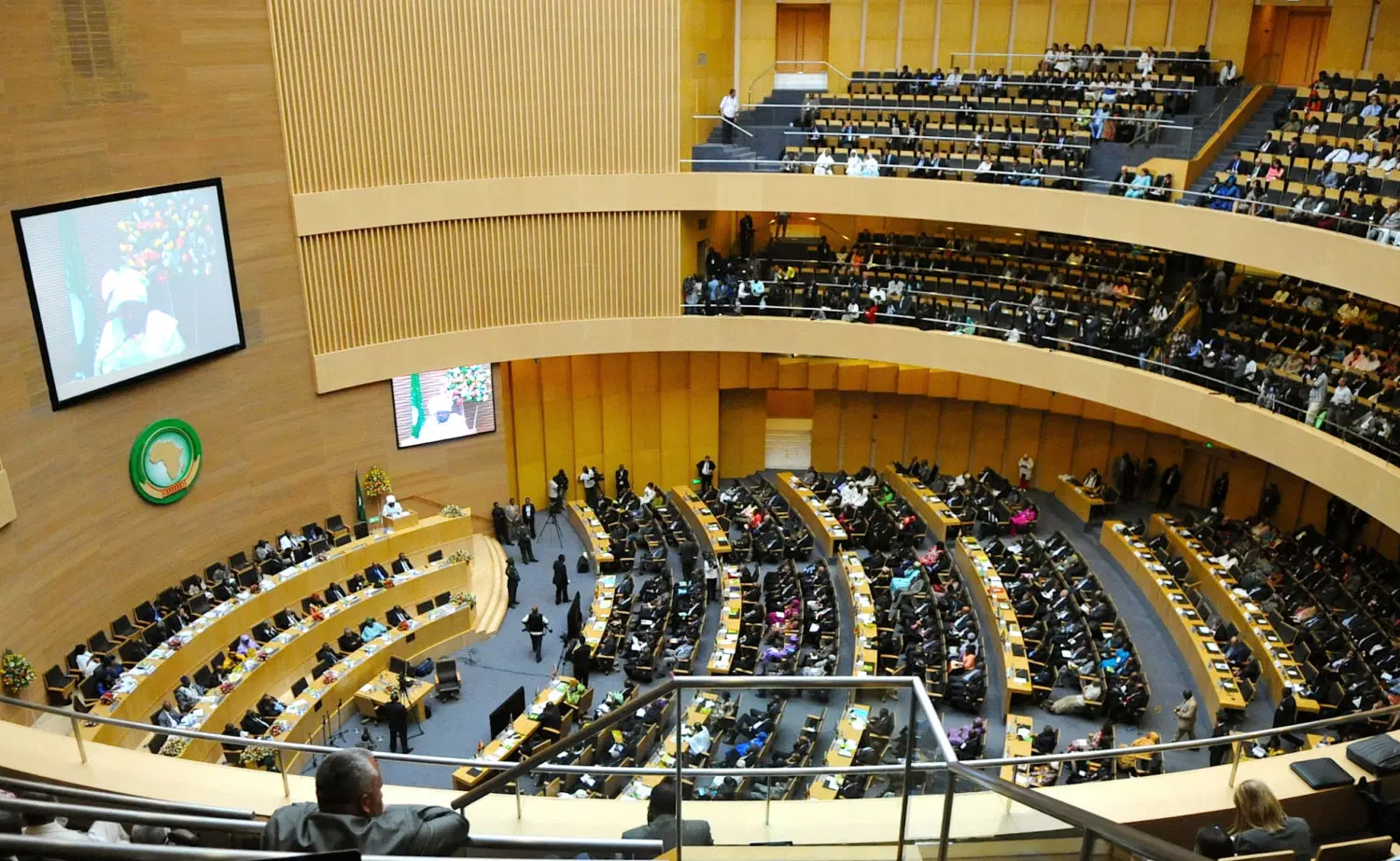
The African Union (AU) on Friday convened an emergency meeting to discuss the future of its military mission in Somalia following the United States’ decision to withdraw crucial financial support, citing limited progress in the fight against Islamist insurgents.
The move follows Washington’s announcement that it will stop funding the United Nations Support Office in Somalia (UNSOS), the agency responsible for providing the majority of logistical support to the African Union Support and Stabilization Mission in Somalia (AUSSOM).
Somalia has battled the Al-Shabaab insurgency for nearly two decades, yet the militant group continues to control significant portions of the country despite ongoing military operations.
AUSSOM remains the primary regional force assisting Somalia’s security agencies and currently deploys approximately 12,000 peacekeeping troops across the country.
According to a letter dated July 1 and addressed to the African Union, the United States informed the continental body that financial support for UNSOS would end at the close of 2026.
The letter, confirmed by a senior African diplomat, also indicated that Washington would oppose any future United Nations Security Council approval for logistical assistance to AUSSOM.
Describing the situation, the diplomat said the decision effectively threatens the continuation of the mission.
“The decision is irreversible,” the official said, adding that without the UN-backed logistics, “the mission is finished.”
An internal AU document obtained by AFP showed that the African Union Commission immediately called an emergency meeting to deliberate on the future of AUSSOM.
The senior diplomat, who spoke anonymously because he was not authorised to comment publicly, explained that the mission relies heavily on UN logistical support financed by the United States.
“Without UN logistics, which were funded by the US… we will have to draw a line under our mission in Somalia,” the diplomat said.
The United States noted in its communication that it has spent nearly two billion dollars supporting UN operations in Somalia since 2007.
It also stated that more than 1.6 billion dollars had been committed to supporting African troops deployed in Somalia, alongside hundreds of millions of dollars in assistance for Somali security forces and billions more in humanitarian and development aid.
Despite the extensive support, Washington argued that Somalia’s government had failed to make sufficient progress in taking responsibility for its own security.
According to the letter, the Somali authorities had not sustained gains against Al-Shabaab, assumed ownership of national security functions or implemented meaningful reforms within the security sector.
Neither the African Union nor the Somali government issued an immediate official response to the development.
The funding dispute comes as Somalia faces increasing political instability.
Earlier this year, President Hassan Sheikh Mohamud secured constitutional amendments extending his tenure by an additional year after his original term expired on May 15.
The constitutional changes have been strongly opposed by opposition parties and several regional administrations, resulting in violent confrontations in parts of the country, including the capital, Mogadishu.
Although Mohamud’s administration recorded notable successes against Al-Shabaab following his election in 2022 through a large-scale military offensive, many of those territorial gains have since been reversed.
The insurgent group continues to maintain a significant presence across large areas of central and southern Somalia.
Security analyst Zekarias Beshah of the Amani Africa think tank warned that the situation could deteriorate further if international support declines.
“Somalia forces were supposed to gradually take responsibility for security, but it’s not happening. The political elite is too busy infighting,” he said.
“One cannot rule out a major advance by Al-Shabaab,” Beshah added.
The emergency meeting is expected to determine possible alternatives for sustaining the AU mission as uncertainty grows over its future funding and operational capacity.