Says President Tinubu’s Support Drives Agency’s Growing Impact
By Joel Ajayi
Director-General of the Nigerian Technical Aid Corps (NTAC), Rt. Hon. Yusuf Buba Yakub, has identified selfless sacrifice and the enduring spirit of Pan-Africanism as the driving forces behind Nigeria’s Technical Aid Corps (TAC) Scheme, describing it as one of the country’s most effective instruments for promoting development and strengthening diplomatic ties across Africa, the Caribbean and the Pacific.
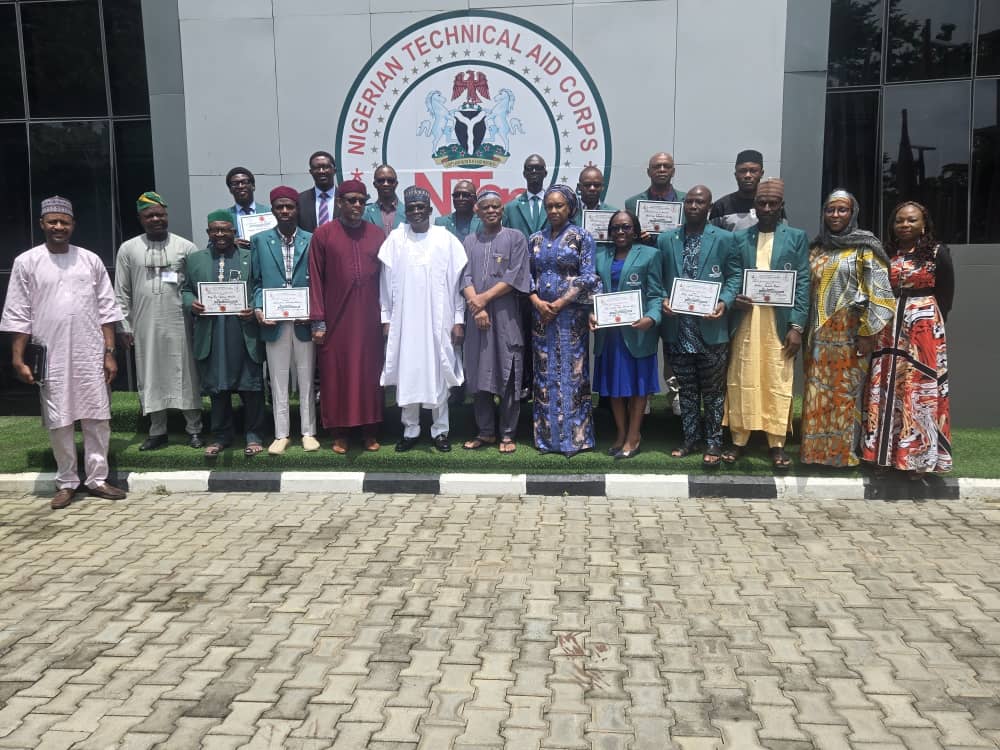
Yakub stated this on Monday in Abuja during a reception organised for 11 Nigerian volunteers who successfully completed their two-year technical assistance assignment in The Gambia.
He said the TAC Scheme continues to reflect Nigeria’s longstanding commitment to supporting fellow developing nations through the deployment of skilled professionals, despite the country’s own economic and developmental challenges.
According to him, Nigeria’s decision to continue investing in the programme is rooted in a deep sense of responsibility to advance the welfare of people of African descent and foster stronger South-South cooperation.
“The sacrifices made by Nigeria through the Technical Aid Corps Scheme are inspired by our Pan-African ideals and commitment to the development of fellow African and Black nations. It is a labour of love that demonstrates Nigeria’s belief in shared progress and collective development,” Yakub said.
The NTAC Director-General also attributed the agency’s recent achievements to the support of President Bola Ahmed Tinubu, noting that the President’s commitment to capacity development and international cooperation has provided the necessary backing for the agency to expand its impact.
He said President Tinubu’s long-standing interest in human capital development, even before assuming office, has strengthened Nigeria’s participation in South-South Cooperation and other international development initiatives being coordinated through NTAC.
Yakub reaffirmed that the Technical Aid Corps remains a vital instrument of Nigeria’s soft power diplomacy, deploying professionals in critical sectors such as education, health, engineering, agriculture, law, public administration and governance to partner countries.
Earlier, Director of Programmes at NTAC, Ambassador Bello A. Jaye, formally presented the returning volunteers to the Director-General and commended the management of the agency for creating an enabling environment that contributed significantly to the success of the assignment.
He praised the volunteers for serving as worthy ambassadors of Nigeria and upholding the country’s reputation through professionalism, dedication and excellence during their stay in The Gambia.
Responding on behalf of the returning volunteers, Engr. Oyetunji A. Akinlabi expressed appreciation to President Tinubu and the NTAC leadership for their unwavering support throughout the assignment.
He said the team made significant contributions in higher education, judicial development, public policy, research and institutional reforms during their two-year deployment.
According to Akinlabi, the volunteers developed a University Policy and Conditions of Service for the University of Applied Science, Engineering and Technology (USET) in The Gambia and also contributed to the country’s National Research Policy Framework.
He added that the team supported reforms in student financing, research administration and other strategic sectors aimed at strengthening national development.
“We carried Nigeria’s mission and delivered. We impacted lives, strengthened institutions and demonstrated that Nigeria remains a dependable development partner. The people of The Gambia continue to appreciate Nigeria’s contributions across various sectors,” he said.
The event climaxed with the presentation of Certificates of Service to the returning volunteers in recognition of the successful completion of their foreign assignment.
The ceremony underscored NTAC’s continued commitment to advancing Nigeria’s foreign policy objectives through technical assistance, knowledge transfer, capacity building and human capital development, while reinforcing the country’s leadership role in promoting sustainable development across Africa, the Caribbean and the Pacific.