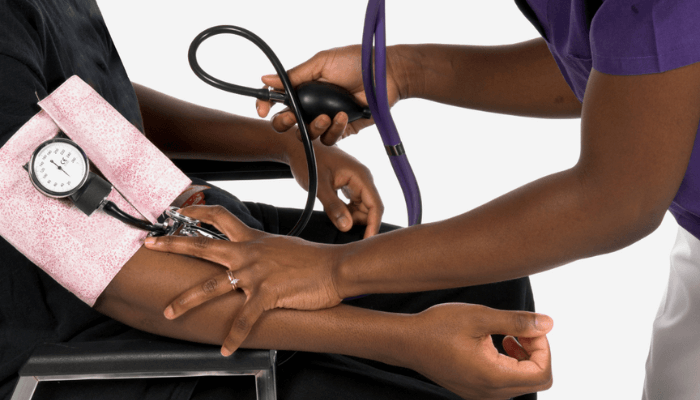
Four out of ten Nigerian adults are walking around with a ticking time bomb. This
isn’t just a clinical statistic; it is a silent, structural heartbreak hiding in plain
sight. Discover the terrifying reality, and the human faces defying Nigeria’s most
overlooked medical emergency, JULIET IBIMINA and LOIS SAMBO write.
On a deceptively ordinary, bustling afternoon in Abuja, the conversation around
healthcare shifted. For a few hours, hypertension was stripped of its sterile clinical
data, its bureaucratic policy frameworks, and its abstract charts. Instead, it became
a collection of raw, deeply personal testimonies of terror, survival, and a quiet,
fierce determination to stay alive.
The gathering, orchestrated by the Leadership Initiative for Sustainable
Development, LISDEL, brought together an eclectic mix of journalists, advocates,
patients, and medical experts. Their collective mission? To find a way to amplify
the conversation around a condition that quietly sabotages millions of lives across
Nigeria every single day.
Olympus Adebanjo, LISDEL’s Public Finance Manager, steered the discussion
with an uncomfortable truth. He challenged the room to confront what many inside
the medical community consider an overlooked public health emergency. Look
around, Adebanjo suggested: campaigns for communicable diseases dominate our
television screens, fill our radio waves, and saturate community outreach programmes.
Yet, public messaging regarding hypertension remains remarkably,
dangerously absent.
The arithmetic of this silence is staggering. Four out of every ten Nigerian adults
are currently living with hypertension. Despite this, public awareness remains
disproportionately low compared to other health conditions that benefit from heavy
government backing and international donor funding. For Adebanjo, shifting this
narrative requires an aggressive cocktail of media engagement, robust public
education, and serious financial investment in preventive, diagnostic, and treatment
services that can actually reach the vulnerable, both in urban high-rises and rural
homesteads.
Yet, beyond the spreadsheets and the funding deficits lie the human stories—the
real-time consequences of fear, denial, and delayed diagnosis.
Take Francis Okonkwo for instance. Today, he is a poised, articulate focal person
for the Patient-led Advocacy Working Group on Non-Communicable Diseases,
NCDs. But his path to advocacy began with the same paralysing anxiety that grips
millions of his compatriots. For years, Okonkwo actively avoided having his blood
pressure checked. It wasn’t carelessness; it was terror. He feared what the monitor
might reveal and how he would cope with the aftermath.
“I didn’t want to go for any check,” Okonkwo recalled, admitting he fell into the
common human trap of believing that ignorance offered a temporary shield.
That illusion shattered when a close friend’s undetected hypertension culminated
in a catastrophic medical emergency. Okonkwo received a frantic phone call one
afternoon. His friend was at home, screaming uncontrollably that his eyes felt as
though they were about to burst from his skull. Okonkwo rushed over and got him
to a hospital, where a stunned doctor delivered a grim verdict: the man’s blood
pressure had soared past 200. He was on the precipice of a fatal stroke or total
organ failure.
“The doctor said he couldn’t explain why my friend was still alive,” Okonkwo
whispered. Though the man survived the initial crisis and spent a week in hospital,
the internal damage was done. Within seven days of being discharged, he died
from related complications.
The tragedy transformed hypertension from an abstract medical definition into a
lethal reality for Okonkwo. He chose to confront his own health. He began
treatment, his sleep improved, and his body recovered. But the battle didn’t stop
there; over time, he developed diabetes and diabetic neuropathy, which leaves a
persistent, burning sensation in his feet.
“People need to know. It must become a routine,” he insisted. His anxieties have
now shifted to younger Nigerians, who are increasingly exposed to highly
processed diets, alcohol, and excessive sugar. He pointed to another young friend
who drank soft drinks with almost every meal, only to be diagnosed with diabetes
at an age when most assume they are invincible.
Across the room, Mrs Ijeoma Joseph-Agbara nodded in solemn agreement. Also a
member of the Patient-led Advocacy Working Group, she knows precisely how
easily the condition hides until it is nearly too late. She recounted a chilling period
in the Kuje area, where four women collapsed and died in quick succession,
entirely unaware they were hypertensive.
“I think the problem is sensitisation,” Joseph-Agbara reflected. In many
communities, the default response to a headache or fatigue is to walk to an
informal medicine vendor and buy malaria drugs. She nearly made the same fatal
mistake. Feeling unwell, she self-medicated for malaria. When her condition
deteriorated, she finally went to a clinic.
The attending doctor looked at her test results, bypassed her explanations about
malaria, and pointed directly to her blood pressure reading. Emergency
intervention was required immediately.
“I didn’t know I was dying,” she recalled. The shock of that moment turned her
into an advocate, particularly for rural women who rarely have access to routine
screenings.
Providing a sobering bird’s-eye view of the crisis, Professor Emmanuel Alhassan,
Country Coordinator of the Global Health Advocacy Incubator, noted that Nigeria
is enduring one of the highest hypertension burdens in its history, with an
estimated 27.5 million people living with the condition.
To put that in perspective, Professor Alhassan drew a stark comparison with HIV.
Approximately two million Nigerians live with HIV, a condition that rightly
receives immense structural support. Yet, hypertension affects over thirteen times
that number, whilst receiving a fraction of the funding or media real estate. In 2022
alone, hypertension-related illnesses claimed over 220,000 Nigerian lives—far
eclipsing deaths from HIV in the same timeframe. Furthermore, a measly 2.8 per
cent of hypertensive Nigerians have their condition effectively under control.
“This is not about diminishing HIV,” Alhassan clarified. “Visibility influences
policy decisions, budget allocations, and public understanding.
He summed up the crisis with a phrase that hung heavily over the room: “There is
an elephant in the wardrooms, but not yet in the newsrooms.” Hospitals encounter
the carnage of hypertension daily, yet the media cycle remains quiet.
Ultimately, the Abuja gathering proved that behind every sterile statistic is a
human face—a parent, a colleague, a neighbour. In an era where lifestyle diseases
are quietly accelerating, the voices of patients are becoming impossible to ignore,
transforming private grief into a loud, nationwide demand for action.