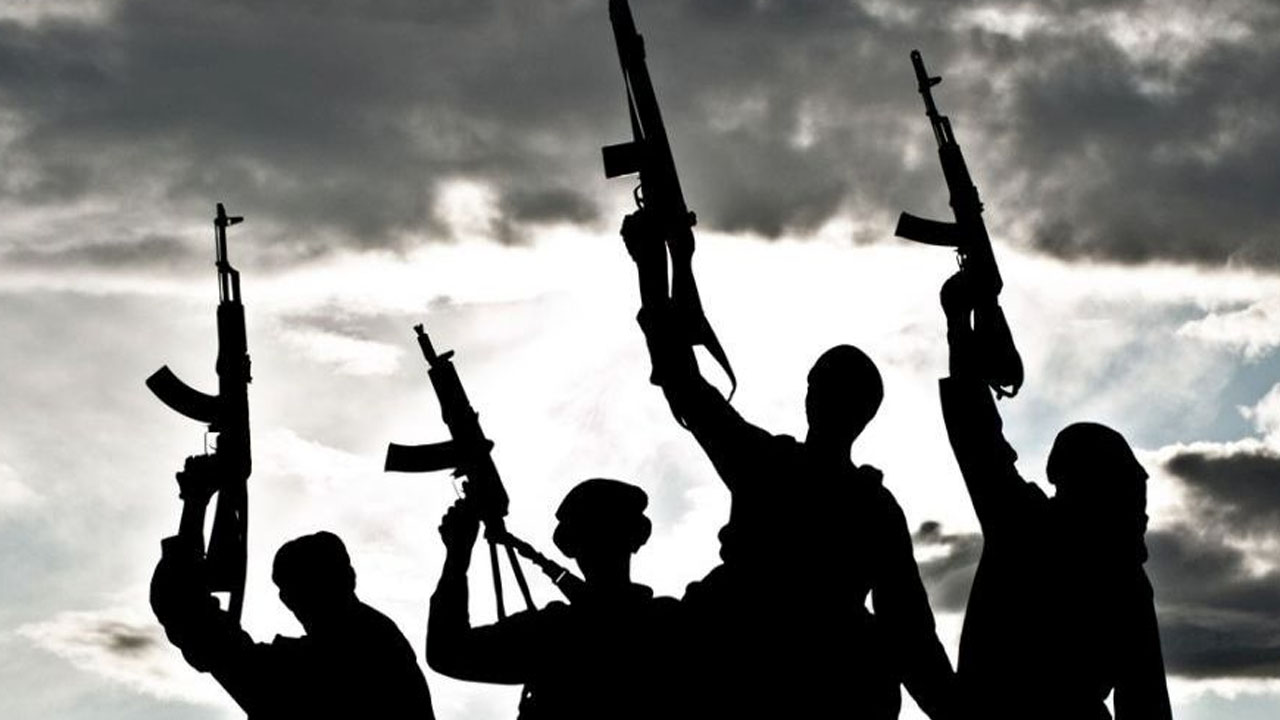
For over a decade, Nigeria has fought terrorism with raw military might. Yet, as guns fail to silence violent ideologies, an ambitious, fiercely debated deradicalisation programme offers insurgents an off-ramp from eternity—forcing a traumatised nation to weigh the price of peace against the demands of justice, writes DAVID MAXWELL.
For well over a decade, the recipe for tackling Nigeria’s twin plagues of Islamist terrorism and rampant banditry has been overwhelmingly kinetic. It is a strategy measured in gun barrels, air strikes, and boots on the ground. Success, when it comes, is announced in the bleak vocabulary of warfare: camps dismantled, kidnap victims salvaged, and thousands of insurgents “neutralised.” Yet, as any seasoned conflict reporter will tell you, guns are remarkably bad at killing ideas. While military offensives can clear a forest, they rarely clear the grievances, poverty, or ideological fervor that drew young men into the bush in the first place. When the artillery falls silent, the rot often remains. It was this bruising reality that forced the Federal Government to look beyond the battlefield. Enter Operation Safe Corridor, OPSC – a highly ambitious, fiercely contested non-kinetic initiative designed to give low-risk, repentant fighters an off-ramp from eternity.
Nearly ten years after its inception, however, this blueprint for peace has become one of the most divisive social experiments in modern West African history. To its champions, it is a masterstroke of counter-insurgency that is hollowing out rebel ranks from within. To its detractors, particularly those living in the scarred landscapes of the North-East, it looks uncomfortably like state-sponsored amnesty for monsters.
De-escalation or Deception?
On paper, the mechanics of Operation Safe Corridor are meticulous. Militants who voluntarily surrender undergo an intense cocktail of psychological counselling, religious re-education, civic therapy, and vocational training. The goal is to strip away the nihilism of the trenches and replace it with a trade—tailoring, carpentry, shoemaking—before handing them back to state governments for reintegration into polite society.
Lately, the programme has faced an unprecedented deluge of clients, driven by sustained military pressure in the North-East. But numbers have brought scrutiny. Rumours have swirled that rehabilitated fighters are secretly being back-doored
into the regular Nigerian Armed Forces—a claim that senior military brass have spent considerable energy denying.
“The suggestions are entirely unfounded,” insists Brigadier-General Yusuf Ali, the coordinator of the programme. He maintains that the initiative is an auxiliary tool, not a replacement for military might. According to Ali, the rigorous profiling and post-release monitoring mechanisms ensure that the state is creating peaceful neighbours, not Trojan horses.
It is a view echoed at the very top. General Olufemi Oluyede, the Chief of Defence Staff, has vigorously defended the framework as a globally recognised necessity. You simply cannot shoot your way out of a protracted insurgency, the top general argues; you must leave a door open for the enemy to surrender, or they will fight to the last man.
Breaking the Enemy from Within
Among security analysts, the strategic logic of the carrot-and-stick approach is widely accepted. “You cannot eliminate every single insurgent through military action,” notes Dr Sani Abubakar, a prominent security analyst.
“If the government creates no pathway for a peaceful surrender, fighters will stay on the battlefield because they have nothing to lose. Deradicalisation weakens terrorist organisations from within because it plants the seeds of distrust. Every defection makes the commanders look over their shoulders.” Furthermore, the dividends of these surrenders often arrive in the form of priceless wartime currency: intelligence. Dr Steve Okwori, a defence analyst, points out that the operational capacity of these networks has been severely degraded by the inside knowledge brought home by defectors. Logistics routes have been mapped, commanders located, and hostages rescued—all because someone chose a sewing machine over an AK-47.
“These are strategic, tangible gains that shouldn’t be dismissed lightly,” Okwori argues. But even he concedes that the programme has a glaring, emotionally agonizing blind spot.
The Unhealed Scars of the Survivors
That blind spot is the victim. For the millions of Nigerians who have spent the last decade dodging bullets, burying relatives, or rotting in squalid Internally Displaced Persons (IDP) camps, the sight of former executioners being fed, housed, and retrained by the state is a bitter pill to swallow.
“I am a victim, and no one can quantify my anguish,” says Mrs Liyatu Tawasu. Her voice carries the weight of an unimaginable tragedy: in 2014, Boko Haram insurgents butchered fifteen members of her extended family during a raid on Gwallam community. Today, she watches survivors struggle for basic dignity while resources are funneled into the rehabilitation of the perpetrators. It is a sentiment that echoes through the tents of IDP camps across the region. Malam Ibrahim Musa, a community leader from Borno State, warns that peace cannot be sustained on a foundation of unresolved trauma. He points out that ordinary citizens remain deeply apprehensive because the military’s criteria for labeling a former fighter “low risk” remains shrouded in secrecy. Without transparency, communities are being asked to accept a leap of faith they are ill-
prepared to take.
The Delicate Balance Ahead
Can justice and rehabilitation coexist, or are they fundamentally incompatible? Peacebuilding experts argue that they must be twin pillars of the same house. True stability will not come from locking up every radicalised youth forever, nor will it come from ignoring the cries of those they terrorised.
If Operation Safe Corridor is to survive its own controversial reputation, the government must strike a finer balance. Reintegration cannot happen in a vacuum.
For the community to open its arms to the repentant, the state must first extend a hand to the broken—through robust compensation, trauma healing, and the reconstruction of decimated villages. Until the victims feel that their justice is prioritized alongside the insurgent’s reform, Nigeria’s path to peace will remain a fragile, tightrope walk over an abyss of resentment.