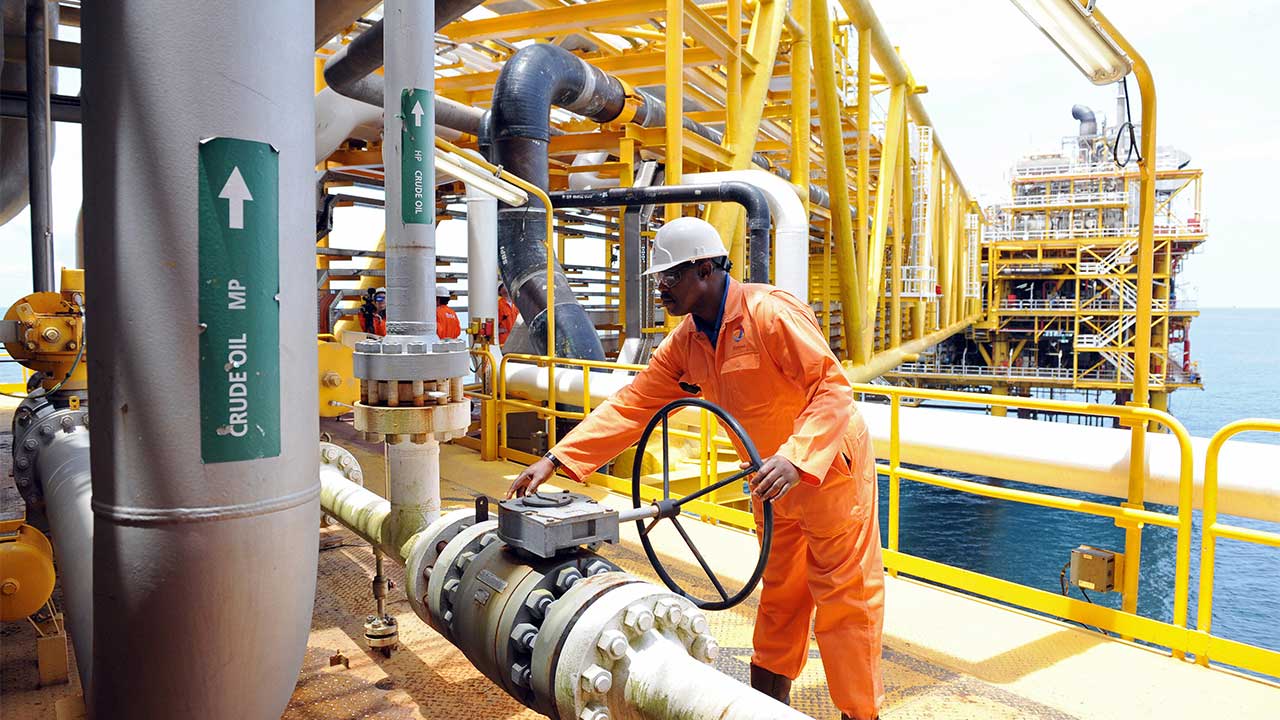
Since the discovery of oil in commercial quantity in Nigeria, the‘black gold’ as described in some parlance, it has continued as one that has attracted several controversies.
With a first major oil discovery in Oloibiri in 1956 shortly before the country’s independence it has been a mixed grill of the good, the bad and the ugly. Nearly 70 years after, the twists and turns have been characterized by incompetence, mismanagement, corruption and sundry vices by the various managers of this resource which remains the mainstay of the nation’s economy.
Worse still, the scene had been characterized by deadly agitations from oil-producing communities over spillage, allegations of inadequate Corporate Social Responsibility, CSR, organised oil theft and sundry issues dogging the sector. Notwithstanding these challenges, the nation has been forging ahead by harnessing what it can to make up the largest of its earnings from oil revenue.
One of the bold moves in the sector is boosting locally refined products and enhancing inward integration, as indigenous refineries came on stream in various locations with two in Port Harcourt in present day Rivers State, one in Warri and another in Kaduna in today’s Delta and Kaduna states respectively. That initiative can hardly be faulted by even the most ardent pessimist against government’s involvement in business ventures, since the motives were clearly aimed at responding to the trend in other shores. Nigeria was therefore not isolated as it seemed prepared to take a befitting place in refining capacity.
Reputed as the sixth highest oil exporter in sub-Saharan Africa, it would be inordinate for the country not to be involved in domestic refining where it can serve domestic consumption and avoid the weighty burden of importation with attendant foreign exchange burdens.
Historically, the country is coming from a long refining experience as it all began in 1965 when Shell BP, the then global oil giant started a 60,000 bpd refinery in Elesa, Eleme, near Port Harcourt. This was later nationalized and taken over by Nigeria, thus making it the first indigenous refining entity.
Indeed at the onset of the creation of the other refineries, it was obvious that the growing economy and increased industrial needs necessitated the creation of additional refineries and then followed the birth of Warri Refinery in 1978, with that of Kaduna following in 1980. To create a wider scope for the local capacity, a second larger facility was established in 1989 in Port Harcourt.
Indeed, the nation’s bloating population and growing economy further gave impetus to add the refineries to the present four by the government’s reckoning of successive governments. That was hailed as foresight then, as it was believed rising local consumption patterns would be adequately contained.
It is doubtful if these ambitious efforts have translated to expected destinations in terms of local refining capacity.
These efforts if anything have been mere lofty dreams yet to actualize the desired goals with the refineries tottering at the brink of collapse despite several billions of naira spent in recent years through many administrations in turn-around maintenance. The cost in these futile attempts at revamping the refineries many analysts say is prohibitive and even wasteful, with no meaningful impact achieved.
With the initiative to boost private sector participation to ease the incessant shocks experience intermittently in the local consumption segment occasioned by fuel scarcity and drifting uncertainties, the entry of the private sector in the refining segment was seen as a welcome and befitting one for a nation which produces crude but ironically imports finished products. Therefore, when Dangote Refinery and a few others came on stream it was largely believed a new era had set in for the country in that segment. However, it has increasingly become obvious that the Dangote quest alone cannot sustain the huge demand for refined products across the country. The nation’s consumption pattern in the various products’ segments is such that it outweighs what Dangote and the few other participants can accommodate.
Beyond the cosmetic approach of stopping issuance of import licences of to enhance local refining when obviously the capacity is lacking, the government must take the bull by horns by seeking viable partnership with reputable business entities across global major oil producing hubs towards revamping state-owned refineries and also create the ambience for more players in the sector.
With such a scenario, Nigeria could surpass its local needs and soon become a net exporter of petroleum products. However, it takes a political will to unseat the powerful interests benefitting from these lapses in the chain of the nation’s oil sector.
Indeed, we emphasize that importation could even be vulnerable to unforeseen circumstances as the current Iran- US, Israel crises has amplified.
[3/18, 10:34 PM] Editor Ibro Aljazirah Nigeria: Cover fillers
FG Secures Coventry University Deal To Deliver UK degrees In Nigeria
Federal Government has secured a partnership with Coventry University under a Transnational Education, TNE, arrangement to establish a campus in Nigeria for the delivery of affordable, globally recognised degrees.
Minister of Education, Dr. Tunji Alausa, disclosed this in a statement issued yesterday in Abuja by Folasade Boriowo, Director of Press and Public Relations, Federal Ministry of Education.
Alausa, who is currently in the United Kingdom accompanying President Bola Tinubu, said he had engaged with UK university leadership, key investors, and development partners to drive the initiative.
He said the proposed campus would be located in Alaro City, Lagos State, and would offer Bachelor’s and Master’s programmes in Science, Technology, Engineering, Mathematics and Medicine, STEMM, Business, and Technical and Vocational Education and Training.
According to him, the degrees would be equivalent to those awarded in the United Kingdom, with admissions expected to commence between the third and fourth quarters of 2026, subject to regulatory approvals.
The minister said the initiative was designed to expand access to world-class education at reduced cost, while strengthening skills development and improving graduate employability.
He added that the programme would enable Nigerian students to study locally while receiving international-standard education.
Alausa noted that the partnership, supported by the UK’s Department for Business and Trade, underscored the government’s commitment to positioning Nigeria as a hub for knowledge, skills, and innovation. NAN
CVR Phase II: INEC Records 2.6m Registrations In Week 10
Independent National Electoral Commission, INEC, has said that 2,657,784 Nigerians have successfully completed their registration in the ongoing second phase of the Continuous Voter Registration, CVR.
The Commission disclosed this in its week 10 update released on Tuesday, titled “Completed Online and Physical Registration as at March 13.”
The update showed that 1,563,169 registrants completed their pre-registration online, while 1,094,615 Nigerians opted for physical registration.
A breakdown of the states showed that Jigawa recorded the highest number of completed registrations with 171,471, followed by Lagos with 154,565 and Kano with 136,073, while Anambra recorded the lowest number of completed registrations with 21,836.
Female registrants led with 1,508,858 ,57% , while males accounted for 1,148,926 ,43%..
In terms of age distribution, youths between ages 18 and 34 dominated the exercise with 1,813,082, accounting for 68.22%of the total registrants.
Students represented the largest occupational group at 640,826 that is 24.11%, followed by those in business at 540,376 representing 20.33%.
The update also showed that a total of 37,687 Persons with Disabilities, PWDs, had also registered so far.
INEC, however, clarified that the current figure of 2.6 million was a preliminary total.
“This is a preliminary figure pending data clean-up during the period for claims and objections by citizens, followed by the deployment of the Automated Biometric Identification System, ABIS”, INEC said.
The independent electoral body also clarified that registration in the Federal Capital Territory, FCT, remained suspended following the Area Council Election held on Feb. 21, in compliance with Section 9 (6) of the Electoral Act 2022.
The electoral body urged eligible Nigerians who were yet to register to visit its official portals at https://cvr.inec.gov.ng or https://cvr.inecnigeria.org to begin the process. NAN