By Blessing Otobong-Gabriel
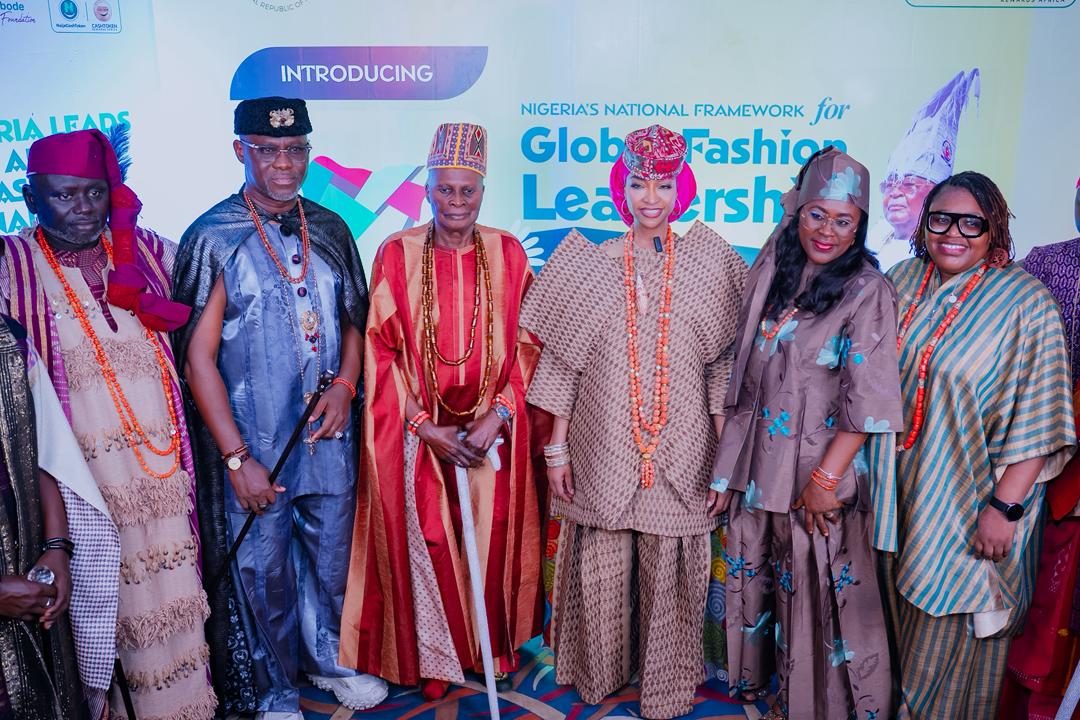
The Federal Government of Nigeria has officially adopted the Afroliganza Vision, marking a major milestone in Africa’s creative and cultural evolution.
Speaking at the World Press Conference on the Adoption of the Afroliganza Vision, the Minister of Arts, Culture and the Creative Economy, Bar Hannatu Musa Musawa declared that Nigeria is not just adopting the continental initiative it is leading it.
Afroliganza, described as the African Fashion Renaissance, is an ambitious vision pioneered by the Lai Labode Heritage Foundation under the leadership of Balogun Lai Labode, PhD. It seeks to unite African nations through fashion, culture, and creative enterprise, institutionalising African creativity through policy, trade, and diplomacy while empowering designers, artisans, and storytellers across the continent.
The minister emphasized that Nigeria’s adoption of Afroliganza reflects the nation’s commitment to place culture, heritage, and fashion at the center of economic diplomacy and global engagement. “Nigeria is not only adopting Afroliganza; we are leading it,” the minister said, announcing Nigeria as the first country to sign the Confederation of African Fashion (CAFA) Charter.
CAFA, the continental body driving the initiative, aims to integrate Africa’s fragmented fashion industries into a single cooperative framework
Convener of the Confederation of African Fashion (CAFA) and President of the organisation, Balogun Lai Labode, Ph.D., expressed deep gratitude and purpose at Nigeria’s adoption of the Afroliganza Vision.
Speaking at the event, he said: “Today, Nigeria becomes the first African nation to sign the African Fashion Industry Growth Charter, and for that commitment, we are profoundly thankful. We also acknowledge the Lai Labode Heritage Foundation for its indispensable partnership in this historic moment.”
Dr. Labode acknowledged the challenges facing Africa’s creative sector, including cultural fragmentation, lack of coordinated global strategy, weak cultural integration in trade and diplomacy, and inadequate creative infrastructure.
Despite these hurdles, he said the opportunities are immense.
“According to Worldometer, Africa is home to over 1.3 billion people, a rapidly growing youthful population, and a creative voice admired and followed around the world. Globally, fashion is a multi-trillion-dollar industry estimated at over $15 trillion annually (African Business, 2024). In comparison, Africa’s fashion and textile market, valued between $30 billion and $65 billion (AfDB, 2023), remains largely untapped, with much value lost to imports and limited local processing.
“Africa currently exports over $10 billion worth of cotton-based products while importing more than $20 billion worth of similar materials (UNESCO, 2023). That mismatch is our opportunity.”
He explained that under the African Continental Free Trade Area (AfCFTA), CAFA will mobilize policy, investment, and expertise to transform these dynamics. The body will coordinate fashion institutions, events, and national platforms across the continent and serve as the home of the African Global Fashion Games (AGFG) — the operational engine implementing CAFA’s vision through programme execution, stakeholder engagement, and strategic management.
Dr. Labode noted that optimism is rising within the industry: “African designers are more confident, visible, and commercially savvy than ever before. They now headline runways in Lagos, Paris, London, and New York, collaborate with global brands, and connect directly with customers through digital platforms. E-commerce in African fashion is expanding rapidly, social audiences are growing by millions, and investor interest is accelerating. CAFA will harness that momentum and translate it into systemic, continent-wide growth.”
He reaffirmed CAFA’s bold vision to build a $500 billion African fashion economy that integrates culture, heritage, and modern markets — and outlined the organisation’s strategic objectives:
Mobilize partnerships, investments, and diaspora linkages to attract public and private capital, expand local processing, modernize textile mills, and scale manufacturing so that Africa retains a greater share of value.
Standardize cultural and industrial frameworks by harmonizing standards, rules of origin, and trade facilitation under AfCFTA, ensuring that goods, services, and talent move seamlessly across borders.
“Our vision is simple yet profound,” he concluded. “We will build a unified, prosperous African fashion economy that honors our heritage and drives our shared future.”