…Esele warns against economic sabotage
…NISO says Dangote-PENGASSAN faceoff may threaten national grid stability
By Charles Ebi
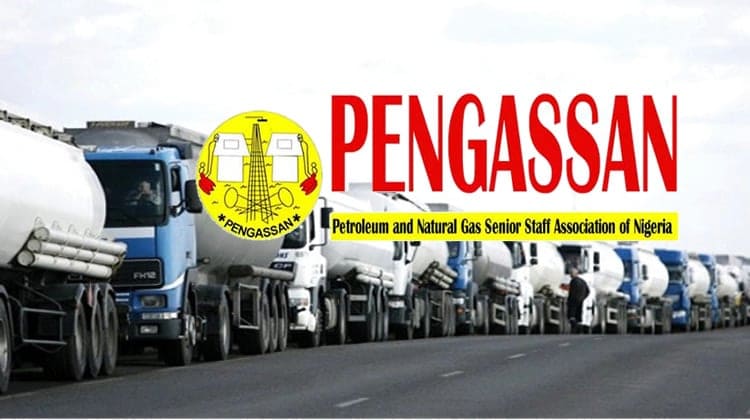
Strike action embarked upon by the Petroleum and Natural Gas Senior Staff Association of Nigeria ,PENGASSAN, on Monday has paralyzed activities across the country’s oil and gas industry, with fears mounting over the economic and social implications if the industrial dispute lingers.
From Lagos to Port Harcourt, Warri, Kaduna and Abuja, reports confirmed that oil and gas facilities have been completely shut down.
Findings revealed that export terminals were locked, production halted, and operations at both upstream and downstream companies suspended.
A top official told AljazirahNigeria that regulatory institutions, including the Nigerian Upstream Petroleum Regulatory Commission ,NUPRC, and the Nigerian National Petroleum Company Limited ,NNPC, Towers in Abuja, were also forced to shut their doors.
“Even management staff, usually exempted from industrial actions, were denied access to their offices”, the official stated.
The strike followed the mass dismissal of more than 800 Nigerian employees by the Dangote Refinery, a development that triggered outrage among oil workers’ unions.
PENGASSAN, in response, convened an emergency National Executive Council meeting over the weekend where the decision was reached to embark on a nationwide withdrawal of services until the affected workers were reinstated.
“The action of the Dangote Refinery is an affront to Nigerian workers and cannot be allowed to stand”, a senior PENGASSAN official told our correspondent. “We are ready to continue this strike until justice is done, no matter the cost to production or revenue”.
The disruption has already sent ripples across the energy sector. Analysts warn that with export terminals closed and production halted, Nigeria could lose millions of dollars in oil revenue daily.
In a swift response, it was learnt that the Federal Government has summoned both PENGASSAN leaders and representatives of Dangote Industries to an emergency meeting in Abuja.
The negotiations, expected to hold later today, are aimed at finding a compromise that would lead to the suspension of the strike and the restoration of normal operations.
A senior government source disclosed that authorities are deeply concerned about the impact of the shutdown on an economy already struggling with high inflation and dwindling foreign reserves.
“The priority is to resolve this quickly to prevent further disruption to crude exports and local fuel supply”, the source said.
The Dangote Refinery, commissioned amid much fanfare as Africa’s largest privately owned refinery, has been at the center of heated debate in recent weeks.
While hailed as a potential game-changer for Nigeria’s downstream sector, its relationship with labor unions has been tense, culminating in the latest dispute.
Recall that Petroleum and Natural Gas Senior Staff Association of Nigeria ,PENGASSAN, had declared a nationwide strike following alleged dismissal of more than 800 employees by the Dangote Refinery.
The decision followed an emergency National Executive Council ,NEC, meeting held on Saturday, September 27, 2025, where the union resolved to mobilise members across the country for a shutdown beginning Monday.
According to a communiqué signed by PENGASSAN General Secretary, Lumumba Okugbawa, the workers were allegedly sacked for joining the association a move the union described as a gross violation of Nigeria’s labour laws, the Constitution, and international conventions on workers’ rights.
The union accused the refinery of replacing the laid-off Nigerians with over 2,000 expatriates, mostly Indians, calling the development a direct attack on the dignity of local labour.
“All members in operational areas are directed to withdraw services from Sunday, 28 September 2025, while a total strike will commence nationwide from 00:01 hours on Monday”, the communiqué stated.
It further instructed branches to cut off crude and gas supply to the refinery and ordered international oil companies to halt feedstock delivery to Dangote facilities.
The NEC also announced daily prayer vigils and vowed not to suspend the strike until all dismissed staff are reinstated. “An injury to one is an injury to all. No individual is greater than Nigeria”, the statement added.
The refinery has recently clashed with oil and gas unions over labour practices. Tensions escalated last week when Dangote management, in a letter dated September 24, 2025, accused some employees of sabotage that allegedly threatened the safe operation of the 650,000-barrel-per-day plant. This led to the mass termination, according to the union.
While PENGASSAN insists about 800 Nigerians were affected, the refinery’s management denied any large-scale retrenchment. Instead, it said it was undergoing internal restructuring aimed at boosting efficiency, adding that most of its workforce remained Nigerian.
With PENGASSAN’s directive now in force, industry observers warn that the shutdown could disrupt operations at Africa’s largest refinery and create ripple effects across the downstream petroleum sector.
Meanwhile, the Former President of the Trade Union Congress ,TUC, Peter Esele, has cautioned that the ongoing dispute between the Petroleum and Natural Gas Senior Staff Association of Nigeria ,PENGASSAN, and Dangote Refinery, if not properly managed, could amount to economic sabotage.
Speaking in an interview with ARISE NEWS on Monday, Esele stressed the need for constructive dialogue, noting that both sides must recognise their shared interests.
“Dangote has the right to set up its refinery. And Dangote’s refinery must also be allowed to function. Dangote’s refinery is a pride of this country, and also Dangote’s refinery has a big bomb”, he said.
“Workers have the right to withdraw their services. There should be a dialogue to address this issue before it snowballs. PENGASSAN aims to support the refinery in every way possible.
“What they seek is to avoid losing face for members who have expressed interest in joining PENGASSAN, particularly the 800 workers who have been fired by Dangote. While Dangote Refinery has the right to hire, it does not possess an absolute right to terminate employment”, he added.
The former TUC leader, who disclosed he had engaged with PENGASSAN leaders, refinery management, and Aliko Dangote himself, described the relationship between the union and the company as “symbiotic, based on mutual interest and mutual benefit”.
Earlier, PENGASSAN had directed its members to halt gas supply to the Dangote Petroleum Refinery with immediate effect. In a letter signed by its General Secretary, Lumumba Okugbawa, the union accused the refinery’s management of disengaging over 800 unionised workers and embarking on a “mission of misinformation and propaganda” instead of engaging meaningfully with the association.
The directive included cutting off all crude oil supply valves, halting loading operations for vessels, and withdrawing all services, which the union described as necessary to protect workers’ constitutional rights.
Dangote Refinery, however, dismissed the move as a “brazen display of lawlessness and criminality,” insisting PENGASSAN had no legal authority to interfere in supply contracts and warning that such actions could plunge the country into chaos.
The fallout has since drawn in other stakeholders, including NUPENG, which raised alarm over alleged attempts by “capitalist interests” to infiltrate its Petroleum Tanker Drivers branch, the Nigerian Independent System Operator ,NISO, which warned of risks to the national grid if gas supply is disrupted, and the Trade Union Congress, which placed its affiliates on red alert in solidarity with PENGASSAN.
The Nigerian Independent System Operator ,NISO,has raised an alarm over the potential impact of the ongoing industrial dispute between the Petroleum and Natural Gas Senior Staff Association of Nigeria ,PENGASSAN, and Dangote Refinery on the country’s power sector.
NISO, in a statement Sunday night stated that the national grid relies heavily on gas-fired power plants for electricity generation.
It cautioned that any sustained disruption in the supply of natural gas could constrain available generation capacity, disrupt system operations, and undermine the stability and reliability of electricity supply across the country.
The warning follows directives reportedly issued by PENGASSAN to suspend the supply of crude oil and natural gas to the $20bn refinery, Africa’s largest single-train refining facility, over unresolved labour issues.
According to NISO, while measures are being considered to cushion the immediate impact and prevent a total grid collapse, the long-term risks of a prolonged gas supply cut cannot be underestimated.
NISO urged both parties to embrace dialogue and lawful dispute-resolution mechanisms in the overall interest of the economy and the well-being of Nigerians, reiterating its commitment to safeguarding the secure and reliable operation of the national grid.