By Joel Ajayi
The Chartered Institute of Purchasing and Supply Management of Nigeria (CIPSMN) has reiterated its call for proper recognition of procurement and supply chain management as a critical driver of national development.
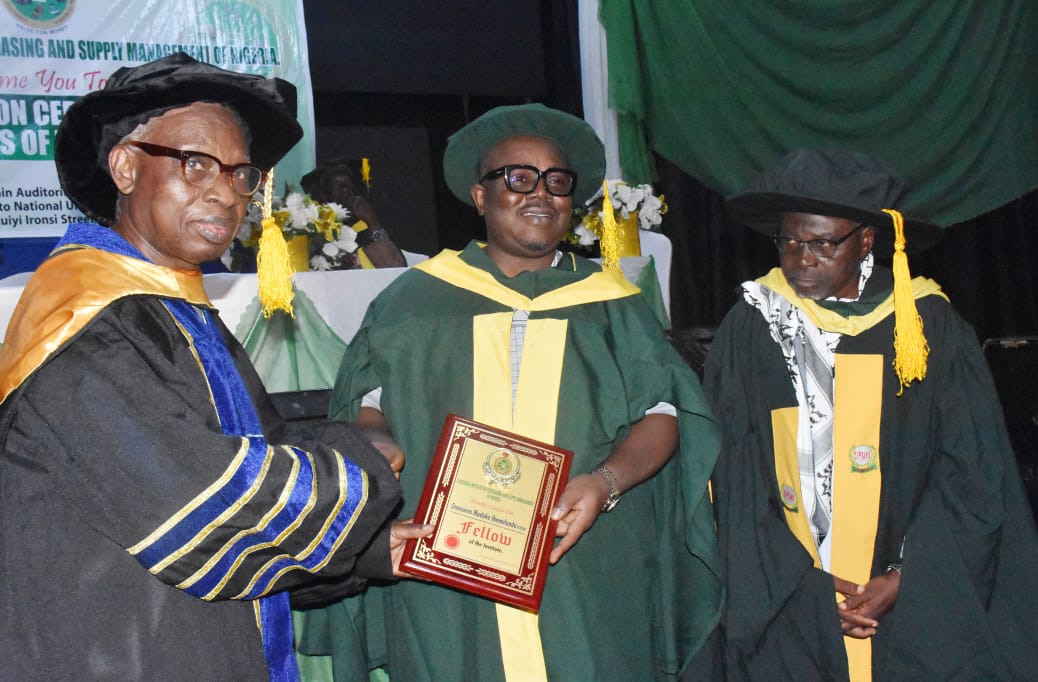
The Registrar and Chief Executive Officer of the institute, Prof. Mohammed Aliyu, made the appeal in Abuja during the 2025 Group B Induction Ceremony, where 250 graduate members and five fellows were formally admitted into the profession.
Aliyu described procurement as too strategic to be left in the hands of unqualified individuals, stressing that it requires professional certification and ethical grounding, just like medicine, law, or accounting.
“When we are talking about procurement, we are talking about value for taxpayers’ money. It is not a function for just anyone to pick up. It is meant for those who have gone through the discipline of the profession,” he said.
The Registrar cautioned that project abandonment, corruption, and mismanagement of resources in Nigeria were linked to unprofessional practices in procurement. He urged government agencies and institutions to strictly comply with the Public Procurement Act 2007, the CIPSMN Establishment Act, and Presidential Executive Order 05 of 2018 to ensure accountability and efficiency.
Aliyu also warned inductees against fraternising with unlicensed associations, emphasising that CIPSMN is the only statutory body empowered to regulate the profession in Nigeria. He encouraged them to uphold ethics, pursue continuous professional development, and use their expertise to strengthen governance and reduce poverty.
Speaking at the event, CIPSMN President, Alhaji Sikiru Balogun, tasked the new members to uphold professional standards, stressing that only licensed practitioners are permitted to operate within the field.
“We don’t want anybody to come in and claim to practise without being licensed. Now that you are licensed, you must also know that infractions will attract disciplinary action,” he said.
Balogun lamented that non-professionals continue to handle procurement in Nigeria, creating loopholes for corruption. He called for full enforcement of Section 50 of the Procurement Act, which mandates the development of certified professionals for the sector.
Also speaking, the North Central Zonal Coordinator of the Institute, Dr. Abdul Mamman, noted that proper procurement practice was central to economic revival and poverty reduction. He explained that strengthening local capacity and reducing overdependence on imports through the “Nigeria First” policy would help boost self-reliance, job creation, and export earnings.
“When procurement is well managed, it enhances local production, reduces borrowing, and expands the government’s capacity to deliver dividends of democracy,” Mamman said.
The induction ceremony marked the formal admission of 255 new members into the institute, comprising 250 graduate members and five fellows.