•China records over 8,000 cases
•Nigeria battling environmental conditions conducive to outbreaks
•As NCDC issues public health alert
•Don proposes alternative cure
The world is currently facing the outbreak of deadly chikungunya virus which was first identified in Africa in 1952, and spread most often by the Aedes aegypti and Aedes albopictus mosquito species, JULIET IBIMINA and BLESSING BATURE write.
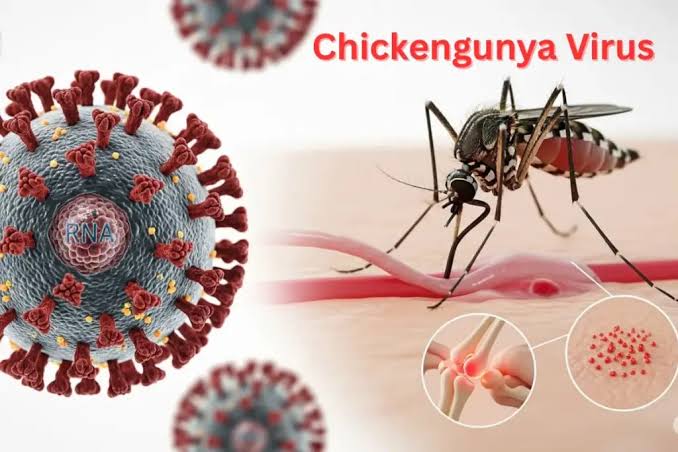
First identified in Africa in 1952, the Chikungunya Virus, CHIKV, is spread mostly by two mosquito species: Aedes aegypti and Aedes albopictus. According to the world Health Organisation, WHO, infected people can get sick within three to seven days of a bite. Though Nigeria is yet to record a case, the Nigerian Centre for Disease Control, NCDC, has already issued a public health alert to prepare Nigerians for a possible spread into the country.
A significant outbreak of CHIKV, currently ongoing in Guangdong province, China, with over 8,000 confirmed cases reported in recent weeks. This represents the largest documented outbreak of CHIKV in China and has prompted aggressive containment measures, including quarantines, drone-based fogging and legal enforcement of mosquito control efforts. CHIKV usually causes acute, self-limiting illness but can also lead to prolonged joint pain and, in some cases, severe complications in the eyes and brain.
The outbreak in Foshan and surrounding areas of Guangdong province has unfolded rapidly and at a scale unprecedented for China. Authorities have responded with containment strategies reminiscent of COVID-19 measures, including household-level inspections, enforced bed-netting and fines for non-compliance with mosquito control. Unlike previous imported or isolated cases, this outbreak involves sustained local transmission, reflecting both increased environmental suitability for Aedes mosquitoes and a lack of population immunity. The scale and speed of spread of the virus mark it as a notable public health event in East Asia.
Little wonder that health officials in Guangdong province in southern China are waging an all-out war against mosquitoes in response to an outbreak of the chikungunya virus that’s sickened thousands with fever, rashes and joint pain over the past month.
Soldiers are fogging streets and parks in the city of Foshan with insecticide. Community workers are going door-to-door to look for stagnant water, where mosquitoes can breed. People who test positive are reportedly being forced to hospitalize to isolate themselves, says Yanzhong Huang, senior fellow for global health at the Council on Foreign Relations.
“It’s reminiscent of the COVID-19 tactics, he says, where citizens were extremely restricted in their activities to slow the spread of SARS-CoV-2.
Some of the current measures are likely overkill, says Huang. Chikungunya is rarely fatal, and the mosquito-borne virus can’t spread through the air. But mosquitoes easily pick it up from infected people. And because chikungunya outbreaks are rare in China, he says “some of the measures are justified given the population has no immunity.” Typically, the virus is found in Africa, Southeast Asia and South America. Although the United States has been hit too, its not as hard hit as south America.
In the Americas, the countries most severely affected by Chikungunya are primarily in South America, with Paraguay, Brazil, and Argentina being particularly hard hit. The Pan American Health Organisation, PAHO, has also highlighted that the Caribbean region has seen significant outbreaks.
Since the beginning of 2025 and as of August 6, two countries in Europe have reported cases of chikungunya virus disease: France (63) and Italy (two).
In Nigeria however, he Nigeria Centre for Disease Control and Prevention, NCDC has released a public health advisory on chikungunya, following reports of outbreaks across multiple countries.
In a statement signed, by Dr. Jide Idris, Director General, Nigeria Centre for Disease Control and Prevention says according to the World Health Organization and the European Centre for Disease Preventionand Control, over 240,000 cases and 90 deaths have been reported across at least 16 countries so far this year. Notably, China has recorded nearly 5,000 cases since early July 2025, with Guangdong Province alone reporting close to 3,000 cases in a week.
He said, although no confirmed cases have been reported in Nigeria, the NCDC is strengthening surveillance and preparedness due to heightened risk from increased flooding and mosquito breeding, which also elevate the threat of yellow fever and dengue fever.
“Therefore, preventive efforts must extend beyond night-time protection. Symptoms include sudden-onset fever, joint pain, muscle pain, headache, nausea, fatigue, and rash. Though rarely fatal, the disease can lead to debilitating joint pain that may persist for months and affect. While no confirmed Chikungunya cases have been reported in Nigeria in 2025, the environmental conditions conducive to outbreaks are present, especially in flood-affected and high-risk states and this requires proactive risk reduction”.
“With the ongoing rainy season and increased flooding across parts of Nigeria, the risk of mosquito-borne diseases including Chikungunya, Dengue, and Yellow Fever is significantly heightened”.
Speaking to this medium on the ongoing outbreak, Benjamin Amodu, a professor of phytomedicine from the Tiune biblical University, USA, and one of Nigerias foremost phtomedicine experts said: As you are aware, chikungunya is a viral disease spread by mosquitos. Here at Halamin, we have cures for viral diseases ranging from viral hepatitis, COVID-19, Herpes simplex, and even HIV which is currently being validated. You are also aware that I’m a malaria specialist I say so because my time-honored sabmal, which is recognised by the WHO, has gone to WHO meetings in Ethiopia, where it was presented to the entire world. So whatever viral disease and whichever way it is transmitted, since they are all derivatives of a virus, we will deal with them. We will prevent and cure them.
“Mind you, we have shown evidence in our laboratory work in the past that we can also cure the Zika virus because during our experiment, our drug was shown to increase the CD8 count, which is a major factor in Zika and other related viruses. So I think as a country, we are ready.We on our part are ready to partner with the Nigerian government in this specialist area that we have the knowledge so that we save our own country.
“With alternative medicine, I think I can say boldly, just like it is in the Bible and Quran that when God created the earth, created the human beings, he has also provided them with solutions to their issues, but we in Nigeria especially have refused to enter into those things to research to get them. After all, how did modern medicine begin? Is it not from plants? It’s the need to manufacture them in large quantities that made them to study their structures and begin to synthetise them. That is why we have gone back to the plant-based natural medicine because it has no side effects unlike the synthetic medicines.”
He said with Nigerias biodiversity in our plants, the country can take a foremost position in alternative medicine globally. He added: More so as America has projected to make $6 trillion in herbal medicine from now till the year 2050, let us get in there and get people to visit us here to come on medical tourism here through what we specialise in doing.