By Uche Onyeali
United Nations, UN, has released a new report revealing the devastating environmental challenge as a result of climate change.
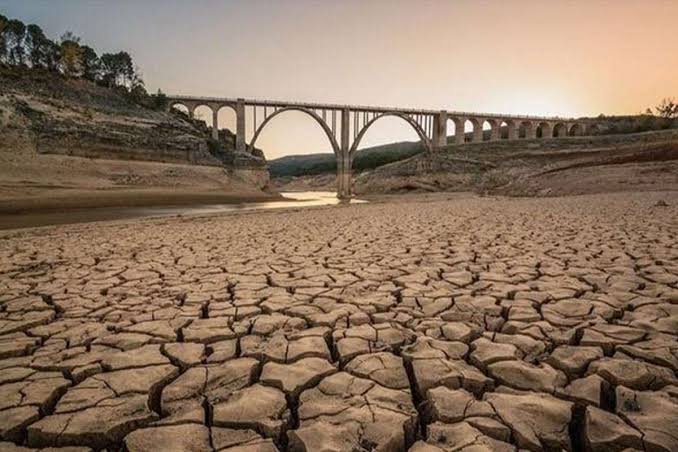
The global body in the report revealed that the world is currently facing some of the most damaging and widespread droughts in recorded history as a result of climate change and environmental degradation.
The report, published by the UN Convention to Combat Desertification, UNCCD, the US National Drought Mitigation Center, NDMC, and the International Drought Resilience Alliance, IDRA, examined global drought impacts from 2023 to 2025, highlighting how the crisis devastates lives and ecosystems, while deepening poverty, hunger, energy insecurity and economic damage.
According to the report, 90 million people across eastern and southern Africa are facing acute hunger, with some regions experiencing their worst drought in history.
In Ethiopia, Zimbabwe, Zambia and Malawi, maize and wheat crops have failed repeatedly.
The report said in Zimbabwe, the 2024 corn harvest dropped by 70 percent year-on-year, maize prices doubled and 9,000 cattle died due to thirst and starvation.
In Somalia, 43,000 people died in 2022 alone due to hunger linked to drought. As at early 2025, one in four Somalis experienced crisis-level food insecurity.
It noted that the effects have also disrupted energy systems.
In Zambia, drought has led to one of the world’s worst energy crises. In April, Zambezi River fell to just 20 percent of its long-term average, pushing Kariba Dam, the country’s largest hydroelectric plant, to only seven percent generation capacity.
The UN report said the resulting 21-hour daily blackouts forced the closure of hospitals, bakeries and factories.
The report also stressed that the impact extends beyond Africa. In Spain, two years of drought and record heat caused a 50 percent drop in olive production by September 2023, doubling the price of olive oil.
In Türkiye, groundwater depletion driven by drought is triggering sinkholes, endangering infrastructure and reducing aquifer storage capacity.
In the Amazon Basin, the report said low river levels in 2023 and 2024 caused mass fish and dolphin deaths, disrupted water supply and made transportation difficult for hundreds of thousands of residents.
It added that ongoing deforestation and fires have raised fears that the Amazon could shift from being a vital carbon sink to a carbon source.
According to the report, global trade has also been affected. The Panama Canal saw transit drop by more than one-third due to low water levels, resulting in soybean export decline in the US and product shortages in UK supermarkets.
UNCCD’s Executive Secretary, Ibrahim Thiaw described the climate crisis as a “silent killer.”
“Drought is a silent killer. It creeps in, drains resources and devastates lives in slow motion. Its scars run deep.
“Drought is no longer a distant threat. It is here, escalating and demanding urgent global cooperation. When energy, food and water all go at once, societies start to unravel. That is the new normal we need to be ready for,” Thiaw said.
Report Co-author and Director of NDMC, Mark Svoboda said: “This is a slow-moving global catastrophe, the worst I have ever seen.
“This is not a dry spell. This report underscores the need for systematic monitoring of how drought affects lives, livelihoods and the health of the ecosystem that we all depend on.
“The struggles experienced by Spain, Morocco and Türkiye to secure water, food and energy under persistent drought offer a preview of water futures under unchecked global warming. No country, regardless of wealth or capacity can afford to be complacent.”
To address the crisis, the report recommended improving early warning systems, monitoring real-time drought impact and investing in nature-based solutions such as watershed restoration and the use of indigenous crops.
It also called for more resilient infrastructure such as off-grid energy and alternative water sources, as well as international cooperation, especially around shared water basins and trade routes.