By Cyril Ogar
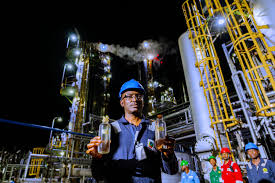
Barely six months after the Nigerian National Petroleum Company Limited ,NNPCL, completed the overhaul of the Port Harcourt Refining Company ,PHRC, at a cost of $1.5 billion, the state-owned oil company yesterday shut down the facility for what it described as “planned maintenance”.
A part of the facility known as the ‘old plant’, was commissioned in 1965, with a processing capacity of 60,000 barrels per day.
Both the old and new plants have a combined refining capacity of 210,000 barrels per day ,bpd, making PHRC the largest refining complex in Nigeria.
After years of inactivity and failed multiple rehabilitation efforts, the refinery resumed operations on November 26, 2024, following a significant overhaul that cost $1.5 billion for the entire complex.
Although the national oil company did not indicate how long the maintenance will last, it was gathered that the exercise could last one month in the first instance.
A statement issued yesterday in Abuja by the NNPC’s Chief Corporate Communications Officer, Femi Soneye, noted that the shutdown was part of a broader initiative to assess and improve the refinery’s performance.
According to him, the company is collaborating with relevant stakeholders, including the Nigerian Midstream and Downstream Petroleum Regulatory Authority ,NMDPRA, to ensure that the maintenance activities are carried out efficiently and transparently.
“The Nigerian National Petroleum Company Limited ,NNPC Ltd., wishes to inform the general public that the Port Harcourt Refining Company ,PHRC, will undergo a planned maintenance shutdown. This scheduled maintenance and sustainability assessment will commence on May 24, 2025.
“We are working closely with all relevant stakeholders, including the Nigerian Midstream and Downstream Petroleum Regulatory Authority ,NMDPRA, to ensure the maintenance and assessment activities are carried out efficiently and transparently”, the NNPCL statement added.
Olufemi stated that the NNPCL remains steadfast in its commitment to delivering sustainable energy security for Nigeria.
He added that further updates will be provided regularly through the company’s official channels, including its website, media platforms, and public statements.
Petroleum Regulatory Authority ,NMDPRA, to ensure the maintenance and assessment activities are carried out efficiently and transparently. “NNPC Ltd remains steadfast in its commitment to delivering sustainable energy security”, he said.
The development has begun to escalate concerns among local retailers and Nigerians at large about potential fuel supply disruptions.
The development also comes despite past investments in the refinery’s rehabilitation, raising questions about its operational reliability and the effectiveness of prior maintenance efforts.
The Port Harcourt Refinery, located in Rivers State, is one of Nigeria’s key oil refining facilities, critical to Nigeria’s goal of reducing dependence on imported petroleum products.
However, the facility has a history of prolonged dormancy and operational challenges.
The refinery resumed operations in November 2024 after extensive rehabilitation efforts starting in 2021, which reportedly cost $1.5 billion.
Despite this significant funding, the refinery has struggled to operate at full capacity, with recent reports indicating it functions at just 37.87% of its installed capacity, far below the 70% claimed by NNPCL.
It’s unclear if the NNPCL will ramp up imports in the absence of the 60,000-bpd refinery, which it announced was refining 1.4 million litres when it resumed production in the last quarter of last year.
However, some retailers had raised concern that the shutdown could lead to fuel shortages and price hikes.
They have therefore urged the NNPC to ensure that fuel supply remains uninterrupted during the maintenance period.
In March 2021, the federal government approved the $1.5 billion expenditure for the refurbishment and modernisation of the refinery complex, which was to be carried out in three phases. Since then, the project has faced several challenges and missed many timelines.
The project was awarded to Italy’s Maire Tecnimont, with Eni serving as the technical adviser at the time.
After several delays, the ‘mechanical completion’ of the 60,000 bpd plant was achieved in December 2023, but it did not resume operations until about a year later.