… As FG refutes reports of 10% VAT increment
…Group accuses FG of following ‘worse off’ IMF directives
By Charles Ebi
Nigeria’s Value Added Tax ,VAT, earnings have more than doubled in the first seven months of 2024 compared to the same period last year.
This is according to data gathered by Nairametrics from official documents of the Federal Inland Revenue Service ,FIRS.
From January to July 2024, total VAT earnings soared to N3.62 trillion, a staggering 102% increase from the N1.79 trillion collected during the same period in 2023.
This surge reflects an additional N1.83 trillion in VAT revenue year-over-year.
This significant increase comes at a time when Nigerians are grappling with escalating costs of living, raising questions about the economic implications for both the government and its citizens.
It has been observed that non-import VAT has been a major contributor to general VAT earnings for Nigeria.
From January to July 2024, Non-Import VAT contributed N2.77 trillion, representing 76.5% of the total VAT earnings of N3.62 trillion.
This marks a sharp increase compared to the same period in 2023, where Non-Import VAT stood at N1.47 trillion, contributing 82% of the total VAT at the time.
While the share of Non-Import VAT decreased slightly percentage-wise in 2024, its actual contribution rose significantly by 88.76% year-on-year. This suggests increased domestic consumption and broader enforcement of VAT collection across goods and services within the country.
In contrast, Import VAT saw a much higher percentage increase of 162.58%, from N324.20 billion in 2023 to N851.27 billion in 2024.
This reflects higher volumes of imported goods, likely driven by inflationary pressures and changes in foreign exchange and trade policies.
Also, the substantial growth in Import VAT suggests a significant increase in imported goods and services, which may be contributing to the higher costs of living due to foreign exchange dynamics and import-dependent consumption patterns.
A detailed month-by-month analysis of VAT collections throughout the first seven months of 2024 reveals consistent and substantial increases compared to the corresponding months in 2023.
In January 2024, VAT collections amounted to N420.73 billion, representing a significant 68.29% increase from the N250.01 billion collected in January 2023.
This increase marks the start of the year with a sharp rise in government earnings, likely driven by increased consumption during the holiday season and the impact of economic adjustments made late in the previous year.
By February 2024, VAT earnings had risen even further, reaching N460.49 billion, compared to N240.80 billion in February 2023.
This 91.24% growth highlights a near doubling of VAT revenue within one year, reflecting both higher consumption and improved tax collection measures.
March 2024 witnessed the most dramatic rise in VAT revenue, with collections soaring to N549.70 billion, a remarkable 151.31% increase from the N218.79 billion generated in March 2023.
In April 2024, VAT collections continued their upward trajectory, reaching N500.92 billion, up from N217.74 billion in April 2023. This represents an increase of 130.05%, further solidifying the trend of sustained revenue growth.
The month of May 2024 saw VAT earnings climb to N497.66 billion, compared to N270.20 billion in May 2023, reflecting an 84.20% increase. While not as pronounced as in previous months, this growth is still substantial and indicates a continued rise in taxable transactions.
By June 2024, VAT collections had risen to N562.69 billion, an increase of 91.75% from the N293.41 billion collected in June 2023.
July 2024 recorded the highest VAT earnings of the year so far, with N625.33 billion collected, marking a 109.31% increase from the N298.79 billion recorded in July 2023. The fact that July saw the highest collection is significant, as it reflects peak mid-year consumption and the effect of sustained economic activity throughout the first half of the year.
The doubling of VAT earnings reflects the government’s intensified efforts to boost revenue amid economic challenges. However, this surge coincides with a period where Nigerians are facing unprecedented increases in the cost of living.
The VAT rate in Nigeria is 7.5% for local (Non-Import) and imported (Import VAT) items.
VAT is a consumption tax applied to goods and services, meaning that higher VAT collections can be indicative of increased consumer spending or higher prices of goods and services—or both.
Given the current economic climate, the latter seems more plausible, suggesting that Nigerians are paying more for the same goods and services than they did a year ago.
Inflation, driven by factors such as the depreciation of the naira, higher production costs, and increased fuel prices, has led to a higher cost of goods across Nigeria. As prices go up, VAT, which is charged as a percentage of the value of goods and services, naturally rises as well.
For instance, when the price of basic goods such as food, fuel, and transportation increases, the VAT collected on these items also grows, resulting in larger tax revenues for the government. The inflationary pressure has compounded this effect, making each purchase more costly for consumers, and consequently raising the VAT collected on these transactions.
This trend is evident across various sectors, from retail to manufacturing, where businesses pass on the cost increases to consumers, who then pay higher prices inclusive of VAT.
Meanwhile, the Federal government has debunked claims that it plans to increase the Value Added Tax ,VAT, rate from 7.5% to 10%.
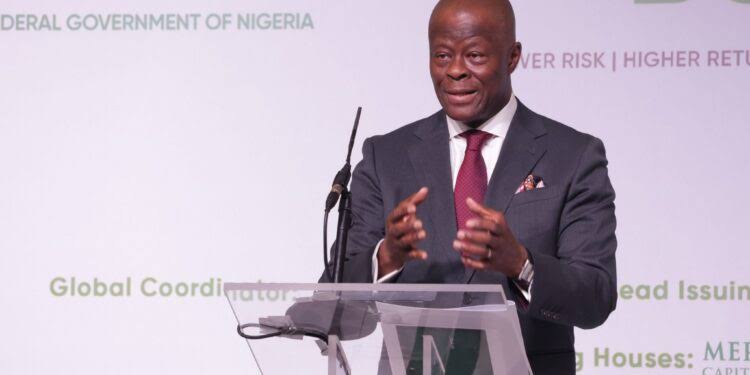
The Minister of Finance and Coordinating Minister of the Economy, Wale Edun disclosed this in a statement posted by the Special Adviser on Information and Strategy, Bayo Onanuga.
Edun explained that the tax system is built on three pillars: tax policy, tax laws, and tax administration.
He emphasized that these elements must function cohesively to establish a robust system that strengthens the government’s fiscal position.
The minister noted that the government’s priority is to leverage fiscal policy to foster sustainable economic growth, reduce poverty, and create a flourishing business environment.
He said, “The current VAT rate is 7.5%, and this is what the government charges on a spectrum of goods and services to which the tax applies. Therefore, neither the Federal Government nor its agencies will act contrary to what our laws stipulate”.
“The imputation in some media reports on the issue of VAT and the opinion articles that have sprouted from them seem to wrongly convey the impression that government is out to make life difficult for Nigerians”.
The media in the past week has been awash with reports of a proposed increase in the VAT rate following the interview of the Chairman of the Presidential Committee on Fiscal Policy and Tax Reforms, Taiwo Oyedele on Channels Television.
Recall that the Former Vice President Atiku Abubakar at the weekend criticized the federal government’s rumoured plan to raise the Value Added Tax ,VAT, rate from 7.5% to 10%, warning that such a move would worsen Nigeria’s already challenging economic conditions.
In a post on his official X (formerly Twitter) account on Sunday, Atiku voiced concerns that the proposed tax increase, alongside other recent government policies, would intensify the cost-of-living crisis, harm businesses, and disproportionately burden the poor.
He also criticized the Tinubu-led administration for being “profoundly insensitive” to the struggles of ordinary citizens by engaging in unnecessary luxury spending.
While the government’s revenue boost is positive from a fiscal standpoint, the burden on consumers could dampen economic growth.
The World Bank has urged the federal government to raise the Value Added Tax ,VAT, rate as a strategy to increase non-oil revenue and boost the nation’s fiscal resources.
In the report, the bank suggested increasing the current VAT rate of 7.5% as a step toward creating more fiscal space and enhancing non-oil revenue streams.
The bank also emphasized that this VAT hike should allow for input tax credits and recommended removing exemptions on petrol as part of broader measures aimed at boosting non-oil revenues.
In their staff report, the Executive Directors of the International Monetary Fund ,IMF, commended the current administration for its decisive actions in key areas, including revenue mobilization, improving governance, and bolstering social safety nets.
In a related development Human Rights Writers Association of Nigeria ,HURIWA, has alleged that the Federal Government is aligning with directives from foreign entities such as the International Monetary Fund ,IMF, and World Bank, labelling the development as making Nigerians “worse off”.
HURIWA argues that the planned decision to increase the Value Added Tax ,VAT, from 7.5% to 10% could ignite “widespread unrest” among the suffering populace.
HURIWA National Coordinator, Emmanuel Onwubiko, disclosed this in a statement seen by Nairametrics on September 8, 2024.
The statement is part of the advocacy against the policy, following criticisms from Nigerians including former Vice President Atiku Abubakar, who recently sharply criticized the federal government’s proposed VAT increase from 7.5% to 10%. He warned that the move will exacerbate Nigeria’s already dire economic situation.
Onwubiko criticized the government for imposing additional financial strain on Nigerians, stating that these policies are driving the population deeper into poverty.
HURIWA called for an immediate reversal of the VAT hike and other “suffocating” fiscal measures that are compounding the economic suffering of the populace.
Citing a report from the National Bureau of Statistics ,NBS, he emphasized that 133 million Nigerians, or 63% of the population, live in multidimensional poverty. He described this as a stark indicator of the country’s deteriorating socio-economic conditions, which require economic-strain-reducing policies.
The group stressed that this alarming figure underscores the gravity of the situation and the urgency of reversing harmful policies.
“The VAT increment is just one in a series of damaging financial measures. Since the removal of fuel subsidies, petrol prices have surged by over 200%, with ripple effects on transportation, food, and other essential commodities. The average Nigerian, especially in low-income groups, is struggling to afford basic necessities.
“The Nigerian government is making choices that benefit the International Monetary Fund and World Bank but leave the Nigerian people worse off. The well-being of citizens is being sacrificed for economic targets dictated by foreign entities.
“These financial bodies are promoting policies that align with their global agenda, not with the survival of ordinary Nigerians. The government is blindly following their advice without considering local realities.
“The government has done little to address poverty, unemployment, and inequality. Instead, it has implemented policies that increase the burden on citizens, with no corresponding wage increases or safety nets. This approach is unsustainable and could lead to social instability”.
The rights group lamented the effect of inflation on the housing sector, as rising costs have forced landlords to increase rents, pushing many citizens to the edge of homelessness.
While acknowledging the potential goodwill of the foreign entities and other top philanthropists, HURIWA argued that decisions affecting millions of Nigerians should not be influenced by individuals disconnected from the country’s socio-economic conditions.
“The administration must realize that Nigerians cannot afford further hikes in the cost of living. The government should prioritize uplifting its citizens rather than impoverishing them”, the statement concluded.