In Ilorin Emirate, traditional titles are far more than ceremonial honours. They are markers of prestige, influence and, often, political power. Within the emirate’s sociocultural structure, such titles serve as a bridge between traditional authority and modern politics, helping to shape the leadership dynamics of Kwara State and beyond.
While many individuals receive titles in recognition of their contributions to the advancement of the emirate, others actively seek them for the social legitimacy and political capital they confer. This dynamic is not peculiar to Ilorin; it reflects a broader Northern Nigerian tradition where chieftaincy titles often intersect with influence in public life.
The hierarchy of Ilorin titles
The Ilorin Emirate possesses a rich hierarchy of traditional titles that carry varying degrees of authority and prestige. Among the most prominent are Waziri, Turaki, Madawaki, Tafida, Shettima, Sarkin Malamai, Mutawali, Dan Iyan, and Malami Ubandoma, among others.
These titles historically served administrative, military and religious functions within the emirate system. In modern times, however, they have also evolved into symbols of societal standing, often bestowed upon individuals who have demonstrated leadership, philanthropy or service to the community. But among them all, the title Turaki occupies a particularly unique place.
The prestige of the Turaki title
Across Northern Nigeria, the title Turaki has acquired significant prominence, largely because of the calibre of individuals who have held it.
Nigeria’s first elected president, Alhaji Shehu Shagari, held the title of Turaki of Sokoto from 1962 until his death in 2018. Similarly, former Vice-President Atiku Abubakar held the title of Turakin Adamawa before he was elevated to Waziri of Adamawa in 2019.
In Ilorin Emirate, the title was introduced in 1963 by Abdulkadir Sulu-Gambari, the second longest-reigning Emir of Ilorin. From its inception, the title has been associated with individuals of exceptional influence.
The first Turaki of Ilorin was Sanni Olanrewaju Buraimo Okin (1910–1972), a prominent First Republic politician who later served as a legislator representing the Ilorin Native Authority. He was succeeded by Dr. Abubakar Olusola Saraki, widely regarded as the most influential political figure in Kwara’s history. Holding the title from 1974 to 2006, Dr Saraki towered over the political landscape of Ilorin and Kwara State for decades, earning a reputation as a formidable kingmaker.
Following his elevation to Waziri of Ilorin, the title passed to his son, Dr. Abubakar Bukola Saraki, who held the title between 2006 and 2018. Like his father, Bukola Saraki also rose to national prominence, serving two terms as governor of Kwara State and later as President of the Senate.
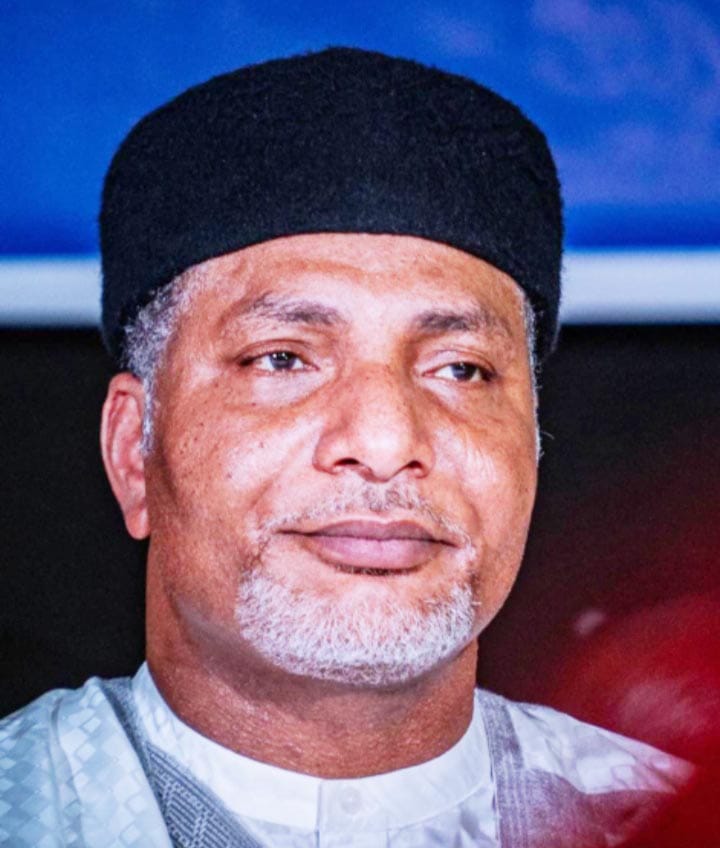
The current holder of the title is Senstor Saliu Mustapha, whose appointment as the fourth Turaki of Ilorin formed part of a broader announcement of new traditional titles within the emirate. On the same occasion, the Emir also conferred titles on several distinguished personalities: Sheikh Yakubu Aliagan as Sarkin Malamai; Dr. Muhammad Alimi AbdulRazaq as Mutawali; Alhaji Abubakar Kawu Baraje as Tafida; Alhaji Saka Onimago as Shettima; and Alhaji Yakubu Gobir as Madawaki.
Others included Engr. Kale Kawu as the Dan’Iya, Sheikh Abdulkadir Salman Solagberu as Malami Ubandoma, and Suleiman Faruq Onikijipa as Grand Mufti of Ilorin Emirate. Yet, among the numerous announcements, the appointment of Mustapha as Turaki attracted the greatest attention.
A familiar pattern
Observers note that the latest Turaki – Senator Saliu Mustapha – shares several attributes with his predecessors. Like them, he was neither born nor raised in Ilorin but maintains deep ancestral ties to the emirate. He is also a businessman and politician with extensive networks and philanthropic engagements within the community.
Over the years, Mustapha has emerged as one of the most visible private contributors to religious and cultural initiatives in Ilorin. His support for the Ilorin Central Juma’at Mosque project and the annual Ilorin Emirate Durbar festival has been widely acknowledged, alongside his donations to various socio-cultural organisations. These acts of philanthropy have helped consolidate his standing within the emirate’s social fabric.
The politics of the Turaki title
Beyond prestige, the Turaki title has developed a reputation for carrying political significance. Within local political folklore, there exists a belief that individuals who assume the title often experience a meteoric rise in their careers and public influence. Whether coincidence or tradition, the historical pattern is difficult to ignore. Each of the previous holders eventually rose to significant positions in Nigeria’s legislative and political hierarchy.
Alhaji Sanni Okin, the first Turaki in the history of Ilorin Emirate served within the Native Authority structure of the First Republic era. Late Dr. Olusola Saraki became a senator and later Senate Leader, dominating Kwara politics for decades. Dr. Bukola Saraki followed a similar trajectory, serving as governor and eventually President of the Senate.
The pattern raises a question now being asked in political circles across Kwara: will history repeat itself with the current Turaki? The question became heightened especially in the light of the rumoured gubernatorial ambition of Senator Mustapha.
Mustapha: The making of a politician
Born more than five decades ago to an Ilorin father and an Okun mother, Mustapha’s background reflects the ethnic and cultural complexity of Kwara State.
His early education took him to Saint Bartholomew Primary School in Wusasa, Zaria, before attending Command Secondary School in Kaduna. He later studied Mineral Resources Engineering at Kaduna Polytechnic, graduating with a National Diploma in 2000.
However, his defining education came through politics. Mustapha’s first major political role emerged in 2000 when he served as the protem National Publicity Secretary of the Progressive Liberation Party. Within a few years, he rose to become National Organising Secretary of the Progressive Action Congress and later the Organising Secretary of the Conference of Nigerian Political Parties.
His influence expanded significantly through his association with Muhammadu Buhari, particularly during the years when Buhari led opposition politics in Nigeria. Mustapha played an active role in the political coalition around Buhari, participating in the activities of The Buhari Organisation and later supporting the All Nigeria Peoples Party presidential campaigns between 2003 and 2007. He subsequently became a founding figure within the Congress for Progressive Change, serving as Deputy National Chairman.
His most historically consequential role came in 2013 when he was among the signatories to the merger agreement that produced the All Progressives Congress, a political coalition that reshaped Nigeria’s electoral landscape.
Outside politics, he has built a strong reputation in real estate and contracting, establishing business networks that further strengthened his political reach.
A title and its possibilities
In Ilorin Emirate, traditional titles often carry symbolic expectations. For the Turaki, the expectation is even higher because of the legacy established by previous holders. Each Turaki has left a deep imprint on the political trajectory of Kwara State.
For Mustapha, the question now facing observers is whether the title will once again align with its historical pattern. If history offers any clues, the Turaki title in Ilorin has rarely been merely ceremonial. It has often been a prelude to influence. Whether Mustapha is also on the crust of history remains to be seen.