•141 pardons provoke outrage, confusion
As Nigerians demand for transparency
By Tony Ochela
Maryam Sanda killed her husband, got convicted and was given the maximum sentence of a life time in jail. End of story right? Wrong! In what came as a shock to many, Sanda was among 175 persons the Presidential Advisory Committee on Prerogative of Mercy decided to grant mercy, albeit, the Nigerian way.
Sanda’s case took up a life of its own because it became synonymous with not just what only Nigerians would call the Nigerian syndrome but a malaise with the system where there is more confusion than there is organisation.
Her story told the story of many others who got on a list that should have never had presidential attention, but that would escalate to a presidential nod for a ‘get out of jail ticket; but it did. Clemencies were granted 175 persons – many convicted of murder, kidnapping, drug-related offences, human trafficking, fraud, unlawful possession of firearms, arms dealing among other notable crimes.
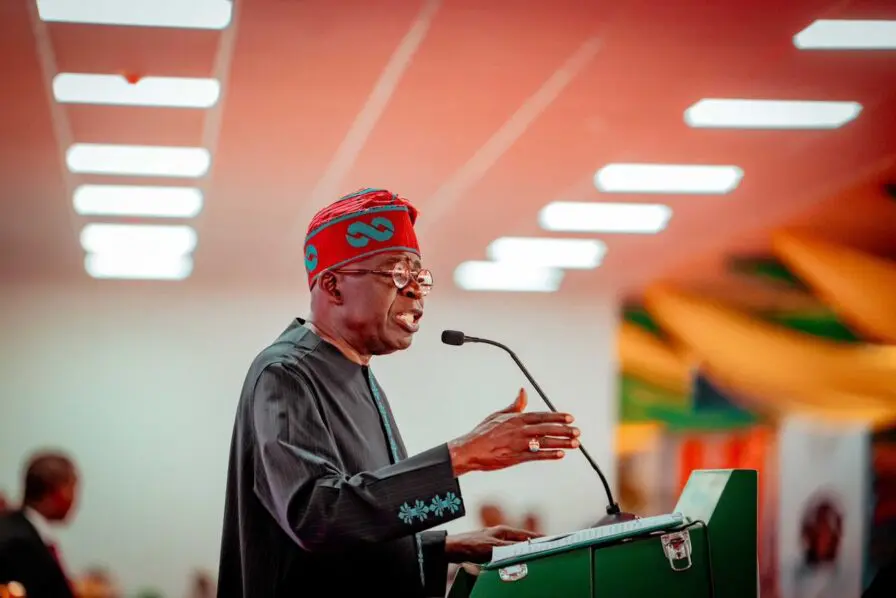
The story, as related to Nigerians by those who should be in the know in the presidency, is that President Bola Ahmed Tinubu, in his heart of hearts, decided to be magnanimous enough to find time to visit prisons, nay Correctional Centres, to set right certain things that were not right and to alleviate the custodial situations of prisoners who have found God.
However, to the consternation of Nigerians, the list looked like one dreamed up by a Mob Lord or ‘Don Corleone himself. It had the crème de la crème or the who is who of those who should never get out of jail. The shock did not only reverberate across the nation as it no doubt ought to, but it also set tongues wagging with many smelling fishes there probably are.
Among those granted clemencies three categories stood out: murderers, drug kingpins and illegal miners. The fourth group was the only ones one could clap for and those were Herbert Macaulay, Maj.-Gen. Mamman Vatsa and the Ogoni group.
All the others, many Nigerians feared, were the handiwork of settlers who had taken advantage of the system to allow their associates take a free pass. It was unsettling and the national outrage could not have been louder.
The family of the late Bilyaminu Bello has expressed outrage and deep disappointment over the presidential pardon granted to Maryam Sanda, who was convicted of his murder.
In a statement signed by Bello Mohammed on behalf of the family, the decision was described as the worst possible injustice any family could be made to go through for a loved one. Ms Sanda was sentenced to death in 2020 for killing her husband, late Mr Bello, in their Abuja home on 19 November 2017. According to the family, they had chosen to remain silent for years, respecting the judicial process and considering the couple’s children. However, the presidential pardon compelled them to speak out.
However, in a surprising move, President Bola Tinubu, who has from day one, ran a government that has never been swayed by public opinion, walked back on some of the names granted clemency in the list initially issued.
It could be noted that individuals do take decisions and later have a rethink about it and no one should deny the government that privilege because all government actions from time immemorial have always been subjected to reviews after reviews. Such layers of consultation and stock taking get to ensure that the right thing gets done at the close of time.
So when the government eventually issued a gazette on its decision about the presidential pardon, not many were left bewildered that tough issues that had held the public’s attention were addressed. It was just that government could not run away from its ramifications. Take the Sanda issue for a start. The family of the deceased husband was perplexed when the pardon was first mentioned. And one can say the same for so many of the other names on the list.
A statement issued Wednesday, October 29 by the President’s Special Adviser on Information and Strategy, Bayo Onanuga, said, Consequently, certain persons convicted of serious crimes such as kidnapping, drug-related offences, human trafficking, fraud, unlawful possession of firearms/arms dealing, etc., were deleted from the list. Others who had been hitherto pardoned in the old list had their sentences commuted.
According to the Presidency, the decision followed consultations with the Council of State and public feedback, undertaken in furtherance of the President’s discretionary powers under Section 175(1) and (2) of the 1999 Constitution (as amended).
This action became necessary in view of the seriousness and security implications of some of the offences, the need to be sensitive to the feelings of the victims of the crimes and society in general, the need to boost the morale of law-enforcement agencies, and adherence to bilateral obligations, the statement continued.
It further noted that the concept of justice as a three-way traffic for the accused, the victim, and the state/society also guided the review.
Tinubu’s reversal comes three weeks after a storm of criticism greeted the inclusion of Maryam Sanda, convicted in 2020 and sentenced to death for killing her husband, Bilyaminu Bello, the son of a former PDP national chairman, on the original pardon list.
The Federal Government, through the office of the Attorney-General of the Federation and Minister of Justice, Lateef Fagbemi (SAN), earlier said the issue is being re-evaluated.
In an official gazette dated October 23, 2025 and released by the AGF on Wednesday, the Presidency announced a revised set of instruments reducing the number of beneficiaries from 175 to 120, with several high-profile names, including convicted killer Maryam Sanda, reclassified under reduced terms of imprisonment.
Fagbemi explained that the exercise followed the President’s approval after a due-process review of the initial recommendations presented to him earlier by the Presidential Advisory Committee on Prerogative of Mercy.
He said the review became necessary after the President received concerns about the initial list of beneficiaries and ordered a reassessment to ensure strict adherence to legal and procedural standards.
During this final review, a few persons earlier recommended were found not to have met the requirements and were accordingly delisted, while in some other cases, sentences were reviewed and reduced to reflect fairness, justice, and the spirit of the exercise, Fagbemi stated.
Among those removed are Maryam Sanda, previously set for a full pardon but now listed under a reduced term of 12 years imprisonment, and several drug convicts whose clemency was withdrawn entirely.
Reacting to the development, Human rights lawyer, Mr Femi Falana (SAN), described the exercise as embarrassing and poorly handled. Falana said the pardon process was flawed from the outset as it violated constitutional provisions guiding the exercise of such powers.
It is not the first time that this exercise has been mishandled, but this time around, the country was exposed to odium, and there was no basis for it. Those who were not deserving of pardon were recommended for pardon, he said, adding that several persons convicted under state laws were also included, contrary to Section 212 of the Constitution, which vests the power to pardon such offenders in state governors.
By virtue of Section 212 of the Constitution, only the governor of a state can pardon people convicted for stealing, obtaining by false pretence, murder or culpable homicide. But all those names were there, he said.
He faulted the Federal Government’s explanation that the list had been reviewed and reduced from about 175 names to 35, insisting that the issue went beyond trimming numbers.
It is not enough to say we have reviewed the list and reduced it. The government owes itself a duty to ensure that such colossal embarrassment does not occur again, he stated.
Falana called on the Attorney-General of the Federation to publicly apologise to Nigerians over what he described as a national embarrassment.
On his part, former Vice President, Atiku Abubakar, berated President Bola Tinubu’s administration’s reversal of the presidential pardon list, describing the move as an act of shame, not wisdom.
In a statement signed by his aide, Phrank Shaibu, Atiku accused the administration of lacking foresight and moral consistency, following Tinubu’s decision to revoke the earlier pardon granted to Sanda and several other convicts. Once again, Nigerians have witnessed a government that doesn’t lead-it reacts, Atiku said.
President Bola Tinubu has cancelled his own pardon for drug traffickers, kidnappers, and other hardened criminals-but only after Nigerians shouted loud enough to wake him from his moral slumber.
Let’s be clear: this U-turn is not an act of wisdom, it’s an act of shame.
He questioned the process that led to the initial inclusion of many convicts on the list, demanding transparency from the presidency. Who compiled the list of beneficiaries? What criteria justified freeing kidnappers and drug offenders? Where was the Attorney-General when this absurdity was cooked up? And why does this government only discover its conscience after Nigerians express outrage? Atiku asked.
Many analysts have continued to express worry over what they term credibility, oversight and oversight issues in the presidency, calling on the president not only to take charge, but be seen doing so.