

By Samson Marvellous
Across Northern Nigeria, millions of children wake each day not for school but for work in markets, on farms, at home or begging on the streets. The country now has one of the world’s highest numbers of out-of-school children between ten and eighteen million, according to recent reports and most of them live in the northern states of Katsina, Zamfara, Kaduna, Kebbi, Borno, and Sokoto.
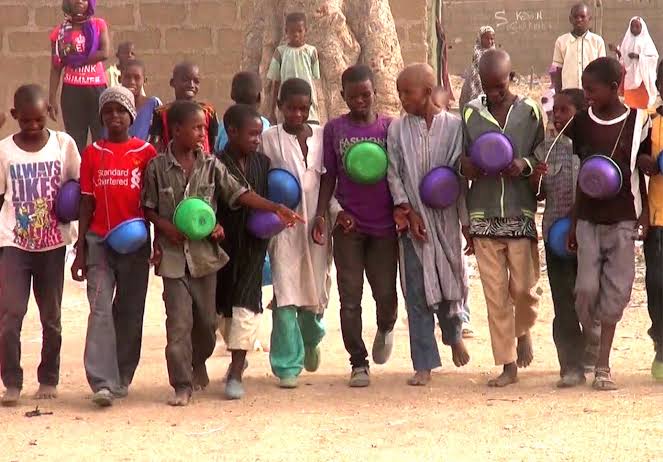
The problem stretches far beyond statistics. In many rural communities, young boys beg on the streets and involve in hard labour instead of sitting in classrooms, while girls are forced to stay at home with their mothers, hawk, or care for their younger siblings. Insecurity has worsened the situation, forcing hundreds of schools to close and leaving parents afraid to send their children, especially their daughters, to schools that are far from home.
Several factors are responsible for this growing crisis. Poverty remains the leading cause, as many families struggle to provide daily meals and depend on their children to earn a living. Insecurity has driven many teachers away, and frequent attacks or kidnappings have destroyed the sense of safety schools once provided. Culture and tradition also play a role, particularly in areas where early marriage and gender stereotypes prevent girls from attending school. Poor learning conditions make matters worse, as many schools lack roofs, chairs, and qualified teachers, forcing children to study under trees or on bare floors.
The consequences of this situation are severe. When children are denied education, they are trapped in a cycle of poverty that limits their potential for the rest of their lives. Many young girls who are out of school end up marrying early, while boys are left to fend for themselves through street work or petty trading.
Communities also suffer because education is the foundation for development and progress. Without educated citizens, villages and towns lack the professionals teachers, nurses, and skilled workers needed to drive growth.
Yet, amid the challenges, stories of hope still emerge. In Katsina State, ten-year-old Aisha once helped her mother fry kosai (bean cake) after her father’s death forced her to leave school. “I used to cry when I saw my friends going, I wanted to be a teacher one day.” she said softly. Her dream seemed lost until the intervention of Humanitarian Organizations that supported her mother with a small grant and school materials. “When I got my new uniform, I could not stop smiling, Now I am back in school, and I still want to be a teacher.” she said softly.
In Zamfara, twelve-year-old Yusuf had also dropped out of school to sell groundnuts by the roadside. One day, a community volunteer convinced his parents to enroll him again in a free community school. “At first, I was afraid because I had forgotten many things,” he said. “But my teacher told me I can learn again. Now, I want to become an engineer and construct roads for my people.”
To address this crisis, Nigeria must take urgent action. Education should be free, safe, and accessible to all children. The government and development partners must invest in rebuilding and securing schools, while communities need to support and promote the education of both boys and girls. Families should receive financial help to cover basic needs such as uniforms and learning materials, and special programs should be introduced for children who have missed years of schooling.
Education remains the key to a brighter future. Aisha’s smile in Katsina and Yusuf’s determination in Zamfara remind us that when children return to school, they regain hope and their communities grow stronger.
Marvellous Samson writes from Katsina.