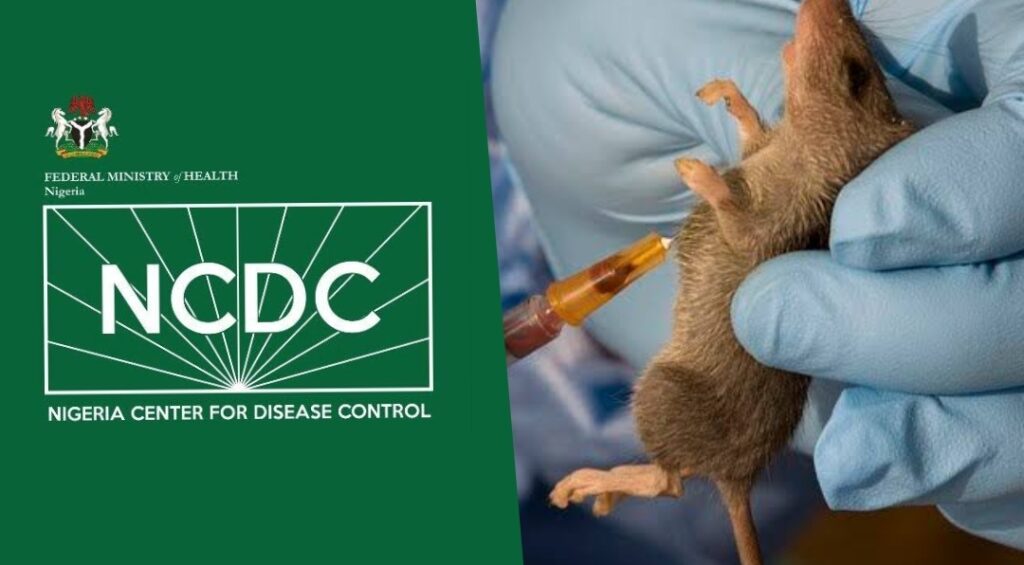
.Cases spread in 67 LGAs across 18 states
By Yahaya Umar, Abuja
Nigeria Centre for Disease Control and Prevention, NCDC, has reported a higher case fatality rate, CFR, for Lassa fever in 2026.
According to its Epidemiological Week 7 Situation Report released yesterday in Abuja, 75 deaths were recorded from 326 confirmed Lassa fever cases between Weeks 1 and 7 of 2026.
This represents a case fatality rate of 23.0%.
“This is higher than the 19.7% CFR recorded within the same period in 2025, when 89 deaths were reported from 451 confirmed cases, the NCDC said.
The agency noted that while suspected and confirmed cases were lower in 2026, mortality appeared to be increasing proportionately.
“In week 7 alone, 82 new confirmed cases were recorded from 74 in week 6.
“Confirmed cases were reported across 14 states, including Ondo, Bauchi, Taraba, Edo, Plateau, Gombe, Nasarawa, Kano, Ebonyi, the Federal Capital Territory, FCT, Kogi, Kebbi, Kaduna, and Benue.
“Cumulatively, 16 states across 58 local government areas have recorded at least one confirmed case so far in 2026″, the NCDC added.
The report indicated that 84 per cent of all confirmed cases were concentrated in four states: Bauchi ,33% , Ondo ,22%, Taraba ,19%, and Edo ,10% .
It said the predominant age group affected was 21–30 years, with cases ranging from one to 90 years and a median age of 30.
“The male-to-female ratio among confirmed cases stands at 1:0.8.
“Five healthcare workers were infected during the reporting week, raising concerns about infection prevention and control measures in health facilities”, the report revealed.
The agency attributed the rising fatality rate to late presentation of cases, poor health-seeking behaviour due to high treatment costs, and inadequate environmental sanitation in high-burden communities.
“Increasing infections among healthcare workers remain an ongoing challenge”, the NCDC said, stressing the need for strict adherence to infection prevention and control protocols in hospitals and treatment centres.
In response, the NCDC had activated a multi-partner, multi-sectoral Incident Management System, IMS, to coordinate national and sub-national response efforts.
“Rapid Response Teams have been deployed to seven high-burden states, while medical countermeasures, including Personal Protective Equipment, PPE, and Ribavirin, have been distributed to affected states and treatment centres.
“The agency is also strengthening surveillance, laboratory testing, community engagement, and behavioural change interventions while advocating for dedicated budget lines to support Lassa fever prevention and control”, it said.
The NCDC urged states to intensify year-round community engagement on Lassa fever prevention and called on healthcare workers to maintain a high index of suspicion while strictly following infection prevention protocols.
Lassa fever is a viral haemorrhagic disease primarily transmitted through exposure to food or household items contaminated by infected rodents, posing serious health risks in endemic communities.
In a related development, Nigeria Centre for Disease Control and Prevention has raised concern over increasing Lassa fever cases across 18 states and 67 Local Government Areas, LGAs.
The agency attributed the sustained transmission and rising fatalities to operational gaps at the state level, urging urgent action to strengthen outbreak response and control measures.
Director-General of NCDC, Dr. Jide Idris, disclosed this in a statement on Tuesday in Abuja.
He said that Bauchi, Ondo, Taraba, Edo and Benue accounted for more than 80 per cent of confirmed cases recorded during the 2026 peak transmission season.
Idris described as particularly worrisome the growing infections among healthcare workers, with 28 confirmed cases and three deaths reported so far this season.
He said field investigations showed most transmissions were occurring in known endemic areas, but weak implementation of established response frameworks had contributed to the continued spread and higher case fatality rate.
According to him, gaps identified include infections in general outpatient and maternity settings, poor adherence to Infection Prevention and Control, IPC, protocols, and inadequate pre-positioning of Personal Protective Equipment, PPE.
He added that delayed patient presentation due to financial barriers, inconsistent activation of State Incident Management Systems, weak contact tracing, persistent stigma and poor isolation centre standards were also driving transmission.
Idris emphasised that outbreak response implementation and health service delivery fell primarily under state governments within Nigeria’s federal structure, urging them to strengthen accountability and resource allocation.
He called on affected and high-risk states to urgently activate and closely monitor their Incident Management Systems, ensuring timely coordination and efficient outbreak response at all levels of healthcare delivery.
He also urged the immediate release of response funds, strict enforcement of Infection Prevention and Control compliance in public and private health facilities, and continuous availability of PPE and other critical supplies.
The NCDC boss also advocated accelerated financial protection mechanisms to reduce late presentation and high fatality rates, alongside institutionalised rodent control and environmental sanitation measures under a One Health approach.
He advised healthcare workers to maintain a high index of suspicion and adhere strictly to IPC guidelines.
He also urged the public to keep environments clean, prevent rodent entry into homes, store food safely and seek early medical care when symptoms appeared.
Idris noted that Lassa fever was treatable, with improved outcomes when detected early, adding that Nigeria was also responding to other epidemic-prone diseases including Cerebrospinal Meningitis, Diphtheria, Mpox and Cholera.
He reiterated NCDC’s toll-free emergency line, 6232, for reporting suspected cases and obtaining further information.