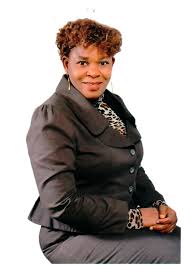
In communities across Rivers State, where hardship often silences young dreams,
Kadilo Brown is quietly building a different story through her Susan Brown
Foundation, restoring dignity and opening paths for vulnerable children, writes
FLORENCE ALLOR.
For much of her early life, humanitarian work was never part of the plan for Kadilo
Brown. She had imagined a modest professional path – one defined by routine
responsibilities and steady progress. Yet today, across communities in Rivers State,
her name is quietly associated with hope, dignity and second chances for orphans,
widows and vulnerable young people and women.
“I never dreamt I would work in charity, but at a workshop I attended years ago, I
felt a strong conviction that would not leave me. I could not sleep. I knew
something was calling me,” she says. That persistent inner prompting eventually
became the foundation of what is now the Susan Brown Foundation – an
organisation supporting disadvantaged children not by removing them from their
roots, but by strengthening the communities around them.
Unlike many traditional orphanage models, the foundation does not emphasise
adoption or institutional relocation, instead, it works within families and
communities to ensure children remain connected to their cultural environment
while receiving structured support.
“We believe nobody can take care of our children better than their own
communities,” Brown explains. This philosophy shapes the organisation’s work
across rural settlements and urban neighbourhoods around Port Harcourt and
beyond. Children identified as vulnerable—especially those who have lost one or
both parents or who are living in extreme deprivation—are supported through
education, healthcare assistance and welfare monitoring within their existing
family settings.
“People come and say, ‘These are not orphans,’” Brown notes with quiet
satisfaction. “That is because we try to give them a standard of care that protects
their dignity.” For her, the goal is not charity in the conventional sense, but
restoration of belonging.
The journey began modestly. After deciding to follow what she describes as a
personal calling, Brown approached the state’s social welfare authorities and
community development officers for guidance. Together, they identified
vulnerable children across several communities where intervention was urgently
needed. What started as a small initiative soon expanded into a structured support
network spanning multiple rural and semi-urban locations.
Today, the foundation works in at least eight communities across Rivers State,
relying on local coordinators who monitor children’s welfare directly within their
family homes. These coordinators help identify urgent needs, arrange medical care
where necessary and ensure children remain in school whenever possible.
The system is simple but effective, and deeply personal. “We visit them regularly,”
Brown explains. “We check their health, their feeding and their schooling. We try
to make sure they feel cared for.” For many children who once survived by
scavenging for food or living without supervision, this attention has proved life-
changing.
While the foundation’s work with orphaned children is widely recognised, its
support for widows is equally significant. In many rural communities, the death of
a breadwinner can push entire households into sudden poverty. By assisting
widows with welfare support and linking them to livelihood opportunities where
possible, the foundation helps stabilise families before children are forced into
street life or exploitation. It is preventive humanitarian work – quiet, consistent and
often unseen. “We try to intervene early. If families are supported, children remain
secure,” Brown says.
Beyond child welfare, the foundation is increasingly investing in youth
empowerment programmes designed to counter unemployment and social
vulnerability. Over the years, dozens of young people have received vocational
training in areas such as computer repairs, fashion design and welding. Some have
gone on to establish independent livelihoods, an achievement Brown regards as
one of the organisation’s proudest successes. “One young lady we trained in
computer repairs is now working independently,” she says with a smile. “Seeing
that kind of transformation gives us strength to continue.”
In a country where many young people feel pressured by unrealistic expectations
of instant wealth, the foundation’s message is deliberately different: patience, skill-
building and discipline remain the safest path to stability. “We try to mentor them.
We encourage them to believe in learning and working,” Brown explains.
Despite its impact, the Susan Brown Foundation operates under persistent financial
constraints. Funding shortages remain its greatest obstacle, limiting both expansion
and the number of children it can support consistently. “There are children who
still cannot attend school because of fees,” Brown says. “There is so much more
we want to do.”
Volunteer shortages also present challenges as many supporters express interest
but are unable to sustain long-term commitment; a difficulty common across
grassroots humanitarian organisations. But for her, the work is not simply a
project. It is a calling.
As the foundation plans future expansion, its leadership hopes to strengthen youth
development initiatives further and establish additional training opportunities that
can reach even more vulnerable communities. The vision is ambitious: extend
support across more parts of Rivers State and deepen partnerships capable of
sustaining long-term intervention programmes.
But even as the organisation grows, its philosophy remains unchanged. At its heart
is a belief that dignity, not dependency, should define humanitarian service. “What
we want,” Brown says quietly, “is to help these children feel loved, supported and
capable of becoming their best.”
In communities where many once faced uncertain futures, that simple promise is
already changing lives – one child, one widow and one hopeful young person at a
time.