…As sector loses N200bn to systemic inefficiencies in Q1
…DisCos worried over Enugu tariff cut, caution against financial instability
By Yahaya Umar
Nigeria’s power sector is set to receive a significant capital injection of more than $2.4bn from the newly approved foreign loan package championed by President Bola Ahmed Tinubu and ratified by the Senate.
The funding is part of a broader six-year external borrowing plan estimated at $21.5bn, €2.1bn, and ¥150bn (yen), aimed at unlocking strategic infrastructure projects across energy, transportation, healthcare, agriculture, security, and climate resilience.
A breakdown of the loan, revealed that at least four power-related projects have been earmarked under the plan, with two major super grid projects taking centre stage.
A total of $2.21bn will go toward constructing the Eastern and Western Super Grids, with $1.14bn and $1.07bn allocated respectively.
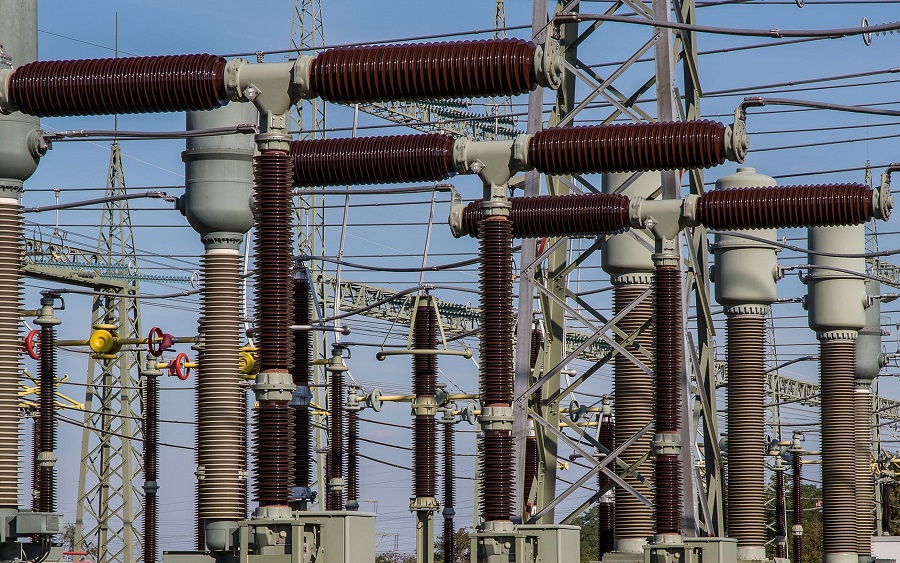
These grids are expected to significantly enhance electricity transmission capacity, reduce losses across the national grid, and support future integration of renewable energy sources.
In addition, a Chinese-backed investment of $100m will go into the Presidential Power Initiative, the federal government’s flagship programme designed to improve power distribution infrastructure in collaboration with Siemens AG.
Also included is a $116m allocation for the construction of high-voltage transmission lines to evacuate up to 700 megawatts of electricity from the recently completed Zungeru hydropower plant into the national grid.
These projects represent some of the most prominent power sector interventions tied to the loan, which Tinubu described as essential to closing Nigeria’s infrastructure deficit and catalysing economic growth.
“This borrowing plan is not about debt for consumption. It is a deliberate step to position Nigeria for inclusive, sustainable growth through strategic infrastructure investments”, the President said in his letter to the National Assembly.
Beyond the power sector, the loan package also covers other high-impact projects including $3bn for the Port Harcourt–Maiduguri Eastern Rail Line, $2bn for the Lagos Green Line Rail, $508m for upgrading eastern ports, and $700m for the Lagos–Calabar Coastal Highway.
Also, the loan would cover healthcare, youth entrepreneurship, border security, climate action, and food security.
However, its being reveal that the Nigeria’s power sector lost an estimated N200 billion in the first quarter of 2025 due to systemic inefficiencies spanning generation, transmission, billing, and revenue collection, according to the latest report from the Nigerian Electricity Regulatory Commission, NERC.
The report outlines energy losses from poor metering, unbilled consumption, transmission collapses, and ATC&C losses across the 11 electricity distribution companies, DisCos. These inefficiencies not only weakened sector liquidity but also increased the debt burden across the electricity value chain.
NERC’s data shows that only N291.62 billion was collected out of N349.55 billion billed in Q1 2025, a 16.57% collection shortfall. This gap widens when compared to the total energy delivered to DisCos, as an additional 1.5TWh worth over N56 billion was not billed at all.
When system collapse events, non-evacuated energy, and distribution bottlenecks are added, the cumulative revenue loss balloons above N200 billion, based on average energy values.
Generation companies, GenCos, and gas suppliers remain the worst hit, as payment defaults from the Market Operator affect their ability to sustain operations. Some GenCos reported only partial payment for energy supplied during the quarter.
Despite these setbacks, NERC says it is working to enforce performance-based regulations and recover value for every unit of energy generated. “We are applying stronger financial penalties and have begun auditing the most underperforming DisCos”, the Commission stated.
Meanwhile, Association of Nigerian Electricity Distributors ,ANED, has expressed concern over the recent reduction of electricity tariffs for Band A customers in Enugu State to ₦160/kWh by the Enugu State Electricity Regulatory Commission ,EERC.
They described the move as a destabilising development for Nigeria’s already fragile electricity market.
In a statement signed by Barrister Sunday Oduntan, the Managing Director and CEO of ANED, the DisCos warned that the tariff slash made without adequate coordination with the Nigerian Electricity Regulatory Commission ,NERC, or other stakeholders in the Nigerian Electricity Supply Industry ,NESI, poses a significant risk to market liquidity, investment confidence, and power supply sustainability.
“Since the release of the Tariff Order by EERC, Distribution Companies ,DisCos, in other states have come under intense pressure to reduce their own tariffs.
Some customers have even vowed not to pay their electricity bills until similar reductions are implemented”, Oduntan said.
He said the current electricity pricing reflects the tough economic realities of the country.
“It is our hope and desire that electricity tariffs begin to come down over time. However, this must happen through a coordinated, transparent, and sustainable process”, he said.
Oduntan noted that the EERC’s reliance on anticipated federal electricity subsidies to back its tariff reduction is highly problematic, particularly given the chronic delays in federal subsidy payments that have left Generation Companies ,GenCos, and gas suppliers owed nearly ₦5tn.
“While DisCos are not opposed to subsidies in principle. We strongly emphasise that subsidies must be transparently structured and promptly funded. Delayed or unfunded subsidies create cash flow disruptions, undermine market confidence, and deepen the existing liquidity crisis across the electricity value chain”, he said.
Oduntan pointed to recent statements by the Minister of Power, Chief Adebayo Adelabu, who made it clear that states implementing tariff reductions must be prepared to fund the resulting subsidies themselves and take full responsibility for the financial implications.
He further argued that, despite recent constitutional changes allowing states to establish independent electricity markets, Nigeria’s power system remains centrally coordinated in the short term particularly in the areas of bulk energy procurement, transmission, and market settlements through the Nigerian Bulk Electricity Trading Company ,NBET.
“Uncoordinated state-level tariff actions like the one from EERC risk weakening DisCos’ ability to meet their Distribution Remittance Obligations. This will ultimately place GenCos and other upstream market participants at greater financial risk”, Oduntan warned.
He also raised a red flag over the limited subsidy capacity of both the federal and state governments.
“Most states cannot afford to make direct budgetary provisions for subsidies, especially amid rising governance costs and a harsh economic climate”, the ANED CEO said.
He called for stronger coordination between the Ministry of Power, NERC, and State Electricity Regulators to ensure uniformity in policy and tariff design.
Recalls that there are mixed reactions over the tariff cut by the Enugu Electricity Regulatory Commission.
While Nigeria’s power generation companies ,GenCos, opposed the EERC’s planned cut of Band A electricity, the Forum of Commissioners for Power and Energy in Nigeria ,FOCPEN, backed it, saying it was designed to ensure fairness and transparency.