By Paul Effiong, Abuja
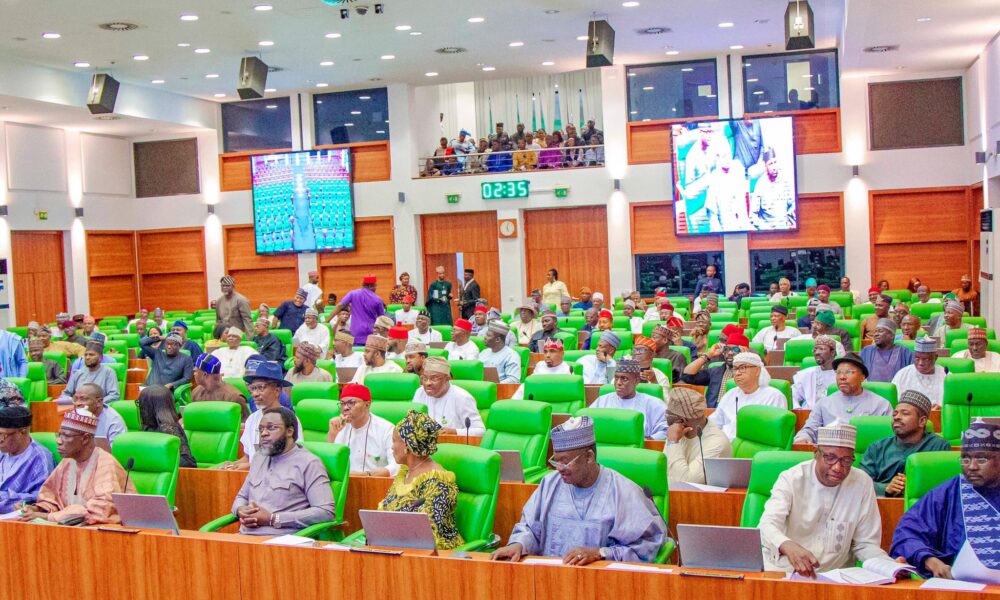
There was pandemonium in the House of Representatives yesterday, as some members of opposition political parties staged a walkout during plenary over what they described as an attempt to manipulate the ongoing amendment to the Electoral Act.
The protest followed heated disagreements on key provisions of the proposed Electoral Act (Amendment) Bill, 2025, particularly Sections 60 and 84.
Yesterday’s emergency session presided over by Speaker Tajudeen Abbas began with a closed-door meeting aimed at resolving contentious issues surrounding the real-time electronic transmission of election results.
Lawmakers had hoped to harmonise positions and calm rising tensions, but the effort appeared to have achieved little consensus.
The chamber turned rowdy when debates resumed in open session, with sharp divisions emerging between members of the ruling All Progressives Congress, APC, and their minority lawmakers.
While some APC lawmakers favoured provisions perceived to allow manual transmission of electronic results under certain conditions, opposition members insisted on full electronic transmission to ensure intergrity, as well as transparency.
During the commencement of plenary, Speaker Abbas had informed members of the sole item on the Order Paper.
Chairman of the House Committee on Rules and Business, Francis Waive moved the motion and was seconded by the Chairman of the House Committee on Electoral Matters, Adebayo Balogun.
Waive had explained that a technical committee comprising leadership from both chambers of the National Assembly, members of the Conference Committee, clerks of the Senate and House, and legal drafting experts had met to address identified anomalies in the expected legislation.
He, however, stressed the need to safeguard electoral timelines, promote inclusivity and restore public confidence in the electoral system by correcting inconsistencies through legislative action.
Tension, however, escalated when the speaker called for a voice vote on the subject matter.
Despite what some opposition lawmakers claimed was a louder “nay,” Abbas ruled in favour of the “ayes,” by hiting the gavel prompting loud protests across the chamber.
The development created suspicion among minority lawmakers who accused the leadership of the House of forcing through controversial amendments.
The House, thereafter dissolved into the Committee of the Whole which was presided over by the Deputy Speaker, Benjamin Kalu.
This time, proceedings initially progressed smoothly, but soon deteriorated into repeated confrontations over attempts to amend provisions relating to electronic transmission of results.
Again, some oposition lawmakers insisted that the bill must be considered clause by clause to enable proper and thorough scrutiny.
Opposition members strongly objected to the proposed adjustments to Section 60, which stipulates electronic transmission of election results, but allows manual transmission where network service is unavailable.
Minority members and caucuses rejected the move, even as they described it as loopholes capable of undermining electoral transparency.
According to the proposed amendment, Section 84 deals with the nomination of candidates by political parties which also sparked outrage.
They argued that political parties should retain the autonomy to determine whether to adopt direct primaries, indirect primaries or consensus arrangements without legislative interference.
Describing the proposed amendments as “anti-people,” opposition leaders declared Sections 60 and 84 “fraudulent” and a threat to democratic integrity.
Addressing journalists after the walkout, the Minority Leader, Kingsley Chinda, flanked by Victor Afam Ogene, condemned what they termed the ruling party’s disregard for Nigerians’ desire for credible elections.
He accused the APC-led government of attempting to erode transparency in the electoral process.
Meanwhile, Chairman of the House Committee on Media and Public Affairs, Akin Rotimi downplayed the incident, describing the walkout and heated exchanges as “democracy in action,”
Rotimi also insisted that divergent views and protests remain integral parts of parliamentary practice.