…Urges multifaceted response
…Says Zulum’s alarm clarion call for renewed commitment
From Rahila Abdullahi, Kaduna, Hassan Jirgi, Maiduguri and Mariyah Adamu, Abuja
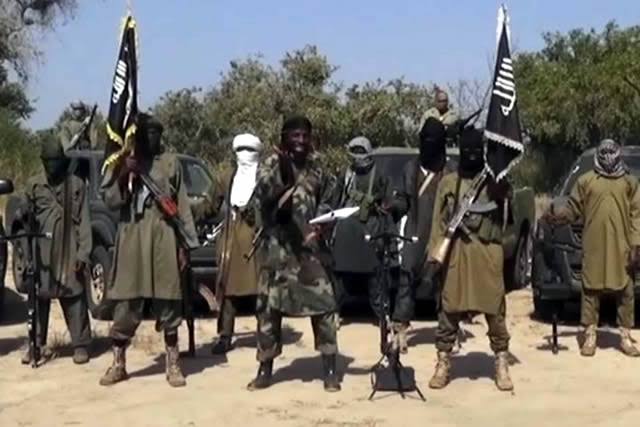
Following the latest security concerns over the resurgence of Boko Haram terrorists in the Lake Chad’s Tumbus region and the Mandara Hills within Sambisa Forest, the Northern Elders Forum, NEF, has said that the development “poses a significant threat to Nigeria’s stability and security”.
Director, NGOs and CSOs, NEF, Abdul-Azeez Suleiman, stated this yesterday while fielding questions from AljazirahNigeria.
Suleiman, also said that “the regrouping of Boko Haram in the Lake Chad region and Mandara Hills is indeed a troubling development that calls for urgent attention and action from both the Nigerian government and its international partners.”
In this vein, he said that
the alarm raised by Borno State Governor, Babagana Zulum, last week “serve as a clarion call for a renewed commitment to addressing the multifaceted challenges posed by this insurgency.”
Therefore, the NEF called for a comprehensive approach that combines military action with socio-economic development, regional cooperation, and community engagement is essential for restoring peace and stability in north eastern Nigeria.
Besides, the forum pointed out that “the fight against Boko Haram is not just a matter of security; it is a fight for the future of millions of Nigerians who deserve to live in peace and prosperity”.
The alarming reports of Boko Haram terrorists regrouping, as highlighted by Zulum, according to NEF “underline the persistent challenges faced by the Nigerian government and military in combating terrorism. This situation is not merely a regional concern but a national crisis that requires a multifaceted response encompassing military, social, and economic strategies”.
The forum recalls that Boko Haram, an extremist group that emerged in the early 2000s, has been responsible for widespread violence, including bombings, kidnappings, and mass killings, particularly in northeastern Nigeria.
Despite significant military efforts to dismantle the group, including the deployment of troops and international assistance, Boko Haram has demonstrated a remarkable ability to adapt and regroup, the NEF noted.
Furthermore, “the Lake Chad Basin, which includes parts of Nigeria, Chad, Niger, and Cameroon, has been a hotbed for Boko Haram activity. The region’s complex geography, characterised by its vast waterways and dense vegetation, provides the perfect environment for insurgents to hide and launch attacks.
“The Mandara Hills, on the other hand, serve as a strategic location for the group, allowing them to leverage the terrain for ambushes and surprise assaults on military and civilian targets.
“Governor Zulum’s remarks highlight a critical concern: the regrouping of Boko Haram signifies not just a revival of their operational capacity but also a potential escalation in violence. The governor’s call for urgent action reflects the fears of many who have witnessed the devastating impact of the group’s activities on communities, infrastructure, and the overall economy”, the NEF stated.
It also emphasised that the humanitarian crisis in Borno State continues to deepen, with millions displaced and in need of assistance.
Addressing the issue of Boko Haram’s resurgence requires a comprehensive strategy that goes beyond military engagement. While the Nigerian Armed Forces have made strides in combating the insurgency, the underlying socio-economic factors that contribute to the group’s appeal must also be addressed. Poverty, unemployment, and lack of education are significant drivers of recruitment for extremist groups. Therefore, investing in community development, education, and job creation is essential to counteract the allure of Boko Haram”.
The forum said that collaboration with neighboring countries in the Lake Chad Basin is crucial. The insurgency does not respect national borders, and a coordinated regional approach is necessary to effectively dismantle the group’s networks. Intelligence sharing, joint military operations, and community engagement across borders can enhance the effectiveness of counter-terrorism efforts.
Another vital aspect of the strategy should be strengthening civil-military relations. The military’s approach to counter-insurgency has often been criticized for its heavy-handed tactics, which can alienate local populations. Building trust between the military and communities through transparent operations, respect for human rights, and engagement in community development can foster cooperation and intelligence sharing, making it more difficult for Boko Haram to operate.
AljazirahNigeria reports that
Zulum of Borno State had last Friday sounded a fresh warning over the resurgence of Boko Haram terrorists in the Lake Chad’s Tumbus region and the Mandara Hills.
Speaking in Maiduguri, during a visit by the Minister of Defence, Mohammed Badaru Abubakar, alongside Chief of Defence Staff Gen. Christopher Musa and other top-ranking military officials, Governor, however, commended the military’s past efforts but warned that gains made are being reversed due to lapses in sustained presence.
He decried a situation whereby “We conduct military operations and disengage. Once we withdraw, Boko Haram and ISWAP elements return to reclaim those territories”.
“There has never been a comprehensive military operation along the Tumbus shoreline in Lake Chad since the beginning of the insurgency,” Zulum noted. “This area remains a fertile breeding ground for terrorists due to access to livelihoods and mobility,” he lamented.
Zulum, called for strategic intervention to ensure permanent military presence and control of the region, warning that without securing the Sahel corridor and Lake Chad basin, Nigeria’s broader security will remain fragile.
Defence Minister Badaru Abubakar, in his response, however, reaffirmed the Federal Government’s commitment to bolstering military capacity in the region, saying “We are here to assess the situation and identify what the Armed Forces require both in personnel and equipment to address the resurgence of insecurity in Borno and the North-east”.
Meanwhile, in another development at least 50 communities across 25 council wards in five local government areas, LGAs, in Benue State have been displaced by armed herdsmen, data released by the Benue State Emergency Management Agency, SEMA reveals.
The report was released by SEMA just days before the latest attacks in Ukum, Logo, Otukpo and Gwer East LGAs.
It stated that the worst-hit area is Gwer West Local Government Area, where all 15 council wards have been affected.
The affected wards in Gwer West include Sengev, Gbaange/Tongov, Saav, Mbapupuu/Tswarev, Mbabuande Kyaav, Mbapa, Tsambe/Mbesev, Sengev/Yengev, Merkyegh, Nyamshi, Tijime, Tyough Ater, and Njaha.