Joel Ajayi
Steron Group Chief Executive Officer, Muhammed Umar, has revealed that the discovery of vast lithium deposits has transformed the company’s former granite quarry into a major critical minerals project, with an inferred resource estimated at over one million tonnes.
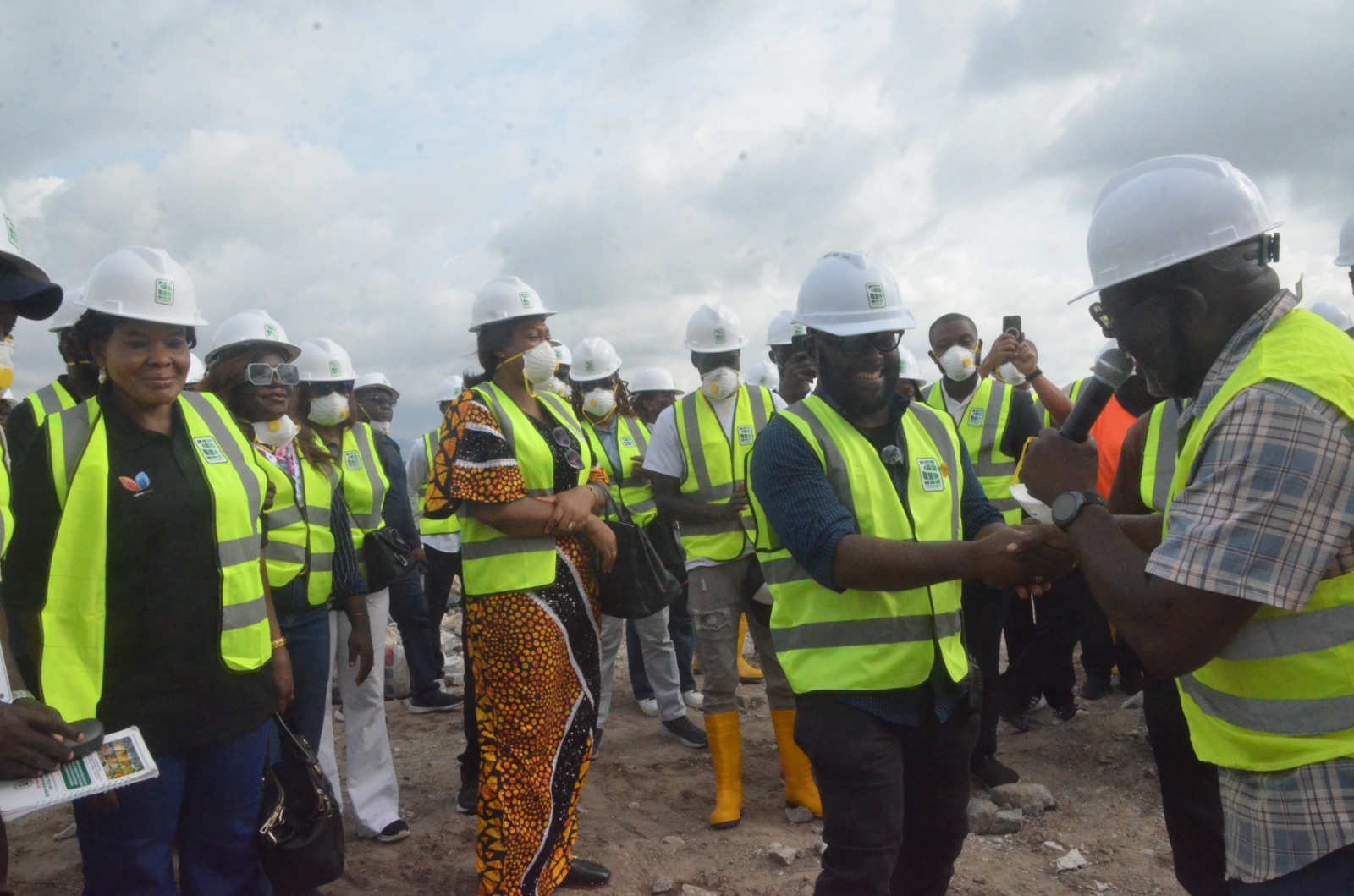
Umar made this known while hosting participants of the Africa Natural Resources and Energy Investment Summit 2026 on a guided tour of the company’s mining site in Nasarawa State, where visitors were exposed to various stages of mining operations, including drilling, blasting, and underground tunnelling processes used in mineral extraction.
According to him, the site initially functioned solely as a granite quarry until extensive exploration activities uncovered commercially viable lithium deposits, marking a significant turning point for both the company and Nigeria’s mining sector.
“The project started as a granite quarry, but exploration activities revealed significant lithium mineralisation, opening a new chapter for the company and Nigeria’s mining industry,” Umar stated.
He further disclosed that ongoing exploration efforts have also led to the discovery of tantalite occurrences, a development he said broadens the site’s mineral potential and strengthens its attractiveness to investors.
“Exploration activities are still ongoing, and we have now discovered occurrences of tantalite. This marks the beginning of even greater opportunities for mineral development,” he added.
Describing lithium as one of the world’s most strategic minerals, Umar emphasized its growing importance in battery production, electric vehicles, and renewable energy technologies.
“Lithium is essential for the production of batteries and is helping to power the future. It remains one of the most important minerals driving the global transition from fossil fuels to renewable energy,” he said.
Umar disclosed that Steron Mining established an inferred lithium resource exceeding one million tonnes in 2023 and is intensifying exploration to further expand the resource base.
Beyond extraction, the company is also focusing on local value addition through beneficiation—a process that upgrades mineral ore by separating waste materials from mineral-bearing deposits before they are supplied to processing facilities.
According to Umar, this process boosts lithium concentration from between one and three percent to approximately 67 percent, significantly increasing its commercial value and making it suitable for advanced industrial processing.
He commended the Federal Government for implementing policies aimed at deepening indigenous participation in the mining sector while simultaneously attracting foreign direct investment.
“The current administration has made deliberate efforts to prioritise local participation in the mining industry. These policies have enabled indigenous companies like ours to grow while creating opportunities for international investors,” he said.
Umar also praised the Africa Natural Resources and Energy Investment Summit 2026 for creating a strategic platform to showcase Nigeria’s abundant mineral wealth to investors across Africa and the global market.
Reaffirming the company’s commitment to responsible mining, community development, and operational safety, he stressed that host communities remain central to Steron Mining’s long-term strategy.
“We have prioritised our host communities by placing their safety, well-being and development at the centre of our operations. Their success is our success,” he noted.
He reaffirmed that Steron Mining remains committed to supporting Nigeria’s rise as a key player in the global critical minerals value chain through sustainable and responsible mineral development.
With global demand for lithium and other critical minerals surging amid the clean energy transition, Steron Mining’s breakthrough signals a major opportunity for Nigeria to strengthen its position in the rapidly expanding global minerals market.